Tuesday, August 17, 2010

Dolph Lundgren is The Killing Machine


Parallel to the release of the super-sized fast food sandwich we know as The Expendables, Dolph Lundgren retitled his courteous family-man/contract killer crime epic from Icarus to Dolph Lundgren is The Killing Machine. While this may look well on paper, this scraps the only semblance of a serious notion towards duplicating A Bittersweet Life in parts and Taken in others, in favor for an expose worshiping this real-life bad-ass. What we get is what we hoped for (we being classic 80s Dolph fans), not much akin to Dark Angel or Universal Soldier, Icarus is the very similar stoic combat-grizzled Soviet who has it out for whoever is wronging him. Owing almost the entire screen time to other films who have done this before and to a better advantage, Icarus never ceases being an anti-intellectual statement and a violent popcorn piece that gives you a merit badge in villainous ways to dispatch your foes. I may never look at a bench press again. Thanks for that, Dolph.


The bizarre thing is that while I do not condone the title switch it does seem to benefit from it, quality wise. Watching this film under the guise of Icarus prolapses the tale into comical austerity from which it never recovers being a DTV film for its own sake. However, as Dolph Lundgren is The Killing Machine, some nostalgic protective aura enshrouds the film giving it that root-for-utter-destruction edge that it needs to survive the continuous landslide that is direct to video sales. Under the moniker of both titles, the film still presents the superfluous tale of a father who has never been there for his family . . . because he assassinates "marks." Struggling to juggle his family and work life proves to be too great for Icarus (Dolph) and he finds himself the target of an old comrade for which penance and comradeship is not enough. Mix in random spices of post-KGB Russian conflict and you got yourself a translucent, yet enjoyable film capable of combing the cheese romance from Commando and creating a hybrid with some gruesome key scenes of cheek-ripping and face-crushing Dolph at his elderly physical peak.


As the film progresses, the producers, I assume, decide to barrage us with thinly conceived narration from Dolph explaining in pseudo-enlightened prose that he has to redeem himself amongst other contrived soliloquies. Upon hearing that he originally intended for his character to be a villain akin to his excellent role as Gunnar Jensen in The Expendables and that his producers denied his request due to sales, It occurred to me that Dolph is a mere puppet to his financial backings which must be a reason in declined quality. Dolph Lundgren was permitted 18 days to complete principal photography and didn't approve of the producers cut, which is what we are viewing. Had Mr. Lundgren has his way, I'm sure we'd all be enjoying a fastidious ode to what Dolph Lundgren really wants to convey with his villainy; a meditating crime tycoon who indulges in the very savagery that made him so prominent as an 80s action star who achieved critical success with his video rentals.


Icarus has several things on its belt, I'll admit. With the exceptional acting chops of the Stefanie von Pfetten (who is also a smelting pot on the eyes) and Lindsay Maxwell whose supple nipples must be the size of a "baby's fingernail", the film boasts strong female and male performances rounding out with a surprise role of Bo Svenson as the past come back to haunt Dolph. Icarus isn't a great film but its entertainment value is worth its weight in gold. I could find myself re-watching some of the exceptional shoot out scenes and replay some of the iconic deaths of the unfaltering waves of henchmen to my hearts delight. Icarus isn't a film that had to be made but now that it is here I graciously accept this gift for what it is; a film by Dolph Lundgren about Dolph Lundgren. I'm sure many of you can complain about the handicam quality but for what it is worth, Dolph sure is menacing toting a Remington 870 and I hungrily look forward to this brutes reemergence in the video scene. I believe I'm going to coin the term "dolphsterpiece" from here on out.


-mAQ

Friday, August 13, 2010

The Dead Pit


Having perused through some much needed cult horror recommendations several months ago, I recently rediscovered this twanging, pulsing need to subject myself to The Dead Pit since being reminded about its release on Code Red DVD. After seeking out a copy and collaborating with the desire for supernatural zombie mysticism inside of me, I can genuinely say I came out of this experience almost surprised by the creeping quality of this low-budget guttural triumph. Brett Leonard's similar affection for fog machines can be found within some of the smoky racial VR combat sequences featured in Virtuosity and I see a similar character schematic being shared with Feed's Michael Metszencalmpf and Dead Pit's Dr. Colin Ramzi. Not only is the set up reminiscent to the brilliant Nightmare on Elm Street 3: Dream Warriors but the brutal crescendo garners an visually-aromatic likeness to the most infamous of scenes within Return of the Living Dead. This plus Cheryl Lawson parading around screaming whilst exposing her midriff equals horror goodness.


Before I get off on a tangent with the ascertainable atmosphere within The Dead Pit, allow me to mention that the film is inclined to have a tremulous build up for some. It took me several viewings to make it past the 30 minute mark and I'm sure glad I finally buckled down for this treat. After its bizarre Ghoulies-esque opening scene of a young(er) Jeremy Slate lurking down a spiral staircase bathed in a ghoulish green smoke only to find a mad scientist who has been using the hospital's patients getting bizarre lobotomies and brain manipulation techniques. Telling the crazed Ramzi that this must come to an end, he puts a bullet between his eyes, rolls him in his "dead pit" and seals the cellar to the abandoned ward. Cut to the present, Dr. Gerald Swan (Slate) has become a shut-in psychiatrist with a misappropriated addiction to alcohol and counseling his patients. With the admittance of a new patient, one with a strange case of amnesia(?), a mysterious earthquake ravages the grounds and breaks the seal to the dead pit.


While the film desperately struggles to breathe life into all its characters, this proves unnecessary as the dead rise from their Nickelodeon-flavored point of entry to devour the brains of all who have entered upon this unholy ground. Cheryl Lawson as Jane Doe is pitch perfect as an entrancing bubblehead but not much more than that. Actress she is not, dissenting guinea pig of psychological and physical torture by way of a malicious manifestation she is. Her connection with the sinister undead ringleader goes as far as one with any luck in predictability would assume. Jane Doe's adventures at night as she daintily sneaks past guard prove to be superfluous at most as most of her contact with the specter prove to be through her dreams until the finale. Even as dated and aged as the film appears to be, The Dead Pit does feature an exquisite set of decadence as told through abandoned hospital wing. To strengthen this aspect, Brett Leonard utilizes several camera techniques way before their time to great effect e.g. the chase scenes through the halls as our poor lead actress flees in fear of falling victim to her boogeyman. At first glance, these scenes might appear to be ordinary but pay close attention as these tactics have just begun being employed again in such a similar "sweeping" pattern. See also: Live Free or Die Hard for a recent example.


Perhaps the most universal ground of praise in The Dead Pit would be the climax of the film where Dr. Ramzi commands all his minions to shuffle ominously through the swinging double doors. Again, the implementing of the fog machine works to a brilliant key stroke. The calamitous nature of these bumbling fiends plays to great regards the tension needed for the shuffling beasts and their lack of humanity. Now while these slaves are limited by command, they break down my expectations to kill two police officers just off the property which sets the mood nicely for an all-over possibility of this supernatural epidemic breaking past the grounds and possibly into a world-killing event. Just a thought. The Dead Pit, while being an 80s horror film, is a sugar rush of evil incarnate. This comes as no surprise from the highly efficient skills of Brett Leonard. It's rather saddening to see him resort to directing Highlander films nowadays as he was such an unregarded icon in both cyber-thrillers and debut zombie features. The Dead Pit comes greatly recommended if you can digest the constant dribble of loons until you reach the midway notch. This is a film that matures as the mysticism of evil progresses; a very nice touch for a first-timer.


-mAQ

Thursday, August 5, 2010

Death Bed: The Bed That Eats


Whether in the underground or the mainstream, I have viewed a plethora of horrible films during my life. I have dug far and wide, from nation-to-nation (cinematically not geographically, of course) hoping to find those few dark films worthy of recognition and notoriety. Despite all the mediocrity I have encountered on my cinematic journeys, the celluloid adventures have been worth it when I recall such horrific masterpieces as Jörg Buttgereit's Nekromantik, Lucio Fulci's The Beyond, Roger Watkins' Last House on Dead End Street, Andrey Iskanov's Visions of Suffering, and a variety of others. Recently, I took my chances with an odd and peculiar horror film Death Bed: The Bed That Eats, a film with such an odd title that it would make even the most initiated and jaded of horror hunters out there wonder in amusement.


Death Bed: The Bed That Eats was directed by the unknown auteur George Barry, a man that seems to only understand art in his own lost vacuum world as his single horror accomplishment testifies to. The ambiguous ghostly voyeur of the Death Bed is the tragic decadent artist Aubrey Beardsley, who is trapped within his own painting. The last great Sage poet and American patriot Ezra Pound once stated, "Beardsley was a sick man who knew he had to make a name quickly if he wanted to make it, personal wish, not believing in what art is or ought to be.......He was a heroic invalid, up to the point of his force. He didn't lie to himself or his friends in private, He knew that beauty is so difficult. He said, beauty is difficult." Like Pound's statement about Beardsley, director George Barry also should hold the title of "heroic invalid," a filmmaker with a twisted vision whose idea of beauty can only be found in the most dark, damp, and deteriorating of mid-western basements. The world of Death Bed: The Bed That Eats is a place that not many people would willingly go to, but those that desire to will be treated to a place of wonderful phantasmagorical bless. For those that cherish their deepest and darkest of strange dreams, the film visualizes a supreme deadly daydream, offering the viewer a glimpse of a deteriorated celluloid netherworld that will not be soon forgotten.


I can only imagine that director George Barry used a wide variety of mind altering drugs before, during, and after the production of Death Bed: The Bed That Eats. In fact, I would not be surprised if Mr. Barry got the idea for this lovely nightmare of a film whilst wasting away on his own bed. Some of the most aesthetically powerful scenes in Death Bed: The Bed That Eats occur when the bed eats a much deserving docile victim. The beautiful bed does not really eat the person, but burns them alive in a beer-like yellowish liquid which vaporizes human flesh like acid. The bed also resonates a whitish foam that makes one wonder whether or not the bed is sexually aroused by the humans it consumes. Drug connoisseur or not, I am sure George Barry felt a bed that eats people would make for a distinctly interesting film in comparison to a bed that people die on merely by overdosing on. Despite the many killings that have occurred before the sad quaint eyes of forever young Aubrey Beardsley, he seems to have gotten rather bored with bedside killings.


If you're looking for a vintage and hypnotic piece of original Sinema, Death Bed: The Bed That Eats is the film to see. I am pretty sure Aubrey Beardsley would not have minded having his ghost make an appearance in this fantastic acid horror experiment, for this is a film merely following in his hopelessly decadent footsteps. Just as I wonder where artistically Beardsley would have ended up had he not succumbed to tuberculosis at an early age, I also wonder where George Barry would have went cinematically had he continued directing films after Death Bed: The Bed That Eats. Maybe Barry only had one film in him, but this single horror film and one-time director deserve exclusive recognition, for Death Bed: The Bed That Eats is one of those rare horror films that manages to go beyond the typical sensory power of the medium, radiating Sinema gold. Swim inside the Death Bed because surreal nightmares like these never get old.


-Ty E

Thursday, July 29, 2010

Chloe


I have been eagerly waiting for sometime to see Atom Egoyan direct another film that even compares to the psycho-sexual electricity of his brilliant work Exotica. That being said, I never thought his next best film would be a highly unconventional lipstick lesbian affair between a voluptuous eighteen year old Aryan girl and a middle-aged red-headed housewife. The sexual romance occurs unconsciously (or at least for the older gal) when a wife disillusion-ally suspects her husband of banging his young college students. I guess the wife has reason to suspect when her husband seems more interested in instant-messaging his female students online than engaging in coitus with a woman he used to passionately pound three times a day. To make the film extra-sexually-subversive, Atom Egoyan made sure to have the wife's son have some high quality hard-on time with the woman of his Mother's subconscious dreams. Like Exotica before it, Chloe is a brilliantly crafted and lavishly paced film that engages the viewer in intercourse during the film's beginning and explodes with a pleasantly fulfilling climax at the end.


With most of the beautiful lipstick lesbians I have met in my life, I have noticed a couple things. For one, the lipstick lesbian is not a sexually inverted bulldyke with too much testosterone who wishes to be male, but usually wallows in the wonderful world of female beauty. Secondly, the lipstick-lebso seems to have not been born with a love of female-on-female cunnilingus but instead developed her fetishistic vice through the lack of development of a mother-daughter relationship as a child just as Chloe hints at throughout Chloe. The married Mother Catherine becomes the perfect motherly replacement for Chloe, a woman that in age could be her own mother. When Chloe attempts to give Catherine her own Mother's hairpin, she is symbolically asking the older woman to replace her own Mother, even if it is in the form of a behind the curtains night of engaging in each others meat curtains.


Wife and Mother Catherine's Lesbian inclinations seem to be the result of her loss of sexual passion for husband and her overall lack of sexual potency as a Mother. She gets aroused at the idea of the young Chloe passionately fondling her husband, for it makes her feel like she did when she was young. Also, being a gynecologist and a sage of the Vagina, Chloe must have been tempted to go down South more than once during her life. Unfortunately for Chloe it seems that Catherine just wanted a taste of the blond beastess. Catherine's eighteen year old son offered Chloe some masturbatory fun but the boy toy could never replace a Mother figure. I think Atom Egoyan should be noted as the director of the truly best family affair for Chloe's passionate nuclear family scare is certainly cinematically quite rare.


Chloe is a brave film and Atom Egoyan is no doubt a brave auteur. Apparently, Chloe was a film that either the critics loved or hated. I certainly do not see feminists, bulldyke lesbians, or any other type of prudish wanna-be-men/men-haters enjoying the film. I have seen more than my fair share of Lesbian-themed films and Chloe is the only one to successfully combine eroticism, sexually-paced storytelling, and passionate-acting for a believable mädis-tale that one will think about long after the experience is over. Isn't that what good sex is about?


-Ty E

Tuesday, July 27, 2010

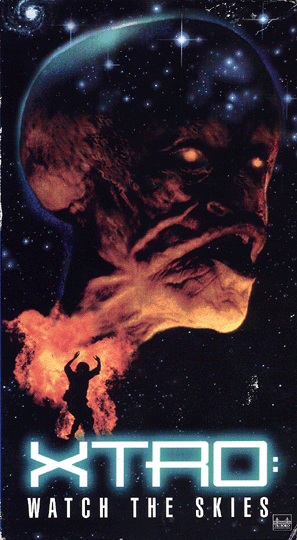
Xtro 3: Watch the Skies


The original Xtro was such a splendid surprise with its dazzling mixture of science-horror and somber surrealism. Setting my eyes of Harry Bromley Davenport who directed all three entries in the Xtro trilogy as well as the low-budget low-quality Mockingbird Don't Sing, I scoped out a comment he made about the quality of his films. Turns out the third film in the series was always his favorite and with this recommendation alone, I set out to find and view these post cursors and delve into what genius the man behind Xtro must offer. Fast-forward to present time; I learned something today. I discovered that the fabled "accidental" director is not just a myth but a frightening reality far more terrifying than any film about vengeful aliens or marines without proper haircuts. Xtro must have been a fluke because I refuse to believe the talented man who combined screaming synth with inner-clown persona's created this godawful abomination that insults the quality of Brain Damage films.


The plot centers around a marine lieutenant who gets assigned a mission with a team of rambunctious misfits. Their task? Simple reconnaissance and a bit of demolition..., or so they thought. As soon as they unearth a strange alien artifact the mishaps begin to occur. Each one with special effects worse than the last. Only in one scene does the second sequel barely resemble the original. A silhouette inked in darkness twitches to extraterrestrial life as a spurting white fire sprays out behind this figure. It shames me to appreciate something about this film and it certainly does not excuse any of this garbage but it's endearing to see that Davenport might still have what it takes to make a great science-fiction film. Let's hope he does justice with his newest Xtro film. Back on topic, these marines discover a classic "it came from the top" government cover-up cliche that should be known as a classic mistake and not some propelling force for a story. After they find a hermit living on the island who survived all the bloodshed that happened so 50 (40) years before, they attempt to get information of what really went on previously.


This is where I note the misuse of the deus ex machina. Yet another film technique ruined in the hands of Harry Bromley Davenport. This primitive survivor with his pepper-gray wig and contrived eccentricity proves this character is nothing more than an Encino Man facsimile whose only use in the film is to lead the crew to some old Super8 films which document the convenient story behind the antagonist alien's rage. In faux-Roswell fashion, we watch an autopsy scene with no scientific clout as the other caged alien wails on behind his bars. After the female alien is butchered and has its baby removed and put in a surgical dish, the male alien bends the bars and uses his psychokinetic ability to kill everyone off screen with a tempestuous regurgitating power. So not only is Davenport inspired by braindead classics like Encino Man but it also appears that he's seen Orca. It's too obvious for it to be just a dupe on his part. Borrowing or being inspired isn't necessarily a negative thing but when you borrow shamelessly from classics and manage to make a film utterly prosaic. Well, . . . I just don't know how to respond other than to eject the disc and stare at the static until my eyes become overwhelmed.


Xtro 3 is a unsubstantial failure on all sides; this is a two-sided coin of cantankerous and belligerent film making. How someone can direct the cast which would obviously lead to disastrous results and a lack of artistic integrity is beyond me. For someone who created one of the most daring and essential science-fiction films to suddenly become a bottom feeder is truly a waste of youthful prowess. This film is not only anti-climatic but it renders itself as the best in the series which gives me absolutely no hope for the future of the Xtro saga. Xtro 3: Watch the Skies is pedestrian at best and my last wish before I wash my eyes out with whiskey is to be able to omit this travesty out of my head completely.


-mAQ

Monday, July 26, 2010

A Serbian Film


Ah, A Serbian Film. What could I possibly say that many of the sickened festival attendees haven't? Even the news of a disgusted film distributor leaving the theater only to stumble and fall breaking his nose scrapes the controversy of the film. Strangely, I'm not here to talk about the controversy because frankly, I don't care what others think about this film. This Serbian film is something that isn't an argument of taste or ethics. What you see is what you get and in this case, close your eyes, swallow, and accept your gift of pure and unadulterated venomous misogyny wrapped in a crunchy shell coated with a (so called) political allegory. A friend of mine coolheadedly recommended me to view this maelstrom of cruelty with no previous knowledge of the events or mishaps that may occur within. Much to my chagrin, A Serbian Film not only impacted me into a state of realized delirium but shook me to my core as I sought out to insure the stability of my future nuclear family.


Even for the jaded business-casual wreck, this film should offer something contemptuous to feed upon your psyche. To redefine the plot within a spoiler-free confine, A Serbian Film offers up a family's story on a burner of esoteric deception. Milosh is a hardly working retired porn star who is struggling to support his beautiful wife and cheerful son, who is experiencing a sexual awakening in part of his dad’s films, and is bleeding out his revenue on silly things like singing lessons. Scared of his family’s future, he agrees to film a final piece out of retirement, one that is wholly unknown filmed by a mysterious man named Vukmir. As the “official” synopsis would treat it, the director’s intention might not be as peachy and straightforward as the art would have it. As far as Milosh’s odyssey of sexual humiliation is shown in graphic detail of ambiguity, I too have been in a situation entirely interesting and chilling to the bone, but not so much as depraved as this experiment in film-making. Some time ago on a forum, a beautiful woman began speaking to me in philosophical tongue. She had been new to the forums and keenly dismissing most of the horny teenagers making passes. As she private messaged me and our conversations raged on for days, she inferred me to a organization (cult?) known as Yellow-1. After much searching the Internet and not coming up with nothing, I linked my friend to the website and he returned with an IP. Tracing that and the location, we discovered that this organization was apart of Neurocam, which is known secretly as a strange affiliation that plays cryptic games of delivering and receiving anonymous packages. Almost like a real life courier game that is bizarre and unknown to most.


After inquiring on their own personal web-board, I was plummeted with woefully profound messages asking me to question my own goals and needs, that brand of horseshit. After acquiring an application to join Yellow-1 in my mailbox, I dropped the topic with chills down my spine and moved on. Much of what I experienced cannot be transferred into mere words as it would rain down skepticism and diatribe on my end. We all fear something and it's always lurking. This story of mine is very congruent to Milosh's feelings as well, without the sodomy of the peculiar. What I ravished in was the descent into madness that this male, like many males with their formidable lust and power, have fallen victim to. A Serbian Film isn't the kind of film an overweight loser from Pittsburgh can make. While this film has a body count, it doesn't act as an exclusive accessory. Take the cult "classic" August Underground for example. With a mere mention it sparks a communion of underground horror fans chanting about "severed penises" and "cut-off nipples." While these facets do occur within Fred Vogel's creation, you must understand that these scenes make the film and the hype. When you mention this pseudo-snuff trilogy, you don't say to yourself "Oh, that's that movie with the climatic character-intrusive depth and ravaging climax?" Those compliments are reserved for an endeavor worthy of the title "art." Taking what I know and what you don't, it would seem that the only fitting label for A Serbian Film is high-velocity punishment. Vukmir would have been so proud of what his creators have created for this is what art is - Consequential.


What Irreversible is largely know for is its brutal rape/fire extinguisher scene and the music. Thomas Bangalter (half of Daft Punk) created for Noé was a collection of the finest and grittiest electronic music ranging from the glitch-pop repetition that is Spinal Scratch then onto the bass-thumping dominance of Outrun. Surely the composer of the eclectic soundtrack of A Serbian Film took notice to this soundtrack, at least enough to incorporate grinding low frequencies in order to churn intestines. For all you noise fans as well, there are better sequences of clenched-teeth dispositions of transgressive savagery marked to the sweet sound of what could be Aphex Twin with unleaded gasoline and vinegar destroying its engine. For what it's worth, Vukmir rants and raves mid film about the languorous state of his mother country; art, film, life. The ravings of a cinema obsessed lunatic have never been detached so clearly from a perspective planted in reality to a character created and given life from a sheet of paper. While he screams about the fragility of being a victim and how victims sell, he reassures Milosh that he is the only one in the picture that isn't a victim. I believe after viewing all what this film has to offer, that his assertion is intelligently correct because whether we like or not, we all fall victim to the seething nihilism that A Serbian Film has to offer.


Creativity is a divine force in the directorial business. You can take any idea and shift it towards either a gifted individual or an inexperienced twit and the result would always show of quality or deterrence. Had any other director taken this film, I'd imagine the end result to pop up of Cinemageddon with observations of its Z-grade no holds barred trash aesthetics. Gladly, I gloat the artistic exhibitionism of this fine barrel ride into a disparage of sadism and Twin Peaks infused scenes of degrading fellatio and cock prosthetics. What really drags me to me senses is the display of disheveled and abused women, crawling towards another cock to suck, another man to please. In this account of what 8mm could have been like had Joel Schumacher been on more coke, the folds of misogyny are ironed out into something so irrevocably clear and direct. The several disenfranchised women throughout A Serbian Film are real women - bitchy, painted, and repulsive in their impulses. For better or worse, A Serbian Film is a real organic piece of hatred with a genre dividing atmosphere for better placement. This is the definition of love it/hate it and I can only give this my highest recommendation. This being the film containing the ending that nearly got me in a car accident on recollection and which killed my sobriety as I wanted, no, needed to consume copious amounts of rum just to get the images out of my head.


-mAQ

Sunday, July 25, 2010

The Village


Recently I decided to watch M. Night Shyamalan's The Village just for the hell it. Or maybe it was because I wanted to see the would-be cool hip-hop Hebrew Adrian Brody play a retard among pleasant Aryan kinfolk. Maybe it was also because I also wanted to further my respect for Shyamalan being one of the most shameless cinema plagiarists out there, showing his unrelenting knack for reproducing worn out shock endings and highly predictable climaxes. Another reason was probably due to a silly article I read calling Indian-American M. Night Shyamalan the "last white nationalist" filmmaker, a statement that shows the utter desperation of white nationalist types attempting to reveal any type of "pro-white" sentiment in pop culture. After all, Shyamalan has a fairly brown complexion.


M. Night Shyamalan had the luxury of growing up in one of the most white states in the country; Pennsylvania. It is no doubt a given that Mr. Shyamalan encountered some Amish and Mennonites folk whilst growing up but he also probably encountered the human zoo desperation of Philadelphia, one of America's various third world refugee disaster sites. Despite his own third world ancestry, M. Night Shyamalan seems most cinematically concerned with the dispossessed majority aka America's white population. Unlike most of the cynical artless filth that comes out of Hollywood, M. Night Shyamalan seems to respect white American traditionalism even if he acknowledges it as a rusting antique hardly capable of refurbishing itself. In The Village, M. Night Shyamalan looks into a vacuum of the old white world, although the world really is not old but a creation of a group of elders who decide having a contrived atavistic re-awakening is the best way to go about rejecting the urban degeneracy of parasitical postmodernism located in the city.


Although most whites do not know it, the third world has been awaiting for the collapse of the Occidental world for sometime. The historical masterpieces The Rising Tide of Color by Lothrop Stoddard and Hour of Decision by Oswald Spengler reveal how even the most backwards gutter-dwellers of the world's numerous ghettos have long realized that the white man is losing his power. In fact, this has been going on for over a century (or more like a couple) now, for that is exactly why the former slave has lost respect for his master. After all, the former slave had more respect for his master when he was a slave, not now where the former master is a slave morality-filled coward who goes out of his way to seek atonement from the formerly dominated. What could be more pathetic? Of course, The Village does not deal with white slave-owner types, but instead the more respectable attributes of traditional white culture. The tight-knit community in The Village is morally sound, hardworking, honest, god fearing (or monster fearing), and friendly amongst one another. There is even room for the town retard (played by Adrian Brody) to be justly treated (and not as someone that should be babied like in modern American victim "culture"). After all, welfare is a Nordic invention that has no doubt been exploited by America's finest conspiring types. When retard-Brody falls to his death whilst pretending to be a monster (he never needed the mask with that beak on his face), the town uses the death of the intellectually challenged man as something positive, a young man martyred to the evil monsters of the woods. Like the renegade Jew Jesus Christ, it does not matter whether the man was a sinful saint or a dandy delinquent, what matter is that his death symbolizes something more powerful and higher than themselves, something that can make others feel more humble.


Like in all the other M. Night Shyamalan films I have seen (and I can't say I care to see all of them), the white family/families finally come to terms with their hardship and go on. Maybe this is M. Night Shyamalan's hope for America's future, for the immigrants from India generally seem to realize that they can do quite well in white America, unlike many of the other third world diaspora groups who are simply destroying it/feeding off it's fruits. With the intellectual bankruptcy of modern American academia it is no surprise that another Indian S. T. Joshi has taken over the work of two of America's last great writers: H.L Mencken and H.P. Lovecraft. Surely, the average white American is unfamiliar with the work of these two great literary sages, but at least someone has enough respect for them to keep their legacies going. M. Night Shyyamalan, for better or for worse, is one of the few American filmmakers whose films uphold any type of traditional values. I might not think much of The Village or any of his other films, but I can respect he has given the general public a voice of reason, something that seems to be on it's way out in the West. One thing I do like about M. Night Shyamalan is his Hitchcockian cameos, for he surely is an outsider looking in.


-Ty E