Wednesday, July 10, 2013

Interview with Bruce LaBruce


 Undoubtedly, one of the most subversive and iconoclastic 'gay' auteur filmmakers working in the world today, Canadian auteur Bruce LaBruce has managed to assemble the perfect insanely idiosyncratic marriage between arthouse and pornography and sardonic satire and biting political incorrectness with aesthetically and thematically revolutionary works like No Skin Off My Ass (1993), Hustler White (1996), The Raspberry Reich (2004), and Otto; or Up with Dead People (2008).  His upcoming film, Gerontophilia (2013), will be LaBruce's most mainstream work to date which, although not featuring any of the aberrant-garde pornographic imagery typical of his previous works, deals with a totally taboo sexual relationship between a young white twink and an old black man and has already been described as a sort of 'gay Harold and Maude.'  In this interview, Soiled Sinema asks LaBruce about his cinematic influences and singularly eclectic filmmaking career, as well as his thoughts on the 'mainstreaming' of gay culture.


Soiled Sinema: Kurt Cobain apparently hailed you as his favorite filmmaker after seeing your feature-length debut No Skin Off My Ass (1993). Do you have any other infamous/famous fans?

Bruce LaBruce: Georgina Spelvin and Camilla Sparv. But seriously, one big thrill for me was when somebody contacted me on facebook and told me that he had taken the brilliant playwright Edward Albee to see my movie "Otto; or, Up with Dead People" in New York, and he had been quite entranced by it. So I asked them if I could get a blurb from Mr. Albee for the back of the DVD, and he did it! I think a lot of people think I just made it up, but it's really from him. I was over the moon because I love his plays so much.

 SS: You co-directed Hustler White (1996) with photographer Rick Castro. How did you share the directing duties?

BLB: Very carefully. Actually, the writing and shooting wasn't too bad, but in post-production it got a little messy. I was also the co-star and a co-producer, and the post process was extremely difficult because we had so little money, so I really had to work hard with my editor to get it completed for its Sundance world premier. Co-directed presented a lot of complications. Let's just say I vowed never to co-direct anything ever again after that experience.


SS: What were the main film influences for Hustler White? Does it owe more to Billy Wilder's Sunset Boulevard (1950) or Paul Morrissey's Heat (1972)? Were you also inspired by The Blind Owl (1992) directed by Reza Abdoh?

BLB: The main influence for Hustler White was real life, followed closely by Sunset Boulevard, Whatever Happened To Baby Jane?, and Warhol's Flesh and Heat, with a little Alice in Wonderland thrown in for good measure. We actually shot the final scene of the movie at the same location where Aldrich shot the ending of Whatever Happened To Baby Jane?, which we were clearly referencing. Zuma Beach, or El Matador, I can't remember which now. We also threw in a little Death in Venice there for good measure, like when the black hair dye is running down my face. I've never seen The Blind Owl, but it sounds delicious.


SS: A number of your films have dealt with neo-nazism. Do you have any plans for similarly themed works in the future? How about a Ernst Röhm biopic?

BLB: I feel like I really explored the neo-Nazi theme, and the relationship between homosexuality and fascism, in my movie Skin Flick, and its hardcore version, Skin Gang. I mean, when you have a scene in your movie of a neo-Nazi skinhead jerking off to a copy of Mein Kampf, as I did, it kind of says it all. But actually I am making an experimental film in the near future called Ulrike's Brain which, in a minor subplot - a B-movie-within-the-movie - pits the RAF's Ulrike Meinhof's re-animated brain against the re-animated ashes of Michael Kuhnen, the gay German neo-Nazi leader of the eighties who died of AIDS in 1991. The movie-within-the-movie is a cross between They Saved Hitler's Brain and The Brain That Would Not Die, two famous B-movies of the sixties. I've already shot parts of it, in Hamburg, as part of the Die Untoten: Life Sciences and Pulp Fiction Kongress at Kampnagel, curated by my friend Hannah Hurtzig.




SS: You have portrayed/parodied both fascists and communists with your films. What political persuasion do you find more "erotic" and/or "fetishistic" and why?

BLB: An excellent question. Obviously politically I'm more in sympathy with communism than fascism, to say the least, but erotically and fetishistically it's a real toss-up. I love the stylish uniformity and militancy of both movements, but for different reasons. I like the simplicity and starkness of both styles, but obviously fascists - the Nazis, for example - were more interested in power and wealth as an expression of style, so they also borrowed from the baroque, both in architecture and in the use of sadomasochistic black leather coats, hats and trimming and fetishistic adornments. Charlotte Rampling in The Night Porter, with her long black gloves, suspenders, and shiny black patent leather Gestapo hat, is one of the ultimate expressions of this style. The gay leather movement was clearly influenced by fascist style. In terms of communism, I love the simplicity and the plainness of the design, whether it be the Mao suit with everything in uniform grey, including the buttons, or the Soviet proletariat uniform with its clean lines and industrial purposefulness. So although the ideologies may be repugnant, the style is undeniably sexy. I am a Marxist-sympathizer, but obviously I don't support any form of totalitarianism. However, totalitarians can have great style.


SS: What inspired you to direct two quasi-pornographic zombie films? Are you a fan of the subgenre or slightly more ambivalent? What are your favorite zombie flicks and did any of these inspire Otto; or Up With Dead People (2008) and L.A. Zombie (2010)?

BLB: I was interested in exploring a more popular idiom at that time, so the hot horror genre and the even hotter zombie sub-genre seemed like the way to go. I've always been a fan of the horror genre, and I do love zombie movies, especially when they're used as political and social allegories. But I also like to explore genre conventions, and mix up the conventions of seemingly irreconcilable or incompatible genres. So I have mixed porn with political satire, or porn with romantic comedy, or gore with porn (gorn), like in Otto and L.A. Zombie, or in the case of Hustler White, the underground art movie with classical Hollywood melodrama. Ambivalence is my middle name, so I always approach each genre with some ambivalent feelings. I hate zombie movies that merely use the zombie as a kind of distasteful replica of the homeless, who can be laughed at or killed for sport. So in my zombie movies I made the titular zombies ambiguous characters - they could be interpreted as homeless schizophrenics who perceive themselves as zombies, or whom others perceive as such, or they could be viewed as "real" zombies. I love Romero's hyper-political zombie films (I wrote an article about them, with an emphasis on Diary of the Dead, for Fangoria magazine), and I love the British miniseries Dead Set. I also love Romero's teenage vampire movie "Martin", which was another inspiration for Otto.


SS: With the mainstreaming of 'LGBT culture,' have you felt a rising backlash from critics? Have you ever been accused of being a 'self-loathing homosexual?'

BLB: I am self-loathing homosexual, but I embrace it! I love my self-loathing! I had a party during Pride Week a few years ago in Toronto called the Self-Loathing Party. It was quite popular. Actually, I would probably be self-loathing even if I weren't homosexual. It's not really self-loathing, but more of an existentialist honesty, along the lines of Mersault in Camus' The Outsider. (I just watched Visconti's film version of it on YouTube last night. Marcello Mastroianni is brilliant as Mersault, and Anna Karina is fantastic as his long-suffering girlfriend.) I think there should be a little more self-loathing these days with the gays and a little less mindless self-affirmation and brainwashed conformity. A healthy bit of self-doubt, ambivalence or well-delivered sarcasm has always been one of the great strengths of the homosexual psyche. But my movies have generally been so far away from the gay mainstream that I've long been accustomed to disapproval and marginalization even within the historically marginalized gay movement. My friends and I were more aligned with the punk movement in the eighties because even back then we found the mainstream gay world hopelessly conformist and assimilationist and bourgeois. Now that gays have become even more mainstream and reactionary, I feel I have less in common with them than with a younger generation that eschews any type of sexual identification and is more interested in political or social upheaval. My films have always been about characters who aren't necessarily gay-identified, but who nonetheless have homosexual sex (hustlers, neo-Nazi skinheads, extreme left wing revolutionaries, gerontophiles, etc.). So even though I'm a Kinsey 9 or so, I've long since given up identification with any gay orthodoxy.


SS: You're undoubtedly the most prolific filmmaker of the "Queercore" (aka homocore) movement. What links homosexuality and punk rock? Do you believe that Darby Crash's 'gayness' was an innate attribute of his art?

BLB: I'm also really over this idea of the queercore or homocore movement being enshrined as some kind of unassailable, pure, and idealistic political moment. It's absolute historical revisionism. Sure, it had its day, and its moments of excellence, but there was also tons of in-fighting, gossip, questionable ideological posturing, and out and out hypocrisy. What was so great about particularly American punk rock was that it refused to be categorized or pinned down in terms of its ideology, its political orthodoxy, or what it stood for. It was a very eclectic, diverse, and ambivalent group of individuals united by a certain amazing and inventive and countercultural style. Great style refuses to be limited to a single meaning or unilateral signification. Punk was confrontational, ambiguous, intense, sometimes violent, and always anti-corporate. It was the last great cohesively incohesive, starkly anti-establishment youth movement. The word punk came from prison slang meaning a passive bum-boy, and also derived from a name for the wood that was used to burn witches and homosexuals at the stake. The original radically political gay movement had lots in common with the countercultural punk movement, so it was only inevitable that the overlap between the two would emerge as the homocore movement. But it was a queer romance that soon became entrenched and co-opted by the art world and political orthodoxy. Darby Crash was the ultimate queer punk because he crashed and burned before he could be co-opted or tamed.


SS: What are your thoughts on popular mainstream gay films like Brokeback Mountain (2005) and its effect on society as a whole?

BLB: Bareback Mountain was okay, but I thought it was mainly Heath Ledger who really nailed the agony of repressed homosexual longing, just as River Phoenix did before him in My Own Private Idaho. It's so strange that both actors Darby Crashed so young. I love the scenes toward the end when Ledger cries clutching his dead male lover's jacket, and then when he asks his daughter if she's sure the man she's going to marry loves her, and assures her he will attend her wedding. It's so touching and melancholy. As to how it effected society, I guess it was a bit of a breakthrough in terms of the tolerance and acceptance of homosexuality, particularly as they were working class, salt-of-the-earth characters without any gay "affectations". But of course when someone tolerates you, it's time to reach for your pistol.

SS: Politically speaking, what inspired you to direct The Raspberry Reich (2004)? Were you in any way inspired by Fassbinder's The Third Generation(1979)?

BLB: Yes, of course! The main movies I studied when I was writing The Raspberry Reich were Fassbinder's The Third Generation, Dusav Makavejev's WR: Mysteries of the Organism, and Godard's La Chinoise (and the last part of Weekend). I particularly love Fassbinder's playful, farcical approach to the wannabe extreme left wing revolutionaries, and his willingness to expose all the hypocrisies and inconsistencies of the radical left. I wrote The Raspberry Reich in the few years following 9/11, when leftist rhetoric had largely been silenced and the radical left proved to be ineffectual against the tide of paranoia and fear capitalized on by western capitalist interests. So I wanted to make an agit-prop movie that both screamed a lot of leftist revolutionary rhetoric but also critiqued the radical left for allowing itself to be diluted, co-opted and exploited by fashion, art, and other capitalistically entrenched institutions. The film operates as both a nostalgia for the no-nonsense, rational discourse of the traditional left - espousing equality, anti-authoritarianism, anti-corporatism, etc. - and as a bitter critique of the left's inability to stave off the global scourge of unbridled, unregulated capitalist hegemony.



SS: You have directed a number of films in Germany using mostly German actors. Is there any reason why? Do you prefer working in Germany as opposed to American/Canada?

BLB: I go where the money is! I mean, you have to have some capitalist impulses to make movies! After my first two feature length films, which were sexually explicit, I couldn't find any funding in Canada, which was also censoring my work like crazy. My producer, Jurgen Bruning, was based in Berlin, and he was able to secure me some modest financing in Germany and from getting recoupable advances from a number of my international distributors. But there is a certain freedom in working in Berlin, which is a much more permissive and free atmosphere for difficult and controversial work. It's also cheaper to shoot there, and there is no shortage of spectacular locations. I also made two films in L.A., also co-produced by Mr. Bruning, which is another city where you can get away with a lot (if you stay under the radar) and which has a preponderance of stunning and unusual locations.

SS: With great gay auteur filmmakers like R.W. Fassbinder, Werner Schroeter, Rosa von Praunheim, Ulrike Ottinger, and Frank Ripploh, etc. making quite a number of great and revolutionary works during the 1970s and 1980s, it seems that West Germany used to have the greatest 'gay' filmmakers in the world. Why do you think this trend has died out in recent decades?

BLB: Well, you could also say that cinema in general in Germany hasn't been the same since the "New German Cinema" of the seventies, with the films of that era by Fassbinder, Herzog, Wenders, Kluge, Syberberg, von Trotta, Schlondorff, etc. German cinema of the seventies was perhaps a reaction against a certain amnesia that Germany had developed about its recent history, with a lot of denial happening about what had gone in German society that allowed the horrible ascendance of the Third Reich, and the failure to teach the new generations about that history in schools. The seventies were also the great heyday of the gay movement, the pre-AIDS era of unbridled, revolutionary hedonism and militant activism, which had a very strong expression in Berlin in particular.


SS: Where are your films most popular? Do you have a larger fan base in Europe or North America?

BLB: I probably have a stronger "fan base", or more accurately, cult following, in Europe, but also strangely in South America, where The Raspberry Reich was particularly revered in certain circles. Hustler White was very popular in France, and Italy and Spain have also always been very supportive of my work, as has Mexico. In the last couple of years I've been invited to mainstream festivals in Mexico City, Guadalajara, and Monterrey.

SS: Although I know you do not consider yourself a part of it, what do you think happened to "New Queer Cinema?" Do you foresee a new generation of subversive gay auteur filmmakers in the future, or has political correctness and mainstreaming killed such a possibility?

BLB: I often joke quite seriously that "gay culture" is essentially dead. The net result of the gay assimilationist movement is that gays have now been integrated into the fabric of mainstream culture, so it no longer has the same iconoclastic, oppositional, and subversive impetus that it once had. In fact, you could argue that the gay movement has overcompensated by espousing and supporting reactionary and conservative values and institutions, to the point where political correctness and the idea of presenting a non-threatening, innocuous "family values" image has undermined the previously well-developed political and aesthetic avant-garde character of homosexuality. Which is fine. Not everyone has the stomach for a daily struggle against oppressive institutions and nature. I never really minded being considered part of the New Queer Cinema, although I was the only one of the group who was making pornographic and largely underground movies. I felt more aligned with the likes of the Kuchar Brothers, Curt McDowell, Wakefield Poole, Peter de Rome, John Waters, Fred Halsted, etc. - the pornographic and the avant-garde.

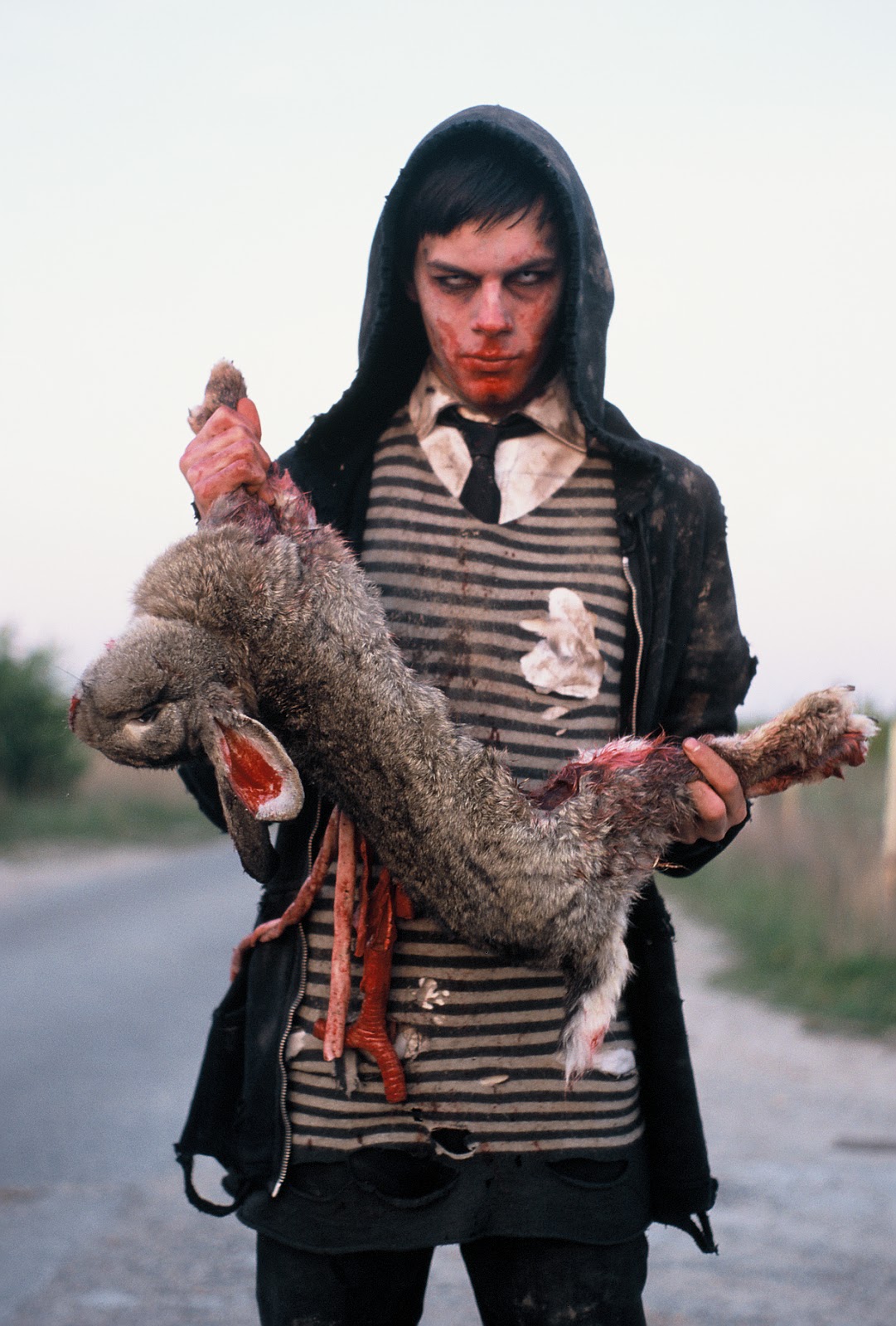


SS: You have directed a number of films that have been described as "art porn." Do you see any intrinsic similarities between pornography and arthouse films? What directors do you think were most successful in synthesizing the two?

BLB: Lately I've come to the conclusion that I don't think there really is or should be a distinction between art and pornography. Re-reading Camille Paglia's astounding book Sexual Personae, I remember now that she is in complete agreement. They are both mediations of reality made by creative people. The arthouse cinema that emerged in the sixties and seventies crossed over somewhat with the softcore porn genre, with films like Emmanuelle and Bilitus and the films of Jess Franco mixing with sexually perverse movies like Luna and The Tin Drum and Salo. And then porn filmmakers like Peter De Rome, Wakefield Poole, Fred Halsted, etc. were making very avant-garde porn films. Even Warhol made a sexually explicit film, Blue Movie, and Paul Morrissey's films were very sexually frank. That was the heyday.


SS: Do you believe that porn can make for potent political propaganda? Can you name any examples?

BLB: Only in the Godardian sense, i.e., sex is always political. That's one of the other reasons I made Skin Flick and The Raspberry Reich, which are both overtly political. I found it astounding that more people haven't used pornography as a tool of political propaganda. So many people watch porn that it would seem like the perfect means to spread a political message as widely as possible. Maybe it will happen some day...

SS: What are your thoughts on mainstream heterosexual actor James Franco directing a gay S&M flick like Interior. Leather Bar. (2013), a work inspired by the cut scenes of William Friedkin's Cruising (1980)?

BLB: Actually, Mr. Franco and I had already discussed making a super 8 remake of Cruising together before he made that film, but we couldn't get the rights to the script and the idea kind of fizzled. I haven't had a chance to see it, but I think people should make films about all sorts of sexuality and not box themselves into one category. It's all about not fixing your sexual identity or imagination.


SS: Your upcoming film Gerontophilia (2013) has already been described as the "gay Harold and Maude." What inspired you to direct this film and when can we expect it to be released?

BLB: Gerontophilia has a few references to Harold and Maude, a great film by a great director, but it also gives a nod to Lolita and One Flew Over the Cuckoo's Nest. Mostly I was trying to make a film with a seventies vibe, aesthetically and thematically. I see it in some modest ways as a kind of reverse Lolita. It will be done by the end of summer, when it will start playing at film festivals.

SS: What can we expect from you in the future?

BLB: Gerontophilia is my first film financed by larger funding bodies, my first union picture - in a sense, a film made more inside the film industry paradigm with a bit of a bigger budget for me. I think I've explored porn and guerrilla filmmaking quite a bit, so I would like to try make another industry film. I have a great script, if anyone is interested in co-producing. But I'll probably never give up the underground altogether. It's a freedom difficult to renounce.


For more on Bruce LaBruce and his films/projects, checkout his official website http://www.brucelabruce.com/
Tuesday, July 9, 2013

Mata Hari (1985)


Without question, executed Dutch spy Mata Hari was a social-climbing slut and real-life femme fatale whose talent for flesh-peddling and leading on men for her own personal gain not only led to her own premature demise, but also the inadvertent deaths of tens of thousands of soldiers due to her espionage work. Although essentially a big budget softcore flick disguised as a spy thriller and World War I period piece, Mata Hari (1985) does a passable job in portraying the life and death of a female spy whose hypnotic sensuality was more deleterious to Europa's military officers than any flying bullets. Directed by the late great Curtis Harrington (What's the Matter with Helen?, The Killing Kind) and produced by Cannon Films, as well as starring the delectable yet tragic Dutch whore Sylvia Kristel of Emmanuelle (in)famy in the role of a historical Dutch whore, Mata Hari is relatively sympathetic to its protagonist, if not portraying her than a less than ingenious exotic dancer whose rampant moral looseness and weakness for aristocratic gentlemen put her in a wayward and wanton web of deceit, degeneracy, and—eventually—death. A woman who grew up in a broken home and who married a Dutch Colonial Army Captain twenty years her senior living in the then Dutch East Indies (what is today Indonesia) at the mere age of 18 after reading the man’s ‘wife-wanted’ ad in a newspaper, which enabled her to socially climb to the Dutch Upper-class and live in relative financial privilege, Mata Hari (born Margaretha Geertruida Zelle) ultimately faced physical and emotional abuse from her husband (who kept a concubine), so she escaped to the wonderful world of xenophilia by studying Indonesian culture and customs, joined a local dance company, and de-Christianized herself “Mata Hari” (Indonesian for “sun” or literally “eye of the day”). After the death of her son under dubious circumstances relating to complications with syphilis (some believe that both of her children contracted the disease from their parents; others believe they were perniciously poisoned by a vengeful servant) and divorcing her husband, Mata Hari moved to Paris, France and dedicated her life to decadence and degeneracy as a so-called ‘artistic’ dancer, absurdly proclaiming to be an authentic Javanese princess and ultimately becoming the mistress of various wealthy industrialists, bluebloods, prominent military officers, and politicians. Essentially ignoring her entire back story before she became a celebrated dancer turned spy, Harrington’s Mata Hari is mainly held together via a fictitious bizarre romantic triangle between Mata Hari and two friends/military officers, French Georges Ladoux (ironically played by Swiss-German Oliver Tobias) and the German Karl von Bayerling (further ironically played by Occitan French Christopher Cazenove). Sort of like Jean Renoir’s anti-war masterpiece La Grande Illusion (1937) aka Grand Illusion meets Emmanuelle (1974), Mata Hari is softcore cinema with a couple campy shades of class that owes any ‘artistic’ merit it has to auteur Curtis Harrington’s exquisite, if not absurdly eroticized, direction. 


 Mata Hari (Sylvia Kristel) is a bisexual babe who will screw any and every handsome (and sometimes less than handsome) man in a military uniform and when she runs into brothers from different mothers, Georges Ladoux (Oliver Tobias), a dark-haired Frenchman and Karl von Bayerling (Christopher Cazenove), a blond-haired German, admiring Indonesian art at a Paris Museum in 1914, they inevitably form a threesome on opposing sides of the war effort after the Great War breaks out. Hari enjoys mystifying her own background, proudly proclaiming to her gentlemen callers, “They told me I was a predestined soul, dedicated to Shiva, god of the mysteries of love.” After boarding a train and spontaneously engaging with carnal knowledge with a ‘handsome traveler’ (Derek de Lint) who is absurdly killed during mid-coitus, horny Hari finds herself a murder suspect of sort, but is ultimately freed by her charming kraut boy toy von Bayerling, a classic gentleman and rare German Francophile who flirts with the exotic dancer with conspicuously cheesy lines like, “You remind me of Paris. Of everything that’s intriguing, innovative, different.” Unfortunately, von Bayerling’s frog friend seems to be a lesser gentleman, as he frames Mata Hari as an informant and declares she join the Allied spy effort after running into her in Paris again where she is performing a six-armed Goddess Kali act. Mata Hari also has the misfortune of being blackmailed by two crazy kraut villains, a certain ‘Fräulein Doktor’ (Gaye Brown)—a demented doctor of psychology and mastermind of German intelligence who is quite butch, to say the least—and her Svengali-like assistant Wolff (played by Fassbinder superstar/perennial villain Gottfried John). Of course, being a dainty ditz with big tits, Hari’s main motivation is attempting to go behind enemy lines disguised as a nurse and rescuing her Aryan charmer Captain von Bayerling after she learns he may have been hurt. In the process of her espionage escapades and sex-scapades, Mata Hari gets a number of fine young European men killed, but she almost makes up for it by thwarting an explosive Teutonic assassination plot masterminded by the nefarious Fräulein Doktor and her wolfish associate Wolff. Rather unfortunately, Mr. Ladoux catches Hari in a rather compromised situation where she is arrested for spying, given a show trial, and executed while her guilty French lover watches on. Possibly owing to Curtis Harrington’s homosexuality, friends-turned-enemies Karl von Bayerling and Georges Ladoux find reconciliation over the mutual melancholy as a result of Mata Hari's very public execution, proving the truism ‘bros before hoes’ can be classy when in the context of old school European military officers. 


In his posthumously released memoir Nice Guys Don't Work in Hollywood: The Adventures of an Aesthete in the Movie Business (2013), director Curtis Harrington wrote regarding Mata Hari, which was incidentally his last feature-length film, “I think it turned out well. One French reviewer even said something to the effect of, “Kristel shows acting talent in this film that we had not suspected she had.” As was the pattern with many of my feature films, Mata Hari was better received in Europe than in the United States.” And, indeed, with its anti-war message and fratricidal and anti-romantic characterization of World War I, relatively respectful portrayal of the European aristocracy, depiction of an orgy and a lesbian Ménage à trios, poetically stylized battle sequences and sex scenes (including a female masturbation scene that producers forced Harrington to add to the film), and adulation of a high-class hooker, it is easy to see why the average John Wayne-wannabe American filmgoer might not have taken too kindly to Mata Hari. As proven by the unsealing of formerly confidential German documents in the 1970s, the real-life Mata Hari was indeed a German spy and not simply a scapegoat whose ‘glamorous’ execution, to quote one of the French military characters in Harrington’s film, would simply “do wonders for the Army’s morale.”   Like the real-life Mata Hari, star Sylvia Kristel, who came from a broken home and was even molested as a child, was sexually exploited and thus would inevitably learn how to exploit her own body for personal gain.  While Ms. Kristel was far from the greatest actress in the world, she was certainly a great choice for Mata Hari, even if her performance is totally eclipsed by Greta Garbo's legend-creating performance in the pre-code Hollywood flick Mata Hari (1931) directed by George Fitzmaurice.  As Harrington wrote in his memoir, “Sylvia was a huge star in France, and her fans came out in droves.  These days Mata Hari enjoys a certain cult status among them, and maybe even a few fans of my own. I do believe I was able to add my touch to the proceedings.”  And, indeed, without Harrington's cultivated, if not compromised, direction, it is hard for me to imagine that I would enjoy Mata Hari as much as I do as a sort of lavish art-sploitation flick with a modest budget directed by an underrated auteur from a different era who was not a huge fan of Josef von Sternberg and friend of James Whale for nothing.  As Mata Hari demonstrates, if anyone could bring class to celluloid exploitation trash and glamor to a glorified porn star, it was Curtis Harrington.


-Ty E

Monday, July 8, 2013

Your Heart in My Head


The real-life true crime story of gay kraut cannibal Armin Meiwes—a man who butchered, killed, and ate a voluntary victim, including his penis, that he met on the internet—has inspired popular culture in a manner not seen in the miscegenation-based man-eating of American blond beast Jeffrey Dahmer, including the popular song “Mein Teil” (which reached second place in German music charts after its released) by Teutonic industrial group Rammstein and the title of untermensch American degenerate Marilyn Manson’s album Eat Me, Drink Me (2007) but, more importantly, it inspired a number of films, especially in the Fatherland. Undoubtedly, the most mainstream, totally worthless, and pathetically politically correct film based on the cannibal case is Grimm Love (2006) aka Rohtenburg, which was initially banned in Germany after Armin Meiwes complained the film infringed on his “personal rights.” Of course, the most brutal and aberrantly artsy cinematic take on the Meiwes case is the splatter-arthouse flick Cannibal (2006) directed by Marian Dora, a relentlessly unhinged piece of putrid, anti-politically correct poetry that was also banned in Deutschland that obsessively attempted to reconstruct the actual events that took place between the cannibal and the man whose cock he chomped on. Aside from possibly Fassbinder superstar Ulli Lommel’s Diary of a Cannibal (2007), a deplorable piece of digital diarrhea set in Los Angeles featuring a heterosexual flesh-eating couple as opposed to a homo one, Your Heart in My Head (2005) aka Dein Herz in meinem Hirn directed by hysterical homo-supremacist Rosa von Praunheim (Army of Lovers or Revolt of the Perverts, Horror Vacui) is the loosest and most fictitious take on the Armin Meiwes case. A no-budget digital work oftentimes shot from the perspective of the sexually aberrant anti-hero and his trusty camcorder, Your Heart in My Head is a crudely assembled piece of campy cannibal melodrama featuring two strikingly ugly and lethally lonely kraut cocksuckers who are too afraid to suck each other's cock yet ultimately find temporary solace and romantic companionship in vorarephilia, at least until one of the two men bleeds out and the other carries his decapitated head around like a little girl clutching a much cherished baby doll. A depressing and pathetic tale about two rather depressing and pathetic middle-aged men well past their prime who see dining on one another as the only way of finding ‘light’ in a world plagued by all-encompassing deadness, Your Heart in My Head has the grand distinction of being probably the only truly 'serious' gay cannibal melodrama ever made, which would have been probably better handled in Rainer Werner Fassbinder's hands were he still alive, but Rosa von Praunheim adds a certain fiercely faggy flare to the film that makes it undeniably entertaining, if not endearingly autistic and aesthetically obnoxious and even revolting. 


 Achim Grenz (Martin Molitor) is a divorced and unemployed middle-aged school teacher and neurotic Norman Bates-esque momma’s boy of the latently homosexual sort who has no one to talk to or confide in, so he talks to himself via camcorder. Unlike Armin Meiwes, who lived in a village in a large and dilapidated ancient home, Achim lives in a small suburban home in Spandau, Berlin, a place he lovingly describes as “the kingdom of the dead” that is full of “dead people, dead cars, dead streets, dead bushes…everything is dead.” Under the pretense of socializing over chess, Achim invites a high school teacher named Peter Mack (Martin Ontrop) to his house. Upon their first visit, Achim finds Peter’s behavior to be “a bit rough,” especially after he ironically describes the color his home as follows: “Doesn’t it make you think of a butcher shop and things like pigs cut in half, dripping?” Achim kicks Peter out, but later he comes back and apologizes, thus ushering in the beginning of their uniquely unhinged and mostly sexless romantic relationship. Achim likes Peter so much that he immediately introduces him to his overbearing yet disabled mother Anna Lisa (also played by Martin Molitor), who is clearly a lonely sexually repressed bitch who seems to be the source of her son’s innate passivity, misery, and sheer and utter lack of testicular fortitude. Although no friend of man’s best friend, Achim is given a dog named Gina by Peter. When Achim kills the canine, Peter locks him in his own basement but the door was never really locked and the deranged dog-slayer spends three entire days in a virtual domestic dungeon because he was too cowardly to even attempt to try and open the door. Seemingly trying in vain, Peter attempts every shady tactic he can think of, including physical and verbal violence, to make a man out of perennial cuckold Achim. As Peter tells Achim, “There’s nothing wrong with a craving for meat. Men need protein.” Despite his repulsion in regard to his cowardice, Peter remarks to Achim’s mother regarding her son, “I like him so much; I could eat him alive,” but, of course, the roles are ultimately reversed when the wimpy middle-aged untermensch finally develops enough gall to go more than balls deep. After pretending to castrate his own cock, Peter begins to show weakness in front of Achim after it is revealed that he is a homeless transient who has lot everything and is no longer a school teacher as he claimed, but just a perverted bum who likes to talk a lot of shit. Peter inevitably convinces Achim to cut off his peter and ultimately kill and eat him because he believes that “to be eaten is to be holy…to be revered...highly honored…” and being a homeless latent homo, he no longer has anything less to lose. After Peter chugs some liquor and takes some pills, Achim turns him into a eunuch and then a corpse and later decapitates and performs an amateur embalming of his body. After his own mother also dies due to his own neglect, Achim, who has gone through some warped ritualistic transformation due to his cannibalism, proudly declares to his camcorder, “At last I’m my own master. No carping mother, no dominating asshole friend.” With Peter’s guts in his formerly weak stomach and his head carefully placed in a cardboard box, Achim decides to take a fabulous trip down South, thus beginning his new life as a man with a sort of cannibalistic confidence that he did not have previously. 


 Probably even more so than the absurdly melodramatic Jeffrey Dahmer biopic Dahmer (2002) starring Jeremy Renner, Praunheim’s Your Heart in My Head dares the viewer to empathize with an exceedingly pathetic and lonely man who dares to eat the flesh of another man as a drastically desperate way to feel both ‘empowered’ and close to someone for the first time in his life. Undoubtedly one of the most melancholy yet strangely campy depictions of post-WWII Germany ever made, Your Heart in My Head certainly is quite effective, if not rather ridiculous for a no-budget flick with a humble home-video aesthetic that looks like it was shot over a mere weekend amongst friends. One must give director Rosa von Praunheim credit where credit is due as the film was condemned by conservative politicians from Armin Miewes' hometown, including Axel Wintermeyer, a Christian Democrat representative in the state parliament, who described Your Heart in My Head as “glorifying a perverse criminal” and stated that the film’s title is “hard to beat for tastelessness,” which is no small insult in a country where prostitution is legal and small sex toys are sold in coin machines in subway and bus stations. Originally advertised as a “mix of grotesque, thriller, and documentary... a gruesome comedy” by the North Rhine-Westphalia Film Institute, which partially funded the film to the disgust of many German taxpayers, Your Heart in My Head—a work that is essentially an autistic melodrama with a tinge of sexually sadistic splatter scenes—represents an all time low in terms of aesthetics in the land of thinkers and poets, but the Armin Miewes case is as well, as both reflect a spiritually sick nation longing for vitality. If Your Heart in My Head can be described as a ‘horror’ flick, it is only in the völkisch sense in its dreary depiction of modern urban Germany as a cultural graveyard of alienation and sexual perversion where physical and emotional ugliness is adulated. Indeed, it is no coincidence that anti-hero Achim describes his hometown as the “Kingdom of the Dead” and if an alpha-degenerate like auteur Rosa von Praunheim understands this, one can only speculate that the Fatherland has a truly forsaken future. 


-Ty E

Sunday, July 7, 2013

Reise nach Agatis


Indubitably transcending his fellow kraut countryman Jörg Buttgereit of Nekromantik (1987) fame in terms of carefully concocting the most unwaveringly subversive and extreme German arthouse horror flicks ever made, Marian Dora (Cannibal, Melancholie der Engel aka The Angel's Melancholia)—a mysterious man who has consistently cinematically depicted real-life animal killings, the most foully fetishistic sex, and unrelenting artsy fartsy and atmospheric drama to the point of receiving threats against his life—is also undoubtedly one of the most, if not the most, extreme and esoteric ‘horror’ filmmakers in the world and one of his most recent releases, the rather brief yet brutally beauteous Reise nach Agatis (2010) aka Voyage to Agatis, is certainly no exception in terms of its extremity. Described by Dora himself as a “not so personal” work in comparison to his vulgarian 'völkisch' epic Melancholie der Engel (2009) aka The Angel's Melancholia—a fiercely fetishistic, virtual cinematic ‘wild hunt’ of the foreboding and apocalyptic expression of the Teutonic soul featuring tributes to German New Cinema alpha-auteur Rainer Werner Fassbinder and the suicidal far-left terrorists of the Baader-Meinhof Group, as well as angelic pilgrimages to Auschwitz concentration camp—Reise nach Agatis is a much simpler piece of digital video derangement which seems to be a loose take on the director’s hero Ruggero Deodato’s early work Waves of Lust (1975), which itself is a take on Roman Polanski’s first feature-length film Knife in the Water (1962), meets The Most Dangerous Game. Shot on a beggar’s budget of an estimated €10,000 (around $14,900) in Croatia over May 27-29, 2008, Reise nach Agatis builds on what director Dora experimented with in his rather uneventful experimental short Carribean Sunrise, an aesthetically pleasing depiction of a voluptuous naked corpse of a woman laying on a beach during an ethereal sunup. A simultaneously cinéma vérité-like work with an oftentimes transcendental dreamlike quality, Reise nach Agatis brazenly blurs the line between natural beauty and the distinctive brutality and sexual sadism of man. Featuring shaved pussies and shriveled cocks, Hans Bellmer-esque dolls, the malicious mutilation of sea cucumbers, a malevolent Ménage à trois and one of the most boorish and innately sleazy alcohol-addled kraut characters to be featured in a film since the release of Steven Spielberg’s Schindler’s List (1993), Reise nach Agatis is an uncompromising celluloid vacation where bloodlusting vivisection of the manhunter sort proves to be the most potent antidote for a superlatively sadomasochistic couple whose relationship is on the rocks, both literally and figuratively. 


 During the first couple minutes of Reise nach Agatis we witness from the perspective of an unseen killer a somewhat pretty yet also somewhat homely and swarthy young woman going from being a lonely tourist to a naked piece of hysterical human prey who is slaughtered on the beach as her blood poetically dissolves in waves with the tide. Clearly dead as a day old Negro, the film cuts to solacing scenes of grotesque baby dolls submerged in the ocean set to the score of slightly somber jewelry box-like music. From there, the film takes an almost home-video-like feel when it introduces the two anti-heroes, lunatic lovers Rafael (Thomas Goersch) and Isabell (Tatjana Mueller), who are taking a much needed holiday trip to the beach. It is quite clear from the get go that the two middle-aged lovebirds are having relationship problems as Rafael drinks liquor like a McKraut fish and Isabell does not waste any time bitching to her bad-mannered dipsomaniac beau about his seemingly vicious vice during a scenic drive through the country. Rafael and Isabell eventually reach a bourgeoisie café around nighttime and run into a pedomorphic Slavic chick named Lisa (Janna Lisa Dombrowsky), whose sheer lack of pubic hair on her un-bearded clam, which is featured bare throughout Reise nach Agatis, falls in line with the paradoxical virgin-whore doll and ‘destruction of purity’ themes that run throughout the film. After attempting to ‘sell’ his woman to men at the café, Rafael pseudo-suavely confronts Lisa and tells her how Isabell is “a bit complicated” but “fucks good.” Sleazy swine Rafael must have something going on for him in terms of charisma, as Lisa agrees to join him and Isabell on a sailing trip on their yacht. In a reversal of gender roles from Polanski’s Knife in the Water, Lisa and Isabell ultimately vie for the sexual attention of the seemingly psychopathic pig Rafael, a megalomaniac of a mensch who sports an undecorated German officer’s uniform to distinguish himself as the captain of his rather small ship. 


 While Rafael tells little blonde babe Lisa that her “decision was just the right one” in terms of sailing with the couple, little does she realize that the captain is a deleteriously domineering sadist who will not take “no” for an answer, especially when it comes to a woman and the sanctity of her own body. Of course, as someone who incessantly flaunts her nubile young body at a homicidal horndog of a man and his discernibly jealous romantic partner, she is just asking for trouble and, indeed, trouble she receives. With the discovery of a corpse-like baby doll in the sea and foretelling of a terrible fate via tarot cards, including the “Five of Cups,” which typically reflects perennial melancholy over past events (while not appreciating what one still has), and the Devil tarot, which typically reflects being shackled to an unhealthy addiction to earthly desires, Reise nach Agatis goes from being a bargain bin Duran Duran video to an ominous oceanic bottomless pit of torture and sadism. After a horrible dinner that results in Rafael throwing wine in the bitchy babe’s face and Isabell physically assaulting Lisa, the tables are turned for the cutesy cocktease, who is not only physically forced to strip by the crazy captain, but also thrown overboard with all of her belongings—purse, panties, and all—which are inevitably lost at sea. Not merely content with brutally assaulting Lisa and throwing away all of her belongings, Rafael ties her au naturel body to his boat and rapes her shortly after, but not before spitting the blood and guts of a sea cucumber he had just caught and dismembered into the sad Slavic girl's mouth. More horny and hysterical than the honeymoon killers, Rafael and Isabell receive mutual sexual ecstasy while torturing Lisa, especially when the man in the relationship does the involuntary manhandling while his lunatic old lady watches. Ultimately, Rafael is a hunter and Isabell is a voyeur, so when the two decide to let Lisa go on an island, it is the man who takes care of business in the form of knife-to-vagina mutilation that results in the young girl’s bloody and fecal-following disembowelment. 


 During a couple scenes throughout Reise nach Agatis, a vintage black-and-white portrait picture of the unnamed dark-haired girl that was brutally butchered on a beach at the beginning of the film is glanced at by maniac murderer Rafael with love and affection, thus hinting that she was his daughter/lover and that his lust for youthful female flesh and blood is the result of not getting over the girl’s death as a victim turned victimizer. With the film’s reference to the Devil Tarot card, a symbol of self-bondage to an unhealthy idea and/or fixation that prevents one from living a healthy life, which Rafael certainly does as an alcoholic murder who still longs for a dead girl, Reise nach Agatis is ultimately a film about a wayward sort of ‘redemption’ via genital mutilation and murder. Rather ridiculously, after Rafael guts Lisa like a pig, he and his lover Isabell, who only have resentful disdain for one another throughout most of the film (Rafael even gives Lisa the opportunity to kill Isabell), lovingly embrace and seem to settle the differences and start a new beginning at the conclusion of Reise nach Agatis, thus one could argue the film concludes on a rather happy and positive note, heavenly and angelic sky and all, at least as far as a Marion Dora film is concerned. Although easily his‘most accessible’ and least unwaveringly grotesque effort to date, Reise nach Agatis is still pure and unadulterated Marian Dora in short but sadistically sweet form. A literally gut-wrenching work with a discernibly discordant moral compass, Reise nach Agatis is so-called ‘torture porn’ with a brain in Dogme 95 style that portrays decidedly deranged individuals who no longer have the same mental processes as the rest of humanity as hopelessly tainted individuals whose only source of solace is from the suffering of others so as to dull their own suffering. A filmmaker who has referenced great Teutonic romantic poets and thinkers like Johann Wolfgang von Goethe, Georg Büchner, and Eduard Mörike, as well as great modern kraut cultural creators like Wolfgang Koeppen and Rainer Werner Fassbinder, Reise nach Agatis is undoubtedly a work that aspires to be a reflection, if not a rather unflattering one, of the German collective unconscious just as it strives to be one of the most aesthetically pernicious yet poetic horror flicks ever made. And, indeed, while it is somewhat dubious whether Dora achieves what he sets out to accomplish (I certainly feel it does, at least to some notable yet nauseating degree), it is nothing short of indisputable that Reise nach Agatis is a piece of erratic emotional excess and audacious anti-entertainment of the Hollywood-free variety that initially sets up the viewer for a lovely scenic sail that transforms into an aesthetically entrancing psychodrama of inhumanity wherein the viewer becomes a metaphysical accomplice to murderous misogyny, which will certainly be no small cinematic task for the typical Spielberg-lobotomized filmgoer, but it is undoubtedly a rewarding one. 


-Ty E

Saturday, July 6, 2013

Usher


Beginning his eclectic life in subtextual Poe-esque cultish camp horror with the black-and-white 8mm short The Fall of the House of Usher (1942), a work based on the 1839 Edgar Allan Poe short story of the same name that the director created in high school at the youthful age of 14 and would later describe as mere “juvenalia” but would set the tone for all of his work to come, criminally underrated American auteur Curtis Harrington (How Awful About Allan, What's the Matter with Helen?) would conclude his unparalleled filmmaking career by coming full circle with Usher (2002), a less than 40 minute remake of the very story he adapted as a teenager. In his unfinished, posthumously released memoir Nice Guys Don't Work in Hollywood: The Adventures of an Aesthete in the Movie Business (2013), Harrington describes the influence of Poe’s short story as follows, “”The Fall of the House of Usher” was the story that gripped me, held me in thrall as no other story ever had. By the end of it, I was almost gasping for breath and leapt from my chair in an attempt to relieve the pressure on my brain. The horror of the story’s final revelation of the returned corpse totally engulfed my mind and senses. My memory was seared with it, leaving a scar that I would never lose. It was as if I had discovered my soul mate in the world of literature.” And, indeed, as a personal friend and collaborator of cine-magickian/Crowleyite Kenneth Anger who was responsible for some of the cinematography in Puce Moment (1953) and played the character of somnambulist Cesare from the German expressionist masterpiece The Cabinet of Dr. Caligari (1920) in Inauguration of the Pleasure Dome (1954), as well as documenting the art of Thelemite and ‘Scarlet Woman’ Marjorie Cameron (who later appeared in Harrington’s first feature-length film Night Tide (1961) as a 'Water Witch') in the short documentary The Wormwood Star (1956), among various other occult connections and directing occult themed films, Curtis Harrington was certainly someone who had found solace in the darkness and Usher is certainly no exception to his life of glistening in the shadows. Partially founded by the brokering of his signed copy of Aleister Crowley’s The Book of Thoth : A Short Essay on the Tarot of the Egyptians by ex-Church of Satan members/occultist Zeena (daughter of CoS founder Anton LaVey) and Nikolas Schreck, Usher was Harrington’s first film in nearly two decades since directing the quasi-skinflick Mata Hari (1985) starring Sylvia ‘Emmanuelle’ Kristel and produced by Menahem Golan after suffering a lifetime of having his cinematic works be deleteriously defiled and butchered by sociopathic Hollywood producers and studios, thus the final celluloid work also acts as his last pure artistic statement. Like his original 1942 adaptation of The Fall of the House of Usher, Usher features Harrington playing both leads as the twin anti-heroes, including in drag as Madeline Usher, thereupon expressing his innate ‘femininity’ and homosexuality, a theme he embraced in a similarly macabre manner with his phantasmagorical avant-garde surrealist horror short Fragment of Seeking (1946). 


 In Usher, elderly poet twins Roderick and Madeline Usher are certainly the celluloid alter-egos of Curtis Harrington, a filmmaker figuratively taking his last gasp in cinematic form via the poetic deaths of the two siblings who share the same dark soul. Indeed, one could even look at Usher as one of the most lavish and dark home-movies ever made as Harrington shot it in his own strikingly elegant, if not seemingly melancholy, antique and fine art adorned Gothic home, and even counted on his own friends to star in and help create the virtual 35mm obituary. Roger Corman, who directed the most famous cinematic adaptation of The Fall of the House of Usher, House of Usher (1960) and who assigned Harrington to direct Voyage to the Prehistoric Planet (1965) and Queen of Blood (1966), also provided insurance that was needed to shoot in eerie Rosedale Cemetery in Los Angeles for Usher. Featuring a naïve young poet named Truman Jones (Sean Nepita) who has the honor of being invited to the House of Usher mansion to be schooled in life and all its dark crevices and corners and not the sort of pseudo-knowledge taught by reading a bunch of flowery poetry, Usher is a film directed by a sweet and generous, if not ominous old-timer who no longer understands the world he lives in, thus he escaped to the dreadful dream world where the only certainty in life is misery and inevitable loss of said life. Picked up by the Usher Twins’ French chauffeur/butler Pierre (Fabrice Uzan), pansy-like protagonist Truman Jones enters the home and life of his dark yet gentlemanly mentor Roderick Usher with almost childish apprehension and naivety. Roderick lets Jones know that he is “not a teacher” but “simply a poet and perhaps not a very good one at that” and that poetry is from the heart, which the artist himself can only know and fully discover and integrate into their work. Jones’ first encounter with Roderick’s sister Madeline is a rather anti-social one as she does not even acknowledge him as she is apparently in ill health. A true gentleman through and through, Roderick entertains his guest by sharing lunch and wine, playing chess, walking around his pet Rottweiler Lucifer, and messing around with an Ouija board. Naturally, Jones is intrigued by the rather reclusive Madeline and one day she does comes by for some outdoor tea with the guest and her twin brother and the siblings discuss poetry, including their critical agreements on the ‘dry’ scribblings of T.S. Eliot, how W. H. Auden will be nothing more than a footnote in a century, and how “above all, there is Reverdy…possibly the greatest poetry of the twentieth century.” Curtis Harrington, a man who learned French while living in Europe during his early adult years, displays his disdain for the idea of poetry being translated when Madeline Usher pretentiously remarks, “when the words are changed, the poem vanishes.”  And, indeed, the same occurred with the butchering of his films like The Killing Kind (1973) and Ruby (1977) by sinister Svengali producers, which also lead to the partial vanishing of Curtis Harrington's auteur signature as a celluloid poet, which is undoubtedly the most horrific thing to consider when watching his films.


Apparently terminally ill, Roderick Usher tells Jones regarding his twin sister that “The doctor gives her no hope and I’m absolutely terrified.” Unfortunately, it is during their mutual birthday party featuring guests in the spirit of James Whale's The Old Dark House (1932)—a film that Curtis Harrington saved from being lost forever—that signals the beginning of the end for the Usher twins. Featuring a number of idiosyncratic party guests, including a priest (ironically played by ex-Satanist Nikolas Schreck), a doctor, a butch blonde lesbian poetess (Zeena Schreck, daughter and 'magical killer' of Church of Satan founder Anton LaVey), and a couple bloated bluebloods, the birthday party begins merrily with wine and party masks, but apparently Madeline drinks a bit too much aged booze for her age and randomly tragicomedically drops dead during an initially happy dance with the ever so patronizing Mr. Jones. Rather oddly, Roderick initially seems quite youthful and even ecstatic after his dear sister croaks as if he has forgotten they both share the same blackened soul, but then, as Jones states, came that “last night.” On Jones’ last evening at the House of Usher, he receives a spooky telephone call from the ghost of Madeline stating, “Tell Roderick I will be seeing him soon,” and, sure enough, she does and comes adorned with rotten corpse-like flesh and remarkably dainty skeletal hands. A terribly stormy night, Roderick initially wallows in the witchy weather while playing discordant melodies madly on his beloved piano, but Madeline has come back to collect her brother and Jones learns the rather unfortunate truth that the two eccentric elderly twins share not only the same taste in poets and aesthetics, but also the same saturnine soul. After she enters the less than humble Usher abode, Madeline angrily accuses Roderick of burying her alive, but the two ultimately reconcile by sharing a big quasi-incestuous kiss, lips to skull, and are thereupon united for eternity with the forlorn brother's necessary death. Naturally, Mr. Jones leaves the house with the sunrise, but it is doubtful whether or not he learned anything about poetry, aside that one cannot fake what is innate, especially when it comes to the perennially disheartened hearts of the Ushers, who lived as gloomily yet paradoxically merrily and poetically as they would die as damned yet dandy demon seeds as living and breathing Jungian anima/animus archetypes.  Undoubtedly, director Curtis Harrington did not decide to portray both Roderick and Madeline Usher for no reason as they act as allegorical metaphysical reflections of his own sexually ambiguous and internally cadaverous soul.


A true ‘auteur’ piece summing up the dark, foreboding, and transcendental thread that defines director Curtis Harrington’s entire career as an experimental avant-garde filmmmaker turned cult horror master, Usher is certainly a work that will be most appreciated by those already rather familiar with the filmmaker’s oeuvre as the final expression of a man who lived and breathed movies, especially of the absurdly melodramatic campy horror variety.  Featuring visual and verbal references to Harrington's favorite artists, including the painting "The Kiss" (1907-08) by Austrian symbolist painter Gustav Klimt and the genius of French proto-surrealist/cubist poet Pierre Reverdy, Usher is also a tribute to the aesthetic ingredients that inspired Curtis Harrington to get up in the morning and become one of the most subtly cultivated cinematic artists of the typically artless and uniquely unrefined horror genre. Indeed, considering the desperate poverty-budget circumstances the film was made under, Usher is truly the last testament of an auteur filmmaker whose dreams were too big and idiosyncratic for the likes of the monetary-inclined culture-distorters of Hollywood, yet whose artistic spirit still managed to prevail in the end with one last work of conspicuously campy and creepy celluloid poetry. Compared to his first film The Fall of the House of Usher (1942), which was recently released for the first time on The Curtis Harrington Short Film Collection DVD/Blu-ray combo put out by Flicker Alley, Usher, like great wine (incidentally, Harrington’s favorite choice of drink), is the finespun product of maturity and purity. Thankfully, Curtis Harrington died happy knowing that he was able to create one last film free from the constraints of petty producers, writing in his memoir regarding Usher, “I was thrilled with the results. It was, indeed, the film I had intended to make. Nobody had told me what script to write, what scenes to shoot, or how it should be cut. It was truly an heir to my early films.”   


 A man who lived when films were actually shot on film as opposed to schlocky and seemingly soulless digital, Harrington also remarked at the conclusion of his memoir regarding the dubious future of film, “Just as the development of sound-on-film technology doomed the silent film as a creative medium, now digitization will doom film itself.  It is as if the painter's traditional pigments have been replaced by artificial colors that could never match the qualities that made older paintings great.  Films can be reproduced on television, or made with digital technology, but a real film is in the magic of refracted light on a screen, of moving shadows.”  Ironically, most people interested in seeing Usher, as well as Harrington's other elegant work of horror, will have to settle for digital viewing via DVD/Blu-ray, which is a small price to pay to experience the works of a celluloid spiritual son of Edgar Allan Poe, a protege of avant-garde filmmaker/voodoo priestess Maya Deren (Meshes of the Afternoon, Divine Horsemen: The Living Gods of Haiti) and Roger Corman, a personal friend/collaborator of Kenneth Anger, and one of the oh so very few aesthete-minded filmmakers who ever worked in Hollywood and the horror genre.  A celluloid swansong from the soul about twins that share one soul directed by a man with a rather conflicted soul, Usher is, as described by personally by Curtis Harrington via his alter-ego Roderick Usher, the product of a macabre mind that had to admit that “I have been suffering from a certain morbidness of the mind. I’m tormented by images of the conqueror worm devouring flesh…That flesh that once gave so much pleasure.”


-Ty E

Wednesday, July 3, 2013

Ruby (1977)


While the majority of experimental avant-garde auteur turned occult-inclined cult director Curtis Harrington’s films were either senselessly butchered by studios and/or some sort of pompous prick of a producer, virtually every one of these tragically tainted films, including Ruby (1977)—a more than worthy rip-off of The Exorcist (1973) that features a seamlessly assembled hodgepodge of conventions from horror, thriller, film noir, Golden Age Hollywood melodrama, and gangster films, as well as a comforting dose of camp—make for singularly pleasurable experiences, sort of like Twilight Zone episodes on steroids, except all the more sinisterly sardonic. In fact, despite being one of the highest grossing independent films of its time before the release of John Carpenter’s iconic slasher flick Halloween (1978), Harrington ultimately abandoned his authorship of Ruby by going to the Directors Guild and having the director’s name credited as “Alan Smithee” because not only did writer/executive producer Steve Krantz (producer of Fritz the Cat, Cooley High) change the ending against the director’s will (which Harrington and star Piper Laurie refused to re-shoot, so C-grade horror hack Stephanie Rothman did the dirty job), but also released a bastardized version of the film for television missing the best violence scenes, which were replaced with an apparently pointless subplot involving two characters that were nothing more than extras in the original theatrical release of the film. Luckily, about a decade ago, VCI Video released a DVD of Ruby that would amount to the closest thing to a director’s cut (it is actually the original theatrical version that unfortunately features Krantz’s conspicuously crappy ‘horror’ ending as Harrington's original poetic ending was permanently lost), at least as far as Harrington’s original vision was concerned. As someone who never understand the seemingly hysterical hype surrounding The Exorcist (what is so strange about a Hollywood Hebrew directing an ostensibly ‘Catholic’ themed film about demonic possession?!), I was not particularly irked to find out that conman screenwriter Krantz penned Ruby with the rather blatant intention of cashing in on Friedkin’s rather overrated yet undeniably financially successful flick, as auteur Harrington managed to turn it into his own idiosyncratic, if not blurred, vision, considering the artistically restraining circumstances. A reflexive movie set in a drive-in made for drive-ins, Ruby can no longer be experienced the way it was meant to be considering the almost complete extermination of outdoor movie theaters, but like Demons (1985) directed by Lamberto Bava, Harrington’s creepy camp horror-noir hybrid makes for the next best thing as a potent, albeit discernibly flawed, piece of nightmare nostalgia, featuring burnout gangsters being strangled by film reels and hanged from giant drive-in movie screens, among other silly yet strangely charming Harrington-esque scenarios. 


 As phantasmagorically depicted during the opening scene of Ruby set in rural Florida during 1935, sleazy yet suave gangster Nicky Rocco (Sal Vecchio) was gunned down by his gang members while in the middle of a romantic night of swamp-side wine drinking with his pretty and pregnant gun-moll Ruby Claire (Piper Laurie of Carrie (1976) and David Lynch’s Twin Peaks (1990-1991)). Apparently, the head mafia boss Jake Miller (Fred Kohler Jr.) did not take kindly to the fact that Nicky was an ambitious young who also loved Ruby, the Dietrich-esque Jazz singer. While gasping his last breath, Nicky, like any self-respecting Guido career thug, vows bloodthirsty revenge and he will ultimately use his unborn daughter to carry out his special Sicilian blend of supernatural vengeance. Flash forward 16 years later to the year 1951 and Ruby is a has-been diva who now makes her living owning/running a drive-in movie theater that anachronistically plays B movies like Attack of the 50 Foot Woman (1958). Despite the fact they all played a part in killing her great love Nicky, Ruby has employed all the members of the mafia gang, who have just gotten out of jail after serving lengthy prison sentences, to run the drive-in theater for the delight of a bunch of local yokel hicks in a rather socially absurd manner totally at odds with cinematic genre conventions. Ruby also has a steady relationship with sensitive yet stoic mafia man Vince Kemper (Stuart Whitman), who helped raise her and Nicky’s 16-year-old daughter Leslie (Janit Baldwin), a mute bug-eyed girl of the seemingly autistic sort. Leslie’s lack of character and inability to speak is more than made up by the fact that she is a medium who can have spirits enter her body, but, rather unfortunately, her deceased dago daddy is a deranged fellow who is about to bring death to his ex-compatriots via his sensitive spawn. 


 After a couple gang members are brutally murdered in a ritualistic fashion, it does not take long for Ruby and Vince, who dump their friends’ corpses into a river to avoid pesky policemen, to realize that Nicky is making good on his promise of spiteful spectral necro-slaughter. In the hope of stopping all the spooky slayings occurring around the theater, Vince has his parapsychologist friend Dr. Paul Keller (Roger Davis of Harrington's TV-movie Killer Bees (1974), as well as Dark Shadows) see ‘what’s the matter with Leslie’ and determine if it really is the Guido ghost of Nicky who is responsible for the mysterious killings that have plagued the quaint Florida drive-in. Not long after Nicky enters his daughter Leslie’s body and beats up Ruby after accusing her of setting him up at the time of his barbaric death, but, in reality, the little lady never committed treachery against her lover, but instead, inevitably got sadistic revenge against Jake, the jilted lover and the mastermind of the mobster-on-mobster mob hit. After Nicky’s archenemy Jake, who is now blind and wheelchair-bound and no longer a powerful Mafioso Don, rolls into the room dead with a knife symbolically pierced through his heart, Ruby reveals to Doc Keller that she avenged her perished lover’s death by gouging out the eyes of the man who ordered the hit of her man. After using his daughter’s body to levitate and perform telekinetic murders, Nicky ultimately convinces Ruby, who is more than willing, to meet him at the scenic swamp where he was killed. In one of the cheapest, most tasteless, and absurdly anti-climatic tacked-on endings in horror history, Nicky’s skeleton, which resembles the cheap sort of plastic Halloween decoration you find at Wal-Mart, pulls Ruby under water, thus reuniting them for eternity. 


 Like virtually any Curtis Harrington film, Ruby is big on atmospheric and morbid yet merry dark humor and, as the director described in his memoirs, “the film has found an admiring audience in Europe, and every once in a while, I meet someone who considers it one of my best films.” Indeed, as someone who has become quite disillusioned with the horror genre, I find that Ruby—with its quasi-campy imagery and persuasion, cause-and-effect period piece setting, sweetly sadistic diva anti-hero, and nonchalant mutilation of genre conventions—makes for a much better way to waste 90 minutes or so than watching any of the films from the Friday the 13th series or even The Exorcist. Although Curtis Harrington would go so far as admitting that directing Ruby would prove to be “the most nightmarish experience” of his career and that he gets “very angry” anytime he re-watches it, the filmmaker’s auteur signature bleeds beauteously a number of times throughout the work to distinguish it among the totally trashy exploitation trash that it is associated with. In terms of comparable works, Ruby is to Harrington’s oeuvre what Touch of Evil (1958) is to Orson Welles, Caligula (1979) is to Tinto Brass, and Wild Side (1995) is to Donald Cammell, as a cinematic work ravaged by corrupt and uncultivated producers who sacrifice cinematic greatness for the quite dubious gamble of a hefty monetary return.   Describing the producer who raped the soul of his film “both evil and stubborn,” Curtis Harrington was just one of many tragic victims of an industry that strives to create philistinic products for the peasant masses as opposed to cinema culture for the cultivated and would-be-cultivated.  That being said, Ruby, ironically the director's most commercially successful film, will undoubtedly be most appreciated by those that already appreciate Curtis Harrington films, but will probably seem like a sort of ‘The Exorcists for Grandparents’ due to its nods to film noir, old school gangster flicks, classic Hollywood melodramas, and other films of yesteryear.


-Ty E

Monday, July 1, 2013

Invisible Adversaries


Undoubtedly, arthouse sci-fi-horror flicks of the feminist alien invasion sort are not exactly the most popular subgenre, but if someone were to create such an innately ridiculous work, Uncle Adolf’s homeland of Austria would probably be the right place for such a seemingly idiotical and inanely idiosyncratic film as the ethno-masochistic birth place of Viennese Actionism and the static and nihilistic anti-völkisch celluloid sermons of German-Austrian Michael Haneke (Time of the Wolf, The White Ribbon). Indeed, Austrian feminist auteur Valie Export (Menschenfrauen, Die Praxis der Liebe aka The Practice of Love) directed such an anti-climatic science fiction work as her debut feature-length film entitled Unsichtbare Gegner (1977) aka Invisible Adversaries, a film about an undainty and somewhat deranged feminist artist suffering from schizophrenia who, on top of facing romance troubles with her equally left-wing yet unloving boyfriend, believes extremely aggressive space aliens known as ‘Hyksos’ have invaded earth and the bodies of humans in a pernicious plot to destroy the world. Directed by an associate of the Viennese Actionist movement who de-christened herself “Valie Export” in tribute to her favorite cigarettes and in anti-tribute to her father and husband or as she once explained herself, “I did not want to have the name of my father [Lehner] any longer, nor that of my former husband Hollinger. My idea was to export from my 'outside' (heraus) and also export, from that port. The cigarette package was from a design and style that I could use, but it was not the inspiration,” Invisible Adversaries is a vaginally-charged celluloid collage utilizing various artistic mediums, including video, still photographs, radio broadcasts, etc. of the fiercely feminized and foully fetishistic variety that is clearly aesthetically and thematically inspired by commie frog Jean-Luc Godard in its minimalism and cliché far-left politics. A woman who thought flashing her own and other women’s bushy beavers around in various Actionist-inspired films and public performances (including infamously entering a Munich art cinema wearing crotch-less pants), as well as allowing strangers to touch her breasts through a curtained box which she documented with her 1 minute short Touch Cinema (1968), would prove how absolutely liberated she was from the Aryan patriarchy, Valie Export, much like her Austrian and German feminist compatriots, rather ridiculously thought she could battle the supposed still lingering taint of female complacency of her mother’s generation during the Third Reich and with Invisible Adversaries, she seemingly unconsciously associates feminism with mental illness by way of a character whose growing contempt for men and the ghost of National Socialism is only transcended by her mental illness. That being said, Invisible Adversaries only works today as an accidental comedy (although the film does feature some scenes of intentional comedy, but it is just not nearly as effective) of the terribly dry and absurdly pretentious sort due to its Godard-esque minimalistic direction and set-design and lack of special effects, as well its innately inane diatribes against authority, patriarchy, Nazism, and the apparently black “Vienna heart.” The sort of soulless celluloid work created by dead souls for dead souls from a disenfranchised generation that self-righteously blamed their National Socialist parents for their own cultural disillusionment and self-hatred, Invisible Adversaries is just one of the many cinematic reasons why ethno-masochism and Frankfurt school intellectual swill have degenerated Europa into the uncultivated and cultureless corpse it is today.  Indeed, if anything, Invisible Adversaries is a sort of artsy fartsy celluloid suicide note that declares in a rather debauched manner the death of traditional Austrian kultur and community.


 As one learns during an off-screen and imaginary broadcast at the beginning of Invisible Adversaries, “An invisible power…An important announcement…Population…As we’ve just learnt…well-founded suspicion…An invisible adversary…a foreign, perhaps otherworldly power…An invisible enemy occupied the town and transformed people.” These supposed ‘invisible adversaries’ are known as Hyksos and are “hardly distinguishable from real humans” and “anyone could already be a Hyksos,” which strikes fear, paranoia, and self-subjected isolation in a female artist suffering from schizophrenia named Anna (played by Susanne Widl, who also starred in Export’s Menschenfrauen (1980) and the segment “lust” of the feminist omnibus film Seven Women, Seven Sins (1986)). On top of worry about the anti-human Hyksos threat, Anna and her intellectually pedantic pseudo-revolutionary boyfriend Peter (played by degenerate far-left artist Peter Weibel) obsess over Vienna’s ostensibly crypto-Nazi government and authoritarian police who, among others things, masturbate in front of a mirror in public in a scene director auteur Export must have felt was an ingenious and rather arousing allegory for patriarchal narcissism and whatnot. To prove his commitment to the anti-fascist commie cause, Herr Peter senselessly argues with a cop and is issued a citation as he proudly claims to his girlfriend Anna that he is willing to pay anything for “freedom of expression,” even if it proves to be a rather impotent, idiotic, and unrewarding display of individualism on his part. When not arguing with Anna via mundane mental masturbation, Peter playfully rubs his head on Anna’s vagina and rectum, remarking afterwards that “my hair stinks. I have to wash it.”


 A postmodern rebel without an organic artistic cause, Anna spends her time defiling traditional European art history by making aesthetically vulgar collages using classic paintings and magazine advertisement clippings, but also by making photocopies of her own vagina and looking at pictures of naked prepubescent boys and deformed children. In a rather vulgar display of penis envy (or what director Export probably absurdly believes is the opposite), Anna also cuts off her pubic hair and glues it to her face so as to create a mustache. Displaying her disgust at the idea of being a domestic housewife, Anna also cuts (or at least imagines so) turtles, beetles (which, to the dismay of modern vegan leftists, were exterminated for the sake of Export’s film), fish, and parakeets with a kitchen knife. In a relationship with a girly and bitchy untermensch who, although he shares her anti-authoritarian political beliefs and ‘liberated’ counter-culture views on sexuality, firmly believes “women are parasites,” Anna naturally has a number of fights with boyfriend Peter, which inevitably results in the severance of their sterile and less than steamy love affair of pubic hair sniffing, thus throwing the little lady in a deeper abyss of paranoia and fear of Hyksos, including the belief that an alien doppelganger is trying to snuff her out, but luckily she meets a female video artist and is introduced to the vaginally stimulating films of feminist documentarian Helke Sander (Break the Power of the Manipulators, The Trouble with Love), which gives her a false sense of empowerment in the face of her failed relationship and mental illness. Of course, being constantly blitzkrieged by news about the war in Vietnam, persecution of barbarian towelheads by Israeli Zionists (whose founder Theodor Herzl was inspired by the Jew-hating in Vienna), and Austria’s supposed crypto-fascism (unlike the kraut, the Austrians were never 'de-Nazified' by the Allies), Anna is ultimately more a victim of the media than some sort of imaginary alien menace. Personally, I think Anna, like virtually all of the degenerate artists of her disillusioned and born-defeated and guilt-ridden degenerate generation would not be suffering the mental illness that has totally consumed her if her Uncle Adolf won the Second World War. That being said, I do not think it is a stretch to say that Invisible Adversaries is the cultural symptom of a defeated people that is no longer able to take pride in their nation’s kultur, so they react relatively ridiculously by destroying said culture and making assholes of themselves by creating ugly films about ugly people doing ugly things. 


 At various points in Invisible Adversaries, a number of seemingly random yet thematically imperative references are made to Austria’s naughty National Socialist past, including in the first couple minutes of the film when a radio announcer states: “Moscow – Vienna. The Soviet News Agency TASS accused the Austrian Radio of serving the goals of fascist propaganda. The fact that former Hitlerite colonel Rudel could appear on T.V. must be seen as Part of the re-activation of neo-Nazi elements and anti-Semitic tendencies. Whilst in a recent T.V. discussion Henriette von Schirach, widow of the former Hitler Youth Leader, was given screen time for fascist propaganda,” thus underscoring the pathetic manner in which Austrians were expected to disavow their past history and heroes, which auteur Valie Export does with self-flagellating glee. In fact, Export goes so far as attacking all of mainstream Austrian cinema (as well as the Austrian collective with it), especially the dreaded nostalgic “Heimatfilm,” with the following nation-negating narration during Invisible Adversaries: “From 1939-45 Austria produced revoltingly sickly, dishonest films, known typically as “Viennese films”, and the elite of the Burg Theatre acted them. The same crew produced after the war the popular country and folklore films. This smooth transition from Nazi Austria to the 2nd Republic is typical of the hypocritical mentality of the country.” 


 Oftentimes described as a sort of feminist version of Invasion of the Body Snatchers, Invisible Adversaries can probably be better seen as the uniquely ugly manifestation of a lost generation of Austrian women who blame Austrian men for both the loss of the Second World War and national dignity and thus have lashed out in a seemingly nonsensical manner of wavering their unclad twats as a way to prove they no longer need a mensch to survive in this world. Ironically, protagonist Anna of Invisible Adversaries is most perturbed by her supposed alien doppelganger, thus demonstrating an intrinsic fear of herself, as well as herself being her own worst enemy, a fate that many feminists seem to suffer from, yet ultimately assign men the blame for. Aside from her early shorts like Mann & Frau & Animal (1973) aka Man & Woman & Animal, which features a woman masturbating in a bathtub as well as a nasty case of what seems to be a vaginitis on a putrid pussy and a rather gory case of menstrual blood flowing out of a gash, Invisible Adversaries is indubitably Export’s most artistically subversive and least banal work, which I guess does not say much considering the unspectacular nature of her cinematic oeuvre as a whole, but at least the film kept me moderately entertained, if not for all the wrongs reasons, the two times I viewed it. A less than wonderfully wanton window into the post-WWII Austrian female (feminist) psyche, as well as an accidental deconstruction of the Aryan feminist mind in a state of seeming panic, Invisible Adversaries is not only probably the best introduction to Valie Export’s art (be it film or otherwise), but also Austrian/German feminist film in general.  If nothing else, Invisible Adversaries will make it quite clear there has never been a skyscraper in the shape of a penis flytrap.


-Ty E