Thursday, August 8, 2013

That Cold Day in the Park


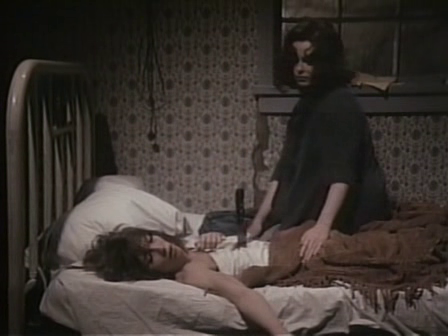
“New Hollywood” auteur Robert Altman (M*A*S*H, Nashville) is a filmmaker who has directed a number of films that I like to some degree for varying reasons, but his pre-fame work That Cold Day in the Park (1969)—a box-office disaster upon its release—is my personal favorite work of his and, along with his British-American psychological thriller Images (1972), arguably the darkest and most unsettling idiosyncratic work in the filmmaker’s entire oeuvre. An American-Canadian production shot on a rather small budget of $500,000 based on the novel of the same name written by American actor/screenwriter Peter Miles (who wrote it along with the bad b-movie They Saved Hitler’s Brain (1968), under the less than inconspicuous pseudonym Richard Miles), That Cold Day in the Park is part moody maniac melodrama, part psychological horror-thriller, part callous leftist criticism of the British Columbian bourgeois, part creepy and even borderline campy comedy, and part dichotomous class/character study and is most like a post-The Merchant of Four Seasons (1971) Fassbinder melodrama minus sympathy for its lunatic spinster lady lead and a certain dark and shadowiness that echoes gothic horror. Shot by Hungarian cinematographer László Kovács, who got his start working on no-budget works like The Incredibly Strange Creatures Who Stopped Living and Became Mixed-Up Zombies!!? (1964) and would go on to shoot Easy Rider (1969) and Five Easy Pieces (1970) and was a pioneering member of the American New Wave, but would go on to directing less artistically merited big blockbusters like Steven Spielberg’s Close Encounters of the Third Kind (1977) and Ghostbusters (1984), That Cold Day in the Park is an intentionally claustrophobically shot ‘chamber piece’ about a sexually repressed and fiercely frigid old maid who lives as a self-imprisoned slave in her lonely and dreary apartment, but discovers a sort of bright white light in the form of a young and seemingly melancholy teenage boy sitting on a bench all by his lonesome on a rather rainy day. Advertised with the superlatively sensationalized tagline, “HOW FAR WILL A WOMAN GO...to possess a 19 year-old boy?,” That Cold Day in the Park is ultimately a foreboding and shuddersome celluloid tale of a uniquely unhinged babe somewhat past her physical prime who would probably have been vaginally penetrated by her high school sweetheart, but instead locked herself away in a neo-Victorian nightmare of ‘proper play dates’ with elderly men and women who happen to belong to the same pseudo-ritzy social clique as her morbid widow mother did. A chamber piece-sized work with an unsettlingly anti-erotic clash of social classes between a figurative princess who has locked herself in a tower and the figurative pretty boy knight she takes it upon it herself to assign to save her but ultimately winds up locked away with her, That Cold Day in the Park is one of the most delightful yet equally depressing diacritic depictions of repressed horniness-gone-homicidal ever captured on celluloid. 


Middle-aged spinster Frances Austen (Oscar-award winning theater/film actress Sandy Dennis of Who's Afraid of Virginia Woolf? (1966) fame) lives in an elegant, if not uniquely ugly and mundanely minimalistic Vancouver apartment that might be occupied by a living and breathing woman, but has the unmistakable metaphysical feeling of death and lack of all vitality. Against the better judgment of some brazen bourgeois bitch who invokes the beyond-the-grave scorn of the old maid’s dead mother, frigid Frances decides to invite a seemingly lonely and visibly wet and cold teenage boy she spots from her window to come and stay inside her apartment. The boy (played by actor turned college history professor Michael Burns) in question, whose real name is never mentioned, agrees to follow Frances back to her apartment, but he does not do this verbally as he pretends to be mute and somewhat dumb, but ultimately proves to be a delightful and entertaining guest to a woman who wants some wantonness in her life, but lacks the experience and social ease to attain it. The first thing Frances does to make the boy feel at home is give him a seemingly sexually-charged but ultimately anticlimactic bubble bath that ultimately proves to be the most sensual and unclothed moment ‘sexual’ moment they share with one another during their radically ridiculous pseudo-relationship. Sort of like a bourgeois woman-child who has never grown up nor did a day’s work in her entire patently privileged yet less than joyous life, Frances will do anything to keep the lost-but-not-found twink boy she snatched up from outside, so she has the creepily childish idea to lock him in the guest bedroom that she allows him to sleep in. Of course, Frances is not a total monster, just a socially retarded one, as she supplies the boy with decent food, clothes, shoes, luxurious shelter, and neverending and hopelessly hysterical chatter that is quite indicative of her intensely introverted and largely insipid, brain damaged mind. Of course, the boy has a life outside his new hermetic home with Frances, so he sneaks out the window in his locked prison window to be with his bitchy big sister and her wild war veteran boyfriend. 


 When the Boy leaves Frances’ apartment to go meet his big sis Nina (Susanne Benton), he walks in on her screwing her boyfriend Nick (David Garfield), but does not seem the least bit shocked as the two seem to share a quasi-incestuous relationship. The Boy tells sister Nina and her boy toy about how Frances has a “strange attitude toward sex” and makes a “big deal about it,” but prefers living with her because he has his own room and board. As the viewer learns, the Boy originally intended to meet his sister and her boyfriend on ‘that cold day in the park’ that sparked the by-chance meeting with seemingly fickle Frances. When Frances unlocks the Boy’s door and surprises him with a hearty breakfast in bed, she notices he is gone and is crushed. Naturally, when the Boy shows up later that day at her door, she is quite jubilant and welcomes him in. Not long after when Frances goes to a gynecologist to get contraceptives, lying to the vag doc that she is single but getting married (sexual protection was not so easy to get back in those days), in a rather dramatic attempt to prepare herself for sharing her novice carnal knowledge with the Boy, the Boy’s sister shows up to the apartment and demands a free bath, complaining, “I have told you, I do not take a bath everyday…what kind brat would deprive his sister of a bath?!” The Boy’s sister pulls him into the bath and even attempts to seduce him, seductively stating, “Imagine if I was not your sister,” in a whorish fashion. Of course, the Boy is not the only one who gets unwanted sexual attention as Frances has an elderly doctor friend named Dr. Stevenson, who has been trying to get in her panties for years, but she is decidedly disgusted by him and his lecherous longings, especially after visiting the gynecologist and having her naughty bits fiddled with in a sterile fashion. When Frances enters the Boy’s bedroom, unwittingly believing he is sleeping under the covers with only his blond hair showing (he is really hanging out with his big sis), she reveals her affection for him and declares “I want you to make love to me,” so when she finally realizes it is a toy doll under the covers, she has a momentarily paused but ultimately hysterical freakout and shrieks as if she found a mutilated dead body. After discovering Frances has nailed his bedroom window shut, thus making him unable to enter the outside world, the Boy reveals to his conspiring non-lover that he is not deaf and dumb, stating, “Don’t think I can’t get out of here…I can get out anytime I want…And if you think by keeping me here I am going to get in bed with you or anything like that, you’re wrong…If I want a girl or anything I’ll just go out and get one myself…And I might not come back.” Clearly a cracked chick with nothing to lose, especially in regard to her dignity, Frances takes the Boy’s statement deathly serious as a sort of ultimatum and responds to him not long after by confessing, “I’m sorry, so so sorry. I don’t want you to be angry with me. I want you to stay here…I want things to stay the way they are…You can understand that, can’t you?! I can’t let you go…Not now.” To solve the strange sexual situation or lack thereof, Frances has the bright idea to buy the boy a prostitute and bring her back to the apartment. After a failed attempt to coerce an aggressive Amy Winehouse-look-alike of streetwalker to come home with her, Francis is approached by a pimp and finally procures a haggard hooker (Linda Sorenson, who played villain Stegman’s mother in Mark L. Lester’s Class of 1984 (1982)) that she brings back to her apartment for the Boy. Rather unfortunately, Frances becomes insufferably jealous and homicidally infuriated by said haggard hooker when she hears her would-be-wonder-boy making love to her and drives a butcher knife into her heart in a manner that would have probably be like Norman Bates’ mother. That Cold Day in the Park ends in slight ambiguity, though Frances' insanity has surely reached a totally new level of nastiness. 


 Sort of like The Collector (1965) starring Terence Stamp meets Misery (1990) starring Kathy Bates, except with a pleasantly foul ‘Gothic Canadian’ flavor, That Cold Day in the Park is undoubtedly a underrated celluloid work that has yet to get its due, though thankfully some have taken notice of Robert Altman’s lost minor masterpiece. For example, Canadian homocore auteur Bruce LaBruce’s debut feature-length film No Skin Off My Ass (1993) is a satirical remake of That Cold Day in the Park that replaces the bourgeois spinster with a homo-punk hairdresser and the Boy with a neo-nazi skinhead, which is all the more interesting considering that the Peter Miles novel that Altman used as the source novel originally centered around a repressed homosexual longing after a lonely hustler. Robert Altman would later utilize theater actress Sandy Dennis’ distinctive acting talents for his film Come Back to the Five and Dime, Jimmy Dean, Jimmy Dean (1982), but, in my humble opinion, the actress never again gave a screen performance as hauntingly hypnotic as in That Cold Day in the Park.  Incidentally, actress Sandy Dennis become a ‘cradle robber’ in real life when she started a relationship with actor Eric Roberts—a man nearly two decades her junior—that lasted from 1980 to 1985, on top of being a ‘spiritual spinster’ of sorts, vocally admitting she never wanted children, stating in a 1989 interview with People magazine regarding a miscarriage she had in 1965, “if I'd been a mother, I would have loved the child, but I just didn't have any connection with it when I was pregnant ... I never, ever wanted children. It would have been like having an elephant.” Ironically, Dennis died childless at the premature age of 54 from ovarian cancer, a disease that is more likely to affect women who have never had children, though the deranged would-be-superman Christopher Dennis featured in Confessions of a Superhero (2007)—a documentary about people who dress up in superhero outfits at the Hollywood Walk of Fame and beg for tips—claims to be the bastard son of the actress, though her family denies it.  Either way, Sandy Dennis was undoubtedly born to play Frances Austen of That Cold Day in the Park, a film that, in its depiction of bourgeois bitch frigidness and prole sexual virility, makes for the closest thing to a Marxist-Freudian Gothic melodrama, albeit being nowhere near as annoying, superlatively soulless, or aesthetically retarded as it sounds.  Indeed, Robert Altman was sort of a leftist prick who played an imperative role in popularizing M*A*S*H with his absurdly overrated 1970 film of the same name and made a bunch of others films about improvised nothingness, but That Cold Day in the Park, as well as Thieves Like Us (1974), Short Cuts (1993), and a couple other films, stops me from despising the filmmaker outright as a glorified TV director posing as a serious auteur and cinematic artist.


-Ty E

Tuesday, August 6, 2013

The Canyons


It has been some time since lapsed Calvinist screenwriter turned audacious auteur Paul Schrader—the man who penned classics like Taxi Driver (1976) directed by Martin Scorsese and directed classics like Hardcore (1979) and Mishima: A Life in Four Chapters (1985)—directed a film that got some notable attention, be it negative or positive, but with his recent work The Canyons (2013), he has certainly grabbed some headlines, if not due to the no-budget work’s dubiously degenerate stars and almost unanimous critical scorn among professional film critics and fans alike. Starring the smoked out slut and media molested Disney child star turned raunchy train wreck Lindsay Lohan and ‘sexually versatile’ Hebraic porn star James Deen, The Canyons is a film that upon even a superficial glance one assumes is a tremendously trashy tabloid-worthy celluloid sleaze, which is no surprise considering director Paul Schrader has always had his ‘genius in the gutter’ as the metaphysically miserable mind behind American Gigolo (1980), The Comfort of Strangers (1990), and Light Sleeper (1992).  Also starring in The Canyons is ancestrally cursed Jewess Amanda Brooks, whose ‘trust fund stoner’ brother was not only convicted of murdering his girlfriend this year, but whose psychopathic pervert father is Joseph Brooks—the seemingly sappy sentimentalist yet ultimately psychopathic Academy Award-winning songwriter behind the emotionally phony hit song “You Light Up My Life” and a serial rapist who was to be tried in the state Supreme Court for Manhattan on no less than 91 counts of rape, sexual abuse, criminal sexual act, assault, and other charges, but committed suicide so he would not have to deal with his demonically degenerate deeds. Undoubtedly, the lead antagonistic of The Canyons as played by gay-for-pay debauchee James Deen is not that unlike Joseph Brooks in his sexually predatory and ultimately psychopathic behavior, just as Lindsay Lohan’s onscreen character is not that far off from her real-life persona as a lecherous lady who could be described as ‘damaged goods,’ thus one has to admit that Schrader’s film is certainly an unflattering example of art reflecting life and vice versa. Penned by overrated quasi-nihilist novelist Bret Easton Ellis (The Rules of Attraction, American Psycho), who bashed Schrader’s film before it was even released, stating, “The film is so languorous. It's an hour 30, and it seems like it's three hours long. I saw this as a pranky noirish thriller, but Schrader turned it into, well, a Schrader film,” The Canyons is, indeed, pure Paul Schrader, which was surely to the corrupting celluloid work's benefit as a rare flick from 2013 that is reflective of America, as well as Hollywood's, all-encompassing moral, cultural, and aesthetic decline.  Essentially, the The Canyons is the superlatively sordid story of a young trust fund kid psychopath who produces movies to “keep his father off his back,” who starts a personal war with a struggling actor who is secretly screwing his prostitute-like girlfriend and who is a sort of psychopath-in-progress who has yet to learn what it takes to live, survive, and strive in Los Angeles. A no-budget piece of ‘psychological horror porn’ shot on a mere $250,000 utilizing some of the most unsavory ‘actors’/porn stars/socialites in Hollywood, The Canyons is not a suavely stylized Schrader-esque celluloid sleaze that lives and breathes the paradoxically sickening Hollywood sunlight, but a radically cinematically reflective work and an indictment of the Hollywood film industry itself, portraying a young producer as the most pernicious and perverted of manipulators who runs and 'directs' the show ‘behind the scenes’ and depicting a young actor as the mostly unholy of whores, who is willing to both literally and figuratively screw anyone, male or female, to get his way. Opening with a number of allegorical shots of various dilapidated, rundown, and closed movie theaters, The Canyons is also a work that portrays the Hollywood studio system as a sort of bankrupt bordello of sorts, run by lunatic libertine pimps (i.e. producers) and occupied by soulless prostitutes (i.e. actors) whose sole goal is to be the most high profile and wealthy sluts in the world. 


 In the first couple moments of The Canyons, one is introduced to the four lead characters, couples Tara (Lindsay Lohan) and Christian (James Dean) and Ryan (Nolan Gerard Funk) and Gina (Amanda Brooks), who are on a double date with one another at an upscale bar so the men, one an actor (Ryan) and another a producer (Christian) who landed the actor a job for an upcoming slasher flick he is producing, can meet each other for the first time, thus sparking the beginning of the end for both men's mutually exploitative relationships. Gina is something like a production assistant on a ‘low-budget slasher flick’ produced by tyrannical trust fund brat Christian, who is only involved with the film to keep his father off his back and pretend he has a semblance of a job. As a favor to her from Christian, who has nil interest in the film and does not even plan to be around for the work’s production, Gina has managed to get her boyfriend Ryan, a fellow that somewhat misleadingly describes himself as a “more conventional guy,” the lead role for the slasher flick. Unbeknownst to Christian and Gina, Ryan and Tara were once lovers and have rekindled their flame after meeting one another again by happenstance on pre-production for the film. Unfortunately for Ryan, his ex-lover Tara is a virtual sex slave of pretty boy psychopath Christian, who essentially forces her to have sex with strangers he meets on the internet, as he gets off to dominating her and loves 'directing it' on his cellphone. Not unsurprisingly, Christian has hired a goofy wigger 'private detective' to tail Tara wherever she goes, so he eventually learns of his girlfriend’s affair with Ryan. Naturally, Christian starts a war with Ryan that involves the ostensibly heterosexual actor allowing another producer (a gay kraut who Christian asks him to blackmail sexually) to suck his cock so he can ‘keep the part’ in the slasher flick, hacking into his facebook, cellphone, and bank account (where he drains his money). Meanwhile, Ryan learns that a girl he used to date named Cynthia (Tenille Houston) is also a mutual ex-girlfriend of Christian who he still screws. Ryan convinces Cynthia to tell Tara a sob story about how supposedly when she dated Christian, who she lovingly describes as a "sick little boy," he secretly put roofies in her drink and allowed a bunch of guys to ‘run a train on her’ while she was passed out, thus landing her in the emergency room at UCLA. Paranoid about the fact she has serially cheated on him with Ryan and his purported drugging of his ex-girlfriend, Tara begins to consider leaving Christian for good, but she also starts her own quasi-femme fatale-like ‘psychological war’ against her rich lunatic lover beforehand to ‘soften him up,’ including coercing the wealthy and wanton psychopath to experiment with his bi-curious side by allowing another man to blow him during one of their ‘swinger nights’ with random people they met on the internet. When Christian goes to his mandatory weekly counseling session (his father will ‘pull his trust fund’ if he does not go) with his therapist Dr. Campbell (symbolically played by queer auteur Gus Van Sant, a filmmaker who 'crossed the line' between the independent New Queer Cinema world and horribly hokey Hollywood blockbusters), he less than proudly admits regarding his brief and ultimately dis-empowering flirtation with faggotry, “Usually, I’m the one in control. Last night I wasn’t. None of it seemed real. Not when that guy was sucking my dick or when Tara tried to get him to fuck me. Which didn’t happen, FYI. There were certain things that Tara and the other girl wanted us to do, and I don’t even know why I care. Just some dumb kids on the internet I’ll never see again. Just…didn’t feel like I wasn’t in control. I felt objectified. The way the two of them just watched and told us what to do. Doesn’t usually go down like that. Usually I’m the one directing the scene….It made me feel like an actor.” Of course, Christian ultimately finds a way to become the “one directing the scene” again and it involves him killing a certain girl in coldblood who both he and Ryan used to date. In the end, Tara finally gets away from Christian, Ryan loses everything important to him yet develops a new found sense of sociopathy, and Christian is still at the top of his game, graduating on to becoming a calculating coldblooded killer opposed to being a mere calculating cock on coke. 


 While a sickeningly sleazy ‘erotic thriller’ featuring some of the most innately reprehensible, unredeemable, and revolting ‘pretty cool people’ characters in recent film history, The Canyons is more importantly, an unpretentious and far from preachy indictment of the contemporary American zeitgeist, where loveless and aberrant sex, mindless materialism, less than fufilling hedonism, callous careerism, and fraudulent and mutually exploitative ‘romantic’ relationships, are just the name of the game, especially in an unwaveringly soulless and culturally hollow place like Hollywood, a decidedly degenerate dream-factory that, rather unfortunately, infects the rest of the world with its metaphysical maladies. As director Paul Schrader stated in a recent interview with Film Comment Magazine regarding the film, “..we’re making art out of the remains of our empire. The junk that’s left over. And this idea of a film that was crowdfunded, cast online, with one actor from a celebrity culture, one actor from adult-film culture, a writer and director who have gotten beat up in the past—felt like a post-Empire thing,” and, indeed, as a work featuring a child star turned disastrous diva and a small and frail boyish Jew porn star in the lead roles as directed by a lapsed Calvinist who did not see his first film until he was almost an adult yet would go on to become one of the most controversial and politically incorrect American screenwriters/directors of his decidedly degenerate generation, The Canyons is indubitably the superficially seductive and scandalous yet also nicely nuanced and anything but naïve piece of apocalyptic celluloid that is bound to go over the head of most viewers, especially those quick to condemn it due to its starcrossed stars and almost nonexistent budget. As Lindsay Lohan’s character rhetorically asks the character played by Amanda Brooks, “Ok, tell me something…Do you really like movies?…Really, really like movies? When’s the last time you went to see a movie in the theater? A movie that you really thought meant something to you?,” thus demonstrating not only the decline of cinema quality in Hollywood and as a “favorite American pastime,” but also how films are now made in general in the internet age with Schrader’s The Canyons being a curious product of this trend as a work funded by the ‘crowd funding’ internet tool of Kickstarter and largely making its premiere on the online video-on-demand on sites like YouTube.com. Screenwriter Bret Easton Ellis also further confirmed the 'postmodern' form of film production regarding The Canyons by remarking “Using social media as a way to help build a film is really like riding the wave into the future,” which is further confirmed by the film's producer Braxton Pope, who proudly stated regarding the film, “Nothing about this film was orchestrated in a traditional way. We wanted to actively embrace all the digital and social media tools at our disposal and give the film real cinematic value – ‘The Canyons’ is the result of a forward thinking experiment with a terrific cast.” While certainly no masterpiece, The Canyons is reasonably ‘penetrating’ proof that director Paul Schrader has been to keep up with the times in terms of his cinematic subversiveness, that Lindsay Lohan is actually a capable actor when in the right sort of film, and that porn stars like James Deen have their place in mainstream films, albeit supremely sleazy ones that are better funded by the fans than put in the hands of solely monetary and propaganda motivated psychopathic Hollywood producers like antagonist Christian as played by James Deen. As stated by Deen's character,“Nobody has a private life anymore” as a result of the internet, social networking sites, and whatnot, but at least now American movies are not totally monopolized by the Hebraic hands in Hollywood as demonstrated with the production of The Canyons, a work that proves that Paul Schrader is not only an audacious auteur but also a postmodern alchemist who is able to turn cultural shit (e.g. James Deen, Lindsay Lohan, Bret Easton Ellis) into cheap celluloid gold.


-Ty E

The Nasty Girl


Unless focusing on totally deranged, perversely politically incorrect, and superlatively scatological subjects like the late great kraut avant-garde carny Christoph Schlingensief (The German Chainsaw-Massacre, Terror 2000) or farcical fascism/lunatic leftism of Rainer Werner Fassbinder's psychopathic slapstick flick Satan’s Brew (1976) aka Satansbraten, German filmmakers should stay away from cinematically depicting comedy, especially of the cliché far-leftist and philo-Semitic Brechtian sort, which is exactly why Bavarian bitchboy Michael Verhoeven’s Das schreckliche Mädchen (1990) aka The Nasty Girl is one of the most intrinsically irritating and aesthetically agonizing films I have ever seen. Based on the true story of a bitchy Bavarian broad named Anna Rosmus who started digging into her hometown of Passau’s unflattering Nazi past after being spurred by a nationwide essay contest, The Nasty Girl follows an indubitably nasty busybody girl who digs deep into her town’s history, despite having her flat bombed and personal relationships destroyed in the process, only to become an ungrateful cunt after the town honors her by having a bust placed in the town hall in the form of her likeliness despite her malicious research. A couple years ago, I had the misfortune of attending a public screening of The Nasty Girl in a room full of Jews, white liberals, and a hodgepodge of multicultural folks of varying racial shades. To my complete and utter surprise, a middle-aged Jewish man popped up immediately during a post-screening conversation regarding The Nasty Girl and rhetorically asked when the Germans will finally refrain from continuing to apologize to the Jews and paying hefty reparations to the not-so-tolerant Jewish ethno-nationalist state of Israel. Of course, the anti-zionist Jew was more keen than most viewers regarding picking up the sickening slave-morality-driven nature of the film, as The Nasty Girl is one of those ostensibly cutesy and comical works that makes it easier for less discerning viewers to swallow its ethno-masochistic, feminist message due to its deranged depiction of a pedomorphic ‘little princess’ depicted by the ever-so-annoying Lena Stolze, who previously depicted ‘anti-nazi martyr’ Sophie Scholl in Verhoeven’s Die Weiße Rose (1982) aka The White Rose, as the protagonist displaying her sassy Svengali-like ‘girl power’ by digging into her town’s past and proving that many of its esteemed leaders are ex-nazis and kike-killers. The son of National Socialist auteur Paul Verhoeven (no, not the Dutch one!), director Michael Verhoeven seems to have used The Nasty Girl as a way to dig up dirt on his daddy, but he thankfully had enough foresight to obscure his personally pernicious agenda by having a little girl stand in for himself, which is further supported by the director’s statement at the beginning of the film, “The story my film tells is at once fiction and truth. I am not interested in the history of a specific town in Germany, but rather in the truth of all towns in our country. My film is set in Bavaria because I live here. Characters and actions are fictional.” Utilizing Syberberg-esque tableaux, including back-projected streets and buildings, and a total blitzkrieging of the Fourth Wall, The Nasty Girl is aesthetic asininity and absurdity that made even holocaust-worshipper Roger Ebert nearly lose his lunch, writing regarding Verhoeven’s flick, “It's the film's style that I object to. The story itself is fascinating, but the style seems to add another tone, a level of irony that is somehow confusing: Does Verhoeven see this as quite the cheery romp he pretends, or is there a sly edge to his method? As a rule I welcome stylistic experiments - most movies are much too straightforward - but this time I'm not sure the movie's odd tone adds anything. Realism might have worked better.” Unfortunately, politics aside, Ebert could not have said it better as The Nasty Girl has the aesthetic integrity of a Geico commerical. 


 If The Nasty Girl ‘protagonist’ Sonja (Lena Stolze) is good at anything, it is prying into other people’s business, especially when said people kindly and, eventually, not so kindly, tell her to fuck off and to mind her own damn business. After winning a high school essay contest that wins her a trip to Paris, which further lobotomizes her already liberal mind, Sonja is more than confident about entering another essay contest that involves researching her town of Pfilzing’s relationship to the Third Reich, but after hitting a number of dead-ends and roadblocks, largely put up by highly secretive townspeople, especially those people in places of power, she must accept that the essay contest’s deadline has expired, which makes her cuckold teacher boyfriend Martin (Robert Giggenbach) rather happy and the two leftist lovebirds inevitably wed. Of course, the always prying Sonja treats her failure to enter the essay contest as a minor setback and after a bunch of naughty Nazis throw a rock through the rear window of her car after her wedding ceremony, she is more than determined to seek her hysterical revenge against the crypto-Nazi townspeople. In fact, throughout various points in The Nasty Girl, the town of Pfilzing is depicted as a Catholic crypto-Nazi epicenter where drunk and boorish krauts sing old school National Socialist songs secretly in the night like sinister demons. When Sonja discovers a certain Jewish conman, who apparently met his death after being sent to a concentration camp, swindled two Pfilzing priests out of 100 pairs of underwear during the Third Reich, she becomes determined to unmask the unholy anti-Semitic holymen. On top of the nameless and faceless masked neo-nazis in the night, Sonja faces scorn from her professor Juckenack (Hans-Reinhard Müller), who, using Gestapo-esque tactics, secretly bars the girl from researching microfilms in a local city archive. To get to the dubious documents, Sonja decides to sue Pfilzing, which causes countless death threats against the little lady and her extended family, but she ultimately wins the lawsuit, although the so-called ‘Zumtobel documents’ that she is looking for are nowhere to be found and she is given a number of questionable reasons why as to their disappearance. Putting the search for the Zumtobel documents before her baby daughter and jealous cuck of a man-woman husband, her personal life takes a dive for the worst, but hey, she eventually gets the docs and proves her ‘girl power’ or whatever and literally yodels in celebration. After learning her professor Juckenack was one of the Nazi priests responsible for putting the Jewish conman in a concentration camp and the local pharmacist was involved with experimenting on Jews, Sonja has the distinguished luxury of having her family home bombed by some nefarious Nazi scum. Sonja publishes a paper on her findings, titled "My Hometown in the Third Reich," and is even given an honorary degree from the University of Vienna because of her “brave accounting of the recent history,” and is subsequently awarded a doctorate from the Swedish Royal Academy in Uppsala, among various other prizes. After revealing that she is writing a book on the “Jews of Pfilzing,” Sonja reveals to the town that professor Juckenack, as well as a certain Father Brummel, the man that christened her as a child, were the two priests that got the Jew put in the concentration camp. Meanwhile, Sonja’s husband leaves her for Munich, her progressive and sexually promiscuous brother starts screwing girls, and professor Juckenack sues her for defamation. With the help of an old school communist who was persecuted during the Third Reich, Sonja wins the trial and “Juckenack is dropped like a hot potato.” Although the townspeople ultimately side with Sonja and pay tribute to her with a bust of her head in tribute, she proves intolerable to the end, stating to the entire town, “I won’t let you turn me into a bust and stick me in the town hall. I am a living human being…I’m not falling for this. Just because you’re scared shitless, because you’re afraid of what I might still find out…I won’t be quiet. That is exactly what they want,” and promptly smacks her mother and grandmother, thus proving to a hysterical and bitter bitch to the very end. 


At the anticlimactic, albeit fitting, conclusion of The Nasty Girl, perennially prying protagonist Sonja climbs up and hides in a tree like a scared little girl who has not only pushed away immediate family and even her neighbors, but who has also become a self-righteous and prissy pixie bitch whose nearly megalomaniacal goals seem to be dragging everyone she knows to a sort of nihilistic and ethno-masochistic netherworld, which can also be said of director Michael Verhoeven and his idiotically idealistic films. In a somewhat recent documentary he directed, Der unbekannte Soldat (2006) aka The Unknown Soldier, Verhoeven proved he saw a kindred spirit/alter-ego in the form of his protagonist from The Nasty Girl by depicting the entire Wehrmacht (German army) as genocidal kike killers, thus making him a man after Teutonophobe S. Spielberg’s Hebraic heart. Aside from being an aesthetically appalling piece of failed kraut comedy, The Nasty Girl is a somewhat hateful work that attempts to disguise its deranged message of ‘most Germans were and are anti-Semitic Nazis’ with a smile by using humor as the ultimate merry and malicious manipulator of the viewer as a wretched work that is intended to inspire self-hatred, guilt, and a sackless slave-morality in German viewers and Hollywood-like Germanophobic hysteria in Americans and other non-krauts. More embarrassing and aesthetically revolting than the most patently prosaic of Wim Wenders’ pseudo-existentialist celluloid meanderings and less humorous and more irritating than the latest Judd Apatow stoner ‘Jew crew’ comedy, The Nasty Girl is as noxious and nettling as cinematic works come, even in the context of ethno-masochistic cinema. Aside from those interested in seeing girlish and agonizingly annoying lead actress Lena Stolze's stark-naked body or baboonish beer-chugging Bavarian acting which is no less retarded than the average on field antics of an American Negro professional football player, The Nasty Girl is a film to be avoided at all costs, though certain masochists, especially of the cuckold persuasion, might find Verhoeven’s film to be one of the greatest ‘ softcore commie comedies’ ever made. 


-Ty E

Saturday, August 3, 2013

The White Rose


Immediately following a public screening at a local university for the German flick The Nasty Girl (1990) aka Das schreckliche Mädchen—a kosher kraut comedy if there ever was one about a busybody bitch of a young broad who takes it upon herself to prove and expose the fact that many people from her own hometown were nefarious Jew-slaying National Socialists—I was intrigued to see a Jewish man get up and question the seemingly unending self-loathing of modern day Teutons and their pathetic and perverse pathological proclivity toward apologizing for the supposed crimes of their fathers and grandfathers. The Brechtian piece of celluloid barf, The Nasty Girl, was directed by an ethno-masochistic far-leftist feminist Bavarian by the name of Michael Verhoeven, who is the prodigal pussy son of National Socialist propagandist filmmaker Paul Verhoeven (of no relation to the Dutch Robocop director of the same name). Undoubtedly, if Verhoeven inherited anything from his father, it was his propensity for making celluloid propaganda, albeit of a lunatic left-wing fashion as if the auteur was trying to make up for every ostensible cinematic wrong his padre made, while at the same reaping scorn on said padre in a manner not unlike how Thomas Harlan (Torre Bela, Wundkanal) would dedicate his entire commie celluloid career to trashing his father Veit Harlan's legacy as the Third Reich's greatest high-camp auteur. Seeing that Michael Verhoeven is a sort of celluloid cuckold who oftentimes portrays fiery yet pedomorphic females as absolutely revolting revolutionary heroes, it was only natural that he would direct Die Weiße Rose (1982) aka The White Rose, a film about the so-called ‘resistance group’ of the same name whose most famous member, Sophie Scholl, and her brother and four other members were arrested by the Gestapo and inevitably beheaded via guillotine in 1943. Naturally, since they stood up to Uncle Adolf and his regime by passively protesting through the pansy power of leaflets/articles (none of which were actually written by Sophie Scholl), the murdered members of the White Rose are now considered martyrs and their little legacies have since been lamentably eulogized to great acclaim by films like Verhoeven’s The White Rose, a agitprop and sociopolitical puffery piece directed by a would-be-auteur whose hatred of his own ancestry and heimat are all the more potent than his rather vapid and vain artistry. If you like the sentimental stupidity of holocaust hogwash like Jakob the Liar (1999) and The Boy in the Striped Pajamas (2008) and philistine feminist flicks like The Lost Honour of Katharina Blum (1975) and North Country (2005), The White Rose might be the perfect film for you. 


Opening with the quote, “If a wave of protest rolls across the country, if “it’s in the air,” when many people join, then, in one last powerful effort, we can get rid of this system,” which was apparently taken from the first leaflet from “The White Rose,” it is quite obvious from the get go of The White Rose that director Verhoeven actually believes the Scholl siblings posed a bigger threat than they did. The year is 1942 and the place is Munich, Germany. The 21-year-old college student Sophie Scholl (played by Lena Stolze, who also played Scholl in Percy Adlon's Fünf letzte Tage (1982) aka Five Last Days the same year) is an annoying, cutesy girl who thinks she can get away with everything because of said conspicuous cuteness, so when she discovers that her brother Hans (Wulf Kessler) and his 'Christian socialist' comrades, all students at Munich University as well as a subversive philosophy professor Kurt Huber (Martin Benrath), have started a softcore anti-violent resistance group called the  “White Rose,” she makes it her business to join, despite her bro’s objections. By anonymously distributing pamphlets about how the Nazis are the “master racists” and painting anti-Hitler graffiti on public walls, the White Rose begins developing a sort of unofficial following, which naturally irks local National Socialists, who inevitably bring in the Gestapo to rid Munich of the pacifist virus. Meanwhile, Sophie is in a relationship with a tall, dark, and handsome Luftwaffe pilot named Fritz (Ulf-Jürgen Wagner) who has been sent away to fight on the Eastern Front, likes to make childish jokes, and looks strangely like his girlfriend’s brother. Naturally, The White Rose features superlatively sensationalized Spielberg-esque scenes (aka 'holocaust porn') of tall, blond, and handsome Aryan soldiers stripping poor innocent Jews of their clothes and executing them with the same robotic and detached precision as cyborg Herr Schwarzenegger in The Terminator (1984). After a nauseatingly nasty Nazi Gauleiter makes an unpopular ‘anti-feminist’ speech at Munich University about why young women should spend their time breeding strong Aryan boys instead of becoming second-rate intellectuals and whatnot, the White Rose gains more support, but it cannot save its members from a deadly date with the ungodly guillotine. Although not contributing to any of the White Rose writings, Sophie demonstrates her dedication to the cause by rather conspicuously purchasing 50 postage stamps, as well as posing as a secretary, so she can steal tons of paper. After siblings Sophie and Hans Scholl, as well as their comrade Christoph Probst (Werner Stocker) are caught distributing naughty anti-Nazi articles at the university, they are arrested by the ghastly Gestapo, firmly questioned, and swiftly executed. Of course, only the most patently pernicious and excessively evil regime in human history could the make the head roll of a pretty pedomorphic humanist Christian girl. 


 Rather absurdly, in a 2003 poll for the show Unsere Besten ("Our Best") broadcasted by the German public television channel ZDF, Sophie and Hans Scholl were voted the fourth “most important Germans of all time” by the German public, even beating Bach, Bismarck, Goethe, and Gutenberg, thus demonstrating the overwhelming sense of guilt the modern Teutons have as a result of the Third Reich. Additionally, what seems all the more absurd is the fact that Claus von Stauffenberg—an infinitely braver man who actually went into the ‘belly of the beast’ and attempted to assassinate Hitler and ‘take back’ Germany from nefarious Nazi hands—was not considered greater than the Scholl siblings whose patently passive actions were ultimately futile and whose legacy is mostly superficial as rare gentle Germans who ‘resisted Nazism’ in the now-cliche bourgeois leftist university protestor sort of way. Of course, as Hollywood’s holocaust campaign grows more hostile as the decades pass, Sophie Scholl has only become all the more popular as demonstrated by the mainstream kraut flick Sophie Scholl – The Final Days (2005), which is quite similar but ultimately inferior to Verhoeven’s similarly aesthetically and melodramatically mundane The White Rose, although it would win two Silver Bear awards, including for Best Director and Best Actress (Julia Jentsch) at the 2005 Berlinale Film Festival, on top of being nominated in September 2005 for an Oscar in the category of Best Foreign Language Film. Indeed, rather unfortunately, it seems the White Rose myth will continue to live on cinematically, with Michael Verhoeven’s The White Rose being the odious archetype for an almost imaginary anti-Nazi resistance that achieved virtually nothing except posthumous fame created by largely self-loathing and left-leaning Germans looking for any example and/or proof that not all krauts were demonic kike-haters. Of course, if Germany won the Second World War, who would still know the names Sophie and Hans Scholl today?! 


-Ty E

Friday, August 2, 2013

The Afterman


When it comes to fucked up no-budget arthouse flicks with aberrant allegorical imagery like maggots crawling on ostensibly rotten vaginas, few nations did it better than the Belgians during the late-1960s/early-1980s. Whether it be the castration-anxiety-inspiring avant-garde shorts of Roland Lethem like The Sufferings of a Ravaged Egg (1967) aka Les souffrances d'un oeuf meurtri and The Bloodthirsty Fairy (1968) aka La fée sanguinaire, the proto-Nekromantik cult-shocker Lucker the Necrophagous (1986) directed by Johan Vandewoestijne, the infamous bestiality-based arthouse fever dream about an autistic boy who falls in love with both swine and shit, Vase de Noces (1974) aka Wedding Trough aka The Pig Fucking Movie directed by Thierry Zéno, or the melancholy corpse-cuddling melodrama of Crazy Love (1987) aka Love Is a Dog From Hell directed by Dominique Deruddere, few other nations in the world have shown such a propensity for pumping out perverse flicks despite being a country with virtually nil film industry in the first place like Belgium. Undoubtedly, one of the greatest degenerate gems of fucked Flemish cinema is the delirium-inspiring, post-apocalyptic dystopian flick The Afterman (1985) aka The Afterman: The Fatal Blast directed by controversial auteur Rob Van Eyck (De aardwolf, Blue Belgium). A man not by chance born in the Belgian town of Zichem, apparently one of the only areas completely obliterated by the Spanish during the “Eighty Years War” due to the anti-authoritarian nature of the Dutch, director Rob Van Eyck was expelled from a number of schools during his youth, spurred a micro-revolution at the bank he worked at, and did the seemingly artistically unthinkable by burning one of his own first feature-length films, Ontbijt voor twee (1972), at the Cannes Film Festival of all places to spite his distributor. When introducing The Afterman for a recent DVD (the film had been virtually impossible-to-find for 25 years before), the director gives a pretty good hint as to his character in an introduction where he sardonically states: “Hello, I am Rob Van Eyck, the director of this masterpiece. This is by far the most successful Belgian movie ever and I dare you to see it!” Like the equally underrated Spanish post-apocalyptic sci-fi flick Animales racionales (1983) aka Human Animals, The Afterman is a distinctively dialogue-less film about what happens to people when civilization is taken out of the equation, which naturally revolves around fighting, fucking, and food, albeit in a more relentlessly visceral and violent form. Featuring an uncompromisingly nasty and nihilistic yet strikingly ethereal and otherworldly and ultimately unforgettable hodgepodge of emotionally grating scenarios, including cryogenic necrophilia, unsanctioned sodomy-inspired circle jerks, Sapphic sadomasochism and killer lesbo cunnilingus, white-on-white (sex) slavery, impotent lardos sinking rather slowly in quicksand, corny cannibal clan hoedowns and food fights, melancholy mad monk sodomites who worship a statue of a dude's derriere, and touching family moments, The Afterman is a rare post-apocalyptic flick of wicked charm, wanton wit, and merry misanthropy that takes a detached yet delicate direction in its sardonically disdainful depiction of humanity, as if director Rob Van Eyck attempted to cinematically adapt Flemish Renaissance painter Pieter Bruegel the Elder’s “The Triumph of Death” (1562) in the spirit of Christoph Schlingensief, Alberto Cavallone, and Jean Rollin. 


 The year is apparently 2003 and a fellow simply credited as “The Man” (played by Flemish Expressionist painter Jacques Verbist), who has the seemingly unbearable honor of growing up in a seemingly state-of-the-art (at least for that time) bomb shelter featuring high tech computer terminals, a warehouse full of food (as a slob-like fat fuck, he eats a whipped cream-like substance straight out of the can!), and a walk-in freezer where he has a beauteous babe cryogenically frozen. After kissing a Polaroid of what one can only assume is him and his mother, watching stock-footage of atom bombs dropping, eating a maggot off a frozen female (which may or may not be his mother) and fucking said frozen female, The Man has the surprise of his life when the computers at the bomb shelter state “Forced Evacuation” after a system malfunction (which concludes with an off-screen explosion) and the rather sedentary fellow is forced to visit the outside world for the first time in his entire lethargic life. As a seemingly socially retarded man who probably suffers from what people describe today as ‘Asperger syndrome,’ The Man makes the anally-fatal mistake of approaching a gang of goofy-looking goons. After touching the leader of the gang on the chest in a dubiously sensual way, The Man is rectally raped by the leader of the group whilst his equally unhinged underlings form a creepy, if not comical, circle jerk. Apparently, sadomasochistic homosexuality is en vogue in the post-apocalyptic world because not long after being pillaged in his pooper, The Man spots a ‘bourgeois’ queen bitch in an indoor pool receiving oral sex from a woman under water. Being a sick Sapphic sadist, the woman does not achieve orgasm until she sinisterly drowns the woman who has her tongue between her legs. While love seems like a lethal phenomenon in the post-civilizational realm, The Man does not give up, especially after spotting a sassy female sex slave on a medieval-like farm. 


 Not long after chowing down on a rather unappetizing live muskrat he has caught trapping, The Man spots a weed-ridden farm owned by a belligerent bald bastard (Nick Van Suyt) and his wife, who the farmer seems disinterested in screwing because he ‘plows’ a caged slave girl (Danielle Detremmerie) in between plowing soil. Probably tired of feeding on muskrat, The Man breaks into the farmer’s house at night, but the boorish bald brute catches him as if he were a ball-less little bitch and puts him in a chicken wire cage with the slave girl. After beating the farmer with a post, The Man manages to escape and brings the slave girl and a sack of ham with him. While initially rebuffing his retarded romantic gestures, the slave girl essentially rapes The Man while he is unconscious after heroically pulling him out of quicksand, thus ushering in the beginning of their relationship as a postmodern caveman couple. Undoubtedly, The Man and the slightly homely slave girl make a rather cute and eccentrically endearing couple, so their trials and tribulations deeply affect the viewer in an artificial, tragicomedic sort of way (or at least they did for me). After the slave girl is kidnapped by a killer clan of bacchanalian cannibals who love to play with their naked human prey as decadently depicted in a scene strikingly reminiscent of the sort of foxy-female-covered-in-food scenarios featured in Dutch auteur Frans Zwartjes’ aberrant-garde epic Pentimento (1979), The Man proves he is no mere chubby coward cuckold by saving his sassy sweet lass’ ass, as well as those of a number of other girls in bondage who seek revenge on the maneaters by literally gouging their eyes out. After making their great escape, The Man and his shield maiden make their way to a maniac monastery full of mad man-loving monks and a hot tub, in which the two share a sacred sensual moment, but little do they suspect that the church is run by sexual sadists in the spirit of vice-venerating villains of Pasolini’s Salò, or the 120 Days of Sodom (1975). Unfortunately, the men of the monastery are debauched colon-chokers who worship a statue of a man’s bare buttocks by kissing it and when The Man makes the mistake of walking on the unholy holy men, he is forced to give a blowjob to a bishop and literally kiss the ass of the statue, which his slave girlfriend walks in on. When The Man and his woman realize that the mad monks are not just a hostile horde of hermetic homos, but also biblical butchers into blood ritual sacrifice, including ripping the hearts out their victims, they naturally run away, but not without driving a pitchfork into one of the holy homo’s throats. Of course, The Man and his little slave lady’s relationship is tested when a rich bitch aristocratic woman with killer lipstick credited as the “Castle Woman” (Dora Raskin), who has her own piano-playing and scantly-dressed Asian housegirl, takes them in and seduces the man. Due to being more than a little preoccupied with the cold and callous yet curiously carnal Castle Woman, The Man forgets about his slave girl lover, only to find her outside laying unconscious and half-frozen in the snow. Of course, even after an apocalyptic holocaust, love still manages to conquer all and The Man and his little lady live happily ever after, but with the imperative addition of a child, thus making them the first nuclear family in a post-nuclear world. 


 Despite its strikingly subversive themes/imagery that sometimes borders on softcore pornography, The Afterman is ultimately a conspicuously ‘cute’ piece of celluloid craziness with an unconventionally ‘uplifting,’ if not misanthropic, message. Indeed, as depicted in The Afterman, ‘forced entry’ (be it anal, vaginal, or oral), collectivist cannibalism, religious buffoonery, S&M homosexuality, and unwarranted ultra-violence are all human psychopathies that every man and woman may possess and are waiting to be released via atavistic fit, with an apocalyptic scenario being the best context as depicted in Van Eyck’s film, but love and family are also innate qualities that human animals possess and ultimately make one forget of homo sapien savagery in the end. Apparently, auteur Rob Van Eyck has recently made two sequels to The Afterman, with Jacques Verbist starring in both films, but only Afterman 2 (2005) is listed on imdb.com. From what I have read, Van Eyck is sort of a reviled figure in his native country of Belgium, largely in part due to his direction of a work entitled Blue Belgium (2000), a film depicting the infamous Walloon serial killer/pedophile Marc Dutroux, who sexually enslaved/starved preteen girls and whose crimes were covered up by the Belgian government and led to a large scandal and a very vocal public outcry which ultimately resulted in the reorganization of the nation’s law enforcement agencies. Unfortunately, aside from The Afterman, virtually all of Van Eyck’s other films seem impossible to find. Indubitably, as far as post-apocalyptic artsploitation films go, The Afterman is certainly one of the best, most enthralling and sardonically scatological works ever made, and infinitely more interesting than Luc Besson’s similarly themed Le Dernier Combat (1983) aka The Last Battle. A lavishly lurid piece of celluloid libertine lunacy that manages to reconcile the satirical surrealist works of Belgian auteur Roland Lethem (The Bloodthirsty Fairy, The Sufferings of a Ravaged Egg) and the proto-Goth arthouse works of Dutch polymath Frans Zwartjes (Visual Training, Living) with Australian dsytopian cult classic Mad Max (1979), The Afterman is a hyper-hallucinatory, anarchistically hedonistic, vaguely hopefully look at Occidental man in the post-apocalyptic neo-barbarian age that, at least for a time, makes one forget about all the intrinsically idiotic Hollywood apocalypse flicks like Spielberg’s War of the Worlds (2005) and World War Z (2013) and for that reason alone, Van Eyck’s film must be cherished like a favorite pair of old smelly socks with holes. 


-Ty E

Thursday, August 1, 2013

Cross of Iron


A culturally mongrelized Anglo-Kraut co-production shot in what was then commie Yugoslavia with money put up by a West German porn producer, Cross of Iron (1977) directed by Sam Peckinpah (The Wild Bunch, Straw Dogs) is not only a rare anti-war film that has testicular fortitude, but also probably the only American directed World War II flick from the German perspective that is actually worth seeing and does not wallow endlessly in tiresome Teutonophobia. Of course, being a work created with American and British viewers in mind, Cross of Iron follows in the culturally disrespectful Hollywood tradition of featuring an international cast speaking in English for the German roles, but at least the film does feature some authentic Aryans, including Fassbinder superstars Klaus Löwitsch (Despair, The Marriage of Maria Braun), Dieter Schidor (Satan’s Brew, Querelle), and Roger Fritz (Berlin Alexanderplatz, Lili Marleen), as well as real-life German bank robber turned writer/actor Burkhard Driest (Son of Hitler, Stroszek), and Academy Award winning Austrian-born actor Maximilian Schell (Judgment at Nuremberg, The Man in the Glass Booth). Based on the 1956 novel The Willing Flesh by German soldier turned novelist Willi Heinrich, which may have been based on the true story of Johann Schwerdfeger—a German non-commissioned officer and super soldier who was awarded the Knight's Cross of the Iron Cross (the highest award possible in the Third Reich), Cross of Iron is the ultra-violent and philosophically unhinged story of a naughty kraut NCO who equally hates National Socialism and aristocrats yet also happens to be one of the greatest and most brave bastards killing Bolsheviks on the dreaded Eastern Front. Featuring quotes/references from Teutonic militarists like Friedrich von Bernhardi and Carl von Clausewitz (the man who wrote the popular aphorism “War is the continuation of Politik by other means”), as well as a crude and rather cynical quote from kraut commie playwright Bertolt Brecht, Cross of Iron is also a rare American directed World War II flick in the fact that it actually takes the time to study the ‘enemy’ and his history as opposed to merely hysterically harping on the holocaust and presenting Hitler as the devil incarnate and the German people as his decidedly demonic disciples. Oftentimes regarded as director Sam Peckinpah's last great film as a drastically declining filmmaker with a seemingly suicidal case of dipsomania and a softspot for cocaine, Cross of Iron is a brazenly bloody and brutal, ultra-violent tale of an angst-ridden anti-hero who tries to save his and his platoon's hides while dealing with the perniciousness and pretentiousness of a cowardly Prussian aristocrat officer and seemingly endless hordes of Soviet soldiers. 


 Opening with a collage of various glorious Nazi propaganda scenes juxtaposed against the horrific stock-footage of the brutal, bloody and body-ridden reality of the Eastern Front with the German children’s folk song “Hänschen klein” playing in the background, Cross of Iron lets the viewer know from the get go that Uncle Adolf and the rest of the Nazi bigwigs were living lives of luxury while the average German was just hoping to survive the next day without facing starvation, frostbite, and/or Bolshevik bullets. After the black-and-white collage, Cross of Iron seamlessly segues into a bloody neck-slicing battle introducing anti-hero Rolf Corporal Steiner (James Coburn) and his men, who have killed every single man in a Bolshevik brigade, except a blond preteen Russian soldier boy (Slavko Štimac) who they spare due to his young age. Things change for the worst when a prick of an aristocratic Prussian officer named Captain Stransky (Maximilian Schell), who applied for a transfer from occupied France to have an opportunity to win the coveted Iron Cross, is made new battalion commander in the Kuban bridgehead on the Eastern Front and ultimately becomes the commander of a man that will prove to be his arch nemesis, Steiner. An absurdly arrogant aristocrat with appalling airs of superiority, Captain Stransky, despite his aversion to the ‘socialism’ of National Socialism and a classless society in general, still believes in the German cause and final victory, which baffles his superiors Colonel Brandt (James Mason), and his adjutant, Captain Kiesel (David Warner). Upon meeting Steiner, Stransky demands that he shoot the Russian boy that his platoon his captured, which the antagonistic soldier refuses to do, thus ushering in their mutual hatred for one another. 


 When Captain Stransky gives Steiner the news that he has been made a ‘Senior Sergeant,’ the Prussian aristocrat seems baffled by the fact that the seemingly nihilistic NCO seems rather apathetic about his seemingly prestigious promotion. If Steiner cares about anything, it is the lives of the soldiers in his platoon. The only thing Stransky cares about his pride and reputation, especially when it comes to obtaining the Iron Cross, which he needs to win or face irreparable shame from his family. When Stransky discovers his leather-fag-mustache-sporting adjutant, Lieutenant Triebig (Roger Fritz), is a crypto-cocksucker after catching him sensually stroking the neck of an Aryan twink named Josef Keppler, it gives him an ace up his sleeve. Of course, Stransky plans to blackmail Triebig for his own ends, which he will ultimately. An ominous and foreboding message is delivered to Steiner when he releases the captive Russian boy and the little lad is gunned down in friendly fire by own his Bolshevik buddies, who ultimately kill a number of Germans as well. While blueblood bitch Stransky cowers in his bunker, his adjunct Lieutenant Meyer (Igor Galo), who just celebrated his birthday, leads a successful counterattack which gets him killed that stops the Slavs from totally slaughtering their platoon, but Steiner is severely injured after attempting to save a wounded comrade, which lands him in the hospital. After awakening from a horrific coma involving phantasmagorical nightmares of Teutonic wraiths, he awakes to a beauteous nurse named Sister Eva (Senta Berger) who cannot resist his boorish charm, thus the two begin a brief romantic fling. While Steiner initially suffers from hallucinations of friends and comrades, as well as enjoying the sexual company of the nurse, he turns down home leave and his new girlfriend Eva and decides to get back to work and war with his platoon. Upon arriving back to the Eastern Front, Stransky offers to let bygones be bygones and begin a new start with Steiner, but with a catch. Under the false pretense of claiming to have lead that counterattack that was really led by martyr Meyer, Stransky has been nominated for the Iron Cross and needs Steiner as one of two signatures (blackmailed homo Triebig has naturally already agreed to sign) to corroborate the fictional story to get the award. Although Stransky offers to essentially make Steiner a rich man after the war, the noble yet nihilistic NCO turns him down. As revenge, Stransky intentionally neglects to notify Steiner’s platoon of an incoming Soviet invasion of the German battalion that will mean very immediate death for anyone that stays. Although Steiner and his men survive the Soviet bombardment, they must take special precautions to make their way back to their battalion. On their way, Steiner’s platoon happens on an all-female Red Army platoon whose uniforms they steal so they can disguise themselves as Soviet soldiers, but also results in the castration of a hated SS man via cock-chomping and the death of a teenage youth named Dietz, who is bludgeoned to death by a falsely flirting Soviet babe. When Steiner and his men eventually near their battalion, they have the foresight to radio ahead so as to avoid friendly fire due to the fact they are incognito and wearing Russian uniforms, but when Stransky catches wind of this, he orders Triebig to machine gun them down and act like it was an accident, which ultimately kills everyone in the entire Platoon except the subversive Sergeant and his two comrades Corporal Krüger (Klaus Löwitsch) and Private Anselm (Dieter Schidor), both of whom are incidentally played by Fassbinder actors. Naturally, Steiner blows away Triebig with a storm of bullets and Corporal Krüger finishes him off with a knife in the gut. When Steiner eventually confronts Stransky about his dirty and devilish deeds, he cowers like a scared puppy awaiting punishment. While initially intending to kill Stransky, Steiner arms the cowardly aristocrat for battle, but not after calling him an “aristocratic pile of Prussian pig shit!” To prove his dubious honor and show him “how a Prussian officer can fight,” Stransky takes up Steiner’s challenge to fight like a man for the first time in his rather posh life. While Steiner shows Stransky, “where the Iron Crosses grow,” the aristocrat shows he is unable to even reload his MP40 submachine gun weapon with ammunition. Of course, Steiner has the ‘last laugh’ when he watches Stransky begging for help while being shot at by a preteen Russian boy. 


 Concluding with real historical photos of Germany’s victims as well as victims of subsequent wars and finally the Bertold Brecht quote, “Don't rejoice in his defeat, you men. For though the world has stood up and stopped the bastard, the bitch that bore him is in heat again,” Cross of Iron is not so much anti-Nazi as it is generically anti-war. Of course, while being ‘anti-war,’ Cross of Iron is no pussy pacifist piece as it the film’s ‘anti-hero’—a man that admittedly hates “all officers” (even those ‘enlightened ones’) and the “entire German army” and believes “God is a sadist but probably doesn’t even know it”—is also the greatest and most proficient killer in the entire film, thus making Peckinpah’s film not so much anti-war as it is anti-authority, anti-ruling class, and anti-aristocracy. In Cross of Iron, the ‘unknown soldiers,’ the German Wehrmacht, were finally given their due, so it should be no surprise that the film was very popular in Germany, being the biggest box-office hit since The Sound of Music (1965). Not unsurprisingly, Cross of Iron was a box-office failure in the U.S., which was in part due to the coinciding release of the feel-good blockbuster Star Wars Episode IV: A New Hope, which ironically utilized Riefenstahl-esque aesthetics. Described by no one less than Orson Welles as “the best war film he had seen about the ordinary enlisted man since All Quiet on the Western Front,” Cross of Iron is the aesthetic and sociopolitical antidote to the anti-kraut bloodfest and philistinic sentimentalist propaganda of S. Spielberg’s Saving Private Ryan (1998). Of course, as demonstrated by the character Colonel Brandt’s remark, “The German soldier no longer has any ideals. He’s not fighting for the culture of the West, not for one form of government that he wants, and not for the stinking party. He’s fighting for his life. God bless him,” Cross of Iron makes the noble, if not somewhat naïve, attempt to disassociate the German soldier from National Socialism, which is something that Hollywood has rarely ever done (how many Americans can describe the difference between a German and a Nazi?). 


 What I found most unintentionally hilarious about Cross of Iron is the utilization of James Coburn—a man whose appearance and character scream grizzled American Scot-Irish—in the lead role as a sort of archetypical Western anti-hero and even the German Fassbinder actors featured in the film have a sort of redneck air about them. Undoubtedly, Cross of Iron is the closest an American directed World War II flick has come to somehow reconciling Germanness with Americanness, thus making it consumable for the most culturally retarded of American viewers, which was no small task on alcohol-addled director Sam Peckinpah’s part, who sunk $90,000 of his own money into the film. Of course, Steiner’s anti-aristocratic remark, “If I remember correctly, Kant was the son of a saddle maker and Schubert’s father was a poor schoolmaster. Perhaps talent, sensitivity and character are no longer privileges of the so-called upper class,” will speak to the typical Yank filmgoer. American viewers, who have always displayed a sentimental softspot for the ‘underdog’ as perennial peasants themselves, also probably loved the fact that Peckinpah portrays the Prussian aristocracy as a bunch of pernicious pansies and cowering girly men, even if it goes against historical reality as demonstrated by “The Red Baron” Manfred von Richthofen—the top ace flying pilot of the Great War and arguably the greatest and most well known fighter pilot in human history—as well as German field marshal Erich von Manstein, a Prussian aristocrat, who is also regarded as one of Germany's greatest military strategists. 


 As demonstrated by the ever so wise Colonel Brandt’s remark, “Steiner is a myth. But men like him are our last hope. And in that sense, he’s truly a very dangerous man,” Cross of Iron anti-hero Rolf Steiner is a ‘man’s man’ and the sort of stoic and innately individualistic ‘fuck you’ kind of renegade ruffian that every (American) man wishes he was and thus acting as a ‘stand in’ for the American viewer to be able to sympathize with men in the German military, which no other Yank directed film has been able to do. Indeed, Cross of Iron is a celluloid cultural mongrel for sure, but that is also one of the things that gives the film its idiosyncratic nihilistic-nazi-cowboy character as a work that could have never been created within the kraut-contempting confines of the Hebraic Hollywood studio system. More than just a film, Cross of Iron is a coincidental celebration of Europeans of all stripes in its utilization of German, European-American, English, Slavic, etc. actors, which is all the more important considering the historical context of the film. Undoubtedly, World War II was a fratricidal war that led the world to turn into the worldwide multicultural sewer it is today, where even the victors of the war, Great Britain and the United States, suffer the infiltration of hostile rabble from the Third World. Of course, as the Occidental world grows ever darker, both literally and figuratively, with a soaring non-white birth rate and and accompanying increase in crime levels and staggering decrease in collective intellect and ingenuity, I think more and more people are going to look to the once reviled German soldiers as heroes and the Americans, English, and French as shabbos goyim duped into murdering their own brothers for the benefit of a perennial enemy. For all the morons that like to gloat, “we’d be speakin’ German if da Natzis had won da war!,” what is so bad about that? After all, how many Nietzsches, Heideggers, Kants, Goethes, and/or Spenglers has the Anglo-American world produced?! 


-Ty E