Friday, April 15, 2016

Big Wednesday


While I spent almost a decade fucking up public property with my skateboard, own a surfer style longboard that I mess around with sometimes, and have lived at the beach for a good portion of my life, for some reason I never got around to learning how to surf and after watching the obscenely underrated cult item Big Wednesday (1978) directed by proud right-wing Hebrew John Milius (Dillinger, Red Dawn), I now realize that it is one of the single greatest regrets of my life. Indeed, after recently getting around to watching the film for the first time this month, I can say without exaggeration that it is probably one of the most, if not the most, underrated and obscenely overlooked films of the New Hollywood era, but of course it was probably considered to be too ‘reactionary’ for people at that time of it initial release since it portrays hippies as gleeful drug-addled automatons, features an extremely likeable and sympathetic all-blond Aryan cast, was inspired by ancient Greek and Norse mythology, does not feature any gratuitous sex scenes, and does not attempt to make any sort of heavy-handed leftist political statements about the Vietnam War (which Milius notably attempted to fight in, but was denied entry into the Marine Corps due to having chronic asthma). Originally expected to be a huge box office hit by a number of Milius’ filmmaker friends at the time, including a fairly young Steven Spielberg, who somewhat absurdly described it as, “AMERICAN GRAFFITI meets JAWS,” the film was a huge flop and was ruthlessly trashed by all the predictable mainstream leftwing film critics, who probably had a hard time sympathizing with a bodacious brigade of shamelessly masculine happy-go-luck blond beast beach rebels that makeup what is undoubtedly a modern-day West Coast Männerbünde.

Admittedly, Milius’ film is somewhat like a sort of surfer equivalent to American Graffiti (1973), albeit a whole lot less lame and more subversive in terms of spirit. Directed by a rightwing Jew who has proudly described himself as “Zen Fascist” and, according to Arnold Schwarzenegger’s autobiography, once declared “There is only one Nazi on this team. And that is me. I am the Nazi,” when Italian producer Dino De Laurentiis bitched that he did not want to cast the Austrian actor as the eponymous lead Conan the Barbarian (1982) because he thought he was a “Nazi,” Big Wednesday is a fairly simple yet highly rewarding coming-of-age film with unwavering testicular fortitude that reveals in a somewhat melodramatic way the fairly pathetic fact that some peoples’ lives reach their peak when they are only in their late-teens and early-twenties. Set over a twelve year period beginning during the summer of 1962 and concluding during the ‘Great Swell of '74’ when the protagonists give their swansong to surfing during an eponymous day when the waves reach upwards of 20 feet, the film is undoubtedly Milius’ closest thing to an auteur piece as a work that was largely based on his and his co-writer Dennis Aaberg’s personal experiences as Malibu surfers. Seamlessly adding Arthurian overtones to largely autobiographical anecdotes, Milius’ rather entrancing cult flick features a hero’s journey with a sort of Nietzschean theme about the ‘Eternal Return’ and the cyclical (as opposed to linear) nature of history and how each generation produces a group of sort of surfer aristocrats and bluebloods of the beach that act as influential surfer gods to the younger generation, who ultimately replace them with their own surfer royalty when it is their turn to rule the beach.  Of course, as the film somewhat sentimentally demonstrates, the best thing a man can hope for is to leave a legacy.  Indeed, the lead protagonist might be a dipsomaniacal lumpenprole that makes his living cleaning the pools of anally retentive people that probably think he is poor white trash, but among surfers he is a legend whose legacy simply speaks for itself.


While Milius—a mensch that hardly looks like he could have ever made for an apt model for an Arno Breker statue—has described his reasoning for casting tall, muscular, and blond actors as being because he wanted the protagonist to look traditionally “heroic,” there is good historical reasoning for having men of such an overtly Aryan physique as the leads, as they are symbolic of Southern California’s German Wandervogel and Naturmensch roots and the fact that Germans immigrants would ultimately play a crucial cultural influence on both the surfer and bohemian/hippie way of life. Indeed, 60 years before long-haired blond surfer dudes and their equally unclad lady friends where living a radical communal way of life on the beaches of Southern California during the late-1960s and early-1970s, Teutonic novelist Hermann Hesse (Siddhartha, Steppenwolf), whose literary works would ultimately have a huge influence on the counterculture movement, met four longhaired sandal-sporting Wandervogel members in 1907 who took him to their commune in Ascona, Switzerland where he received a natural cure for his debilitating alcoholism.  Naturally, I bring up Hesse to illustrate the deep roots of the Wandervogel movement and how is went on to influence many individuals and subcultures that have never even heard of it.  The Wandervogel movement would also influence the proto-hippie Nature Boys of California, who were largely German immigrants and were promoting a life of veganism, nudism, and beards and long-hair during the 1910s.  Of course, the Völkisch artwork of Fidus (aka Hugo Reinhold Karl Johann Höppener)—a Wandervogel member who lived in a proto-hippie commune and who once served a prison sentence for public nudity (in fact, his mentor, German Symbolist painter Karl Wilhelm Diefenbach, bequeathed him with the name “Fidus” aka “faithful” after he served said prison sentence)—would ultimately inspire the psychedelic aesthetic of both surfer and counterculture art during the 1960s.


As a coming-of-age flick that depicts a group of young surfer friends who ultimately begin succumbing to more hedonistic vices, Big Wednesday depicts what is arguably the last ‘innocent’ generation of surfers before the age of criminally-inclined rock star surfers like Bunker Spreckels and Rick Rasmussen, who both joined the surfer division of the 27 Club and died particularly pathetic deaths before they even reached their thirties. Notably, Spreckels (real name Adolph Bernard Spreckels III), who was a German-American that claimed to “come from a Viking line of Teutons” via his paternal line (he was the great-grandson of German-born sugar baron Claus Spreckels), was the stepson of Clark Gable and experimental filmmaker Kenneth Anger would pay tribute to his legendary Luciferian spirit and Aryan handsomeness with the 4-minute short My Surfing Lucifer (2007). While Big Wednesday depicts a group of young surfers that were from the generation before heroin and shitty rock music began plaguing surfer greats like Spreckels and Rasmussen (who were both involving in drug dealing), it is clear that these characters, who are perfectly played by leads Jan-Michael Vincent, William Katt, and Gary Busey, have the same sort of innately rebellious spirit, as sort of modern-day Norse Berserkers that are prone to trance-like fits of fury while both on and off their surfboards. Making up a sort of unconscious Malibu Männerbünde as an eccentric collective of inordinately loyal surfer comrades with their own set of rules, rituals, routines, and even lingo, the sunbaked beach boys of the film reveal that, although surfing is a fairly individualistic activity that is in stark contrast to popular collectivist-minded team sports like baseball and football, personal relationships are certainly one of the most important and memorable aspects of the lifestyle. Indeed, as an ex-skater, I can certainly say that I have more fond memories of the many people that I skated than the best tricks I ever landed. Somewhat unfortunately, I can also attest that, not unlike the surfers in Milius’ films, some of the greatest skaters that I was friends with also become some of the biggest fuck-ups and degenerates when they reached their late teen and adult years, but I guess that is what one should expect from individuals derive fun from intentionally putting themselves in various dangerous life-or-death situations.


Next to his buddy Paul Schrader, there has probably never been another screenwriter who went on to have such a successful career as a filmmaker as John Milius, who most notably penned the best lines of dialogue from Dirty Harry (1971) and its first sequel Magnum Force (1973) and received an Academy Award nomination for his screenplay for Apocalypse Now (1979). Originally written by Milius in 1969 under the somewhat less tempting title The Psychedelic Soldier (he was later inspired to change the title to its current name to mock a popular hippie button of the late-1960s that read “Nirvana Now”), Milius is the man responsible for the most memorable lines of Apocalypse Now, including “Charlie don't surf!” and “I love the smell of napalm in the morning.” Needless to say, watching Big Wednesday sometimes feels like the cinematic equivalent of hanging out with the friends of Apocalypse Now character Lance B. Johnson, who notably rides some waves after his new pal Lieutenant Colonel Bill Kilgore covers him from enemy bullets by having helicopters drop napalm on a surrounding gook village. Of course, the films also deals with the issues of the Vietnam War and how one of the surfers dies in battle, but it never resorts to petty political sloganeering, emotionally manipulative sermonizing, or pathetic melodramatics, as the characters deal with war as if it is a normal fact of life.  Featuring special water cinematography by innovating surfer George Greenough, who also did camera work for Bruce Brown’s classic surf doc The Endless Summer (1966) and Peter Weir’s early masterful metaphysical mystery The Last Wave (1977), Big Wednesday is certainly as technically accurate and innovative as fictional surf movies come, yet you do not have to give a shit about epic 20-foot waves to enjoy it.


Sentimentally narrated by lovably ugly Aryan actor Robert ‘Freddy Krueger’ Englund at the beginning of each of the film’s four main chapters, Big Wednesday begins with a segment entitled “THE SOUTH SWELL – Summer 1962” where the viewer is introduced to the main three protagonist, or as the rather nostalgic unseen narrator states, “I remember the three friends best: Matt, Jack, Leroy. It was their time. They were the big names then. The kings. Our own royalty. It was really their place…and their story.” Although a seeming loser in just about every other aspect of his life, Matt Johnson (Jan-Michael Vincent in a most fitting and perfectly played role)—a character inspired by a real-life surfer named Lance Carson who suffered from alcoholism for most of his life and who was inducted into the International Surfing Hall of Fame in 1991—is the greatest surfer in town and the uncontested ‘king’ of his beach, ‘The Point.’ As an anally retentive yet inordinately mature and stoic chap, Jack Barlowe is certainly Matt’s total opposite, yet they are still best friends and the best surfers in town. Although not nearly as pathetically self-destructive as the lead protagonist, Oklahoma-born beach hillbilly Leroy ‘The Masochist’ Smith (Gary Busey) is easily the most unhinged yet simultaneously most jovial of the trio and he wastes no time in hassling a couple young surfers for a board at the beginning of the film after a quite hungover Matt misplaces his own.  As Leroy's playfully authoritarian behavior demonstrates, the beach has its own set of unofficial rules and those individuals (e. g. ‘Hodads’) that do not follow them must pay the price.  At the entrance of the Point is a sort of Lovecraftian gate in ruins that hints that a great civilization once thrived there, but now blond beast barbarism rules the beach and Matt, Jack, and Leroy rule by example with their oftentimes ethereal and entrancing wave-riding.  In fact, Matt is such a legendary figure among young Malibu surfers that they can only seem to recognize him when he is actually surfing, as if he is too meek and pathetic looking to impress anyone otherwise.  Unfortunately for the trio and their equally blond friends, they are at a point in their lives when their carefree existences are about to be threatened and they soon must come to accept that not everything in life is fun and games, even if you happen to be one of the greatest and most radical surfers of your generation.


If the protagonists of the film have any sort of all-wise father figure and mentor, it is a burly bearded beach bum named ‘Bear’ (Sam Melville), who is a Korean War veteran that seems to have no life of his own and instead lives vicariously through Matt and his friends.  When Matt and his friends have parties, Bear also symbolically hangs outside the entire time, as if he knows he is too old to be truly a part of the group and thus always stays slightly off to the side. Bear’s greatest claim to fame is that he used to regularly surf crazy waves in Hawaii and, as he states like an old wise man recalling his experiences, “Once I rode it alone in Point Surf at Mākaha at 20 feet.” As a sort of compulsively cerebral yet carefree surfer priest/philosopher/poet who only gets pissed when someone or something impedes on his surfer lifestyle, Bear stoically declares to some young kids in regard to the innately individualistic nature of surfing, “You’re always alone, anyway. That’s the test of a surfer to ride alone. You shouldn’t have to depend on anybody but yourself.”  As his words and actions reveal, Bear considers himself a sort of perennial surfer, even if he is never depicted riding a board once in the entire film.  Bear does not believe that the leads have truly lived up to their full potential yet and as he tells the kids while working on a longboard in regard to Matt and his friends’ ultimate Arthurian mission, “It’ll be a swell so big and strong it will wipe everything that went before it. That’s when this board will be ridden. And that’s when Matt, Jack and Leroy…they could distinguish themselves. That’s the day they can draw the line.” Of course, the longboard is symbolic of Excalibur and, not unlike like King Arthur with the legendary magical sword in the stone, Matt is the only one that will be able to use it, but only on the right day at the right time when god has blessed him with the appropriate waves that will challenge both his courage and talent.  Naturally, both Jack and Leroy will join him in surfing these waves on the eponymous big day, but it is ultimately alpha-surfer Matt that will reach the deepest and fullest form of transcendence, as he is the greatest hero of his generation.


While Leroy pretty much seems to be willing to fuck anything that moves so long as it has a warm wet hole and thus does not seem like the sort of fellow that could settle down and share his life with a woman for any notable period of time, both Matt and Jack soon acquire girlfriends. Indeed, while Matt hooks up with a supposedly lecherous female surfer and tomboy named Peggy Gordon (Lee Purcell) who is just as tough as the boys and who will ultimately act as the lead protagonist’s much needed backbone, Jack hooks up with a cutesy Chicago-bred diner waitress that just moved to the area named Sally (Patti D'Arbanville), who states to her new beau in regard to the stark contrast between sunny Southern California and her ex-hometown, “It’s really different here. Well…back home, being young was…just something you do until you grow up. And, well, here…here it’s everything!” While everything seems to be going great for the protagonists after they have a party at Jack’s mother’s house where they beat up a gang of proudly arrogant party-crashers from Burbank, reality smacks them in the face when they decide to travel south of the border to Mexico to engage in mindless hedonistic activities and ultimately realize that they are not as tough or brave as they thought when they are out of their element and left vulnerable to the unpredictable hostilities of the rather unforgiving third world. Indeed, aside from Peggy revealing to Matt that she is pregnant and plans to keep the baby while she is absurdly chugging down a can of cheap Mexican beer (!), the boys get in an ugly bar fight involving knives and bullets, not to mention the fact that Jack’s prized car is practically left totaled.  Not surprisingly, self-described masochist Leroy is the only one that enjoys the trip and he even impulsively marries a teenage Mexican girl, though he ultimately leaves her behind.


As the narrator states at the beginning of the second chapter entitled “THE WEST SWELL – fall 1965” in regard to the decidedly dispiriting spirit of time, “The summers passed with each year. I don’t seem to remember them anymore. I remember the fall and the coming of winter. The water got cold. It was a time of the west swell. A swell of change. A swell you usually rode alone.” Always the mature and disciplined friend in the group, Jack annoys him comrades by joining the enemy and becoming a lifeguard at their surf spot.  In fact, while at work, Jack even unwitting yells at Matt for sleeping on the beach after assuming he is just some random drunken wino. Of course, Matt is indeed drunk and Jack is forced to punch him in the face and banish him from the beach that he was once the king of after he causes a car crash while playing around in the street and pretending to be a matador that dodges cars instead of bulls. To make matters worse, all the boys have received draft notices for the Vietnam War, hence Matt's perpetuation state of inebriation.  Somewhat ironically, while his protégés have more or less hit rock bottom and no longer speak to one another, Bear has become a successful surf store owner with his own surfboard brand and he is getting ready to get married, so naturally he becomes quite disheartened when Matt randomly shows up at his shop and pathetically declares that he no longer wants to be a surf hero, complaining like a true loser, “I don’t want to be a star. My picture in magazines, having kids look up to me. I’m a drunk, Bear. A screwup. I just surf because it’s good to go out and ride with friends. I don’t even have that anymore.”  Of course, big burly Bear refuses to listen to such pathetic crybaby talk and sternly states to Matt, “It’s just not going right, and you can’t understand it. Growing up’s hard, ain’t it, kid? Those kids do look up to you, whether you like it or not.” While Matt is convinced to get serious about surfing again and he and Jack subsequently makeup at Bear’s wedding after symbolically sharing a swig of cheap liquor together, the happy reunion is unfortunately short-lived, as all the boys are forced to face the draft board and not all of them are successful in their attempts to scam their way out of fighting in the Vietnam War.  Indeed, while Matt manages to dodge the draft by pretending to be a barely mobile cripple with an antique Forrest Gump-esque leg brace and Leroy gets out by merely exaggerating his madly masochistic tendencies after a darkly humorous encounter with a military psychologist played by Joe Spinell that ultimately has him strapped to a stretcher and hauled off to a loony bin, Jack and their mutual friend ‘Waxer’ (Darrell Fetty), who unsuccessfuly pretended to be a flamboyant homo to get out of military service, are drafted, with the latter ultimately dying in the war.


As the coarse horse-voiced quasi-commie agitator Robert Zimmerman once arrogantly yet rightly sang “The Times They Are a-Changin” and working-class hero Matt is certainly not happy with it, especially after going to a local restaurant with his baby-momma Peggy to get a cheeseburger and being told by a repulsively effete long-haired burnout hippie server, “We’re off that trip. We don’t serve animal hostilities. Dead flesh.” While Matt yells at the hippie server in a threatening manner, “I’m not your brother…and turn down that crappy music,” he must live with the fact that blacks are burning down American cities and that spoiled white hippie degenerates have turned rebellion into a lame form of slave-morality-based social signaling where the weak and meek are worshiped and all forms of Occidental traditional and morality are mindlessly mocked and demonized by people that lack the self-discipline and moral fortitude to even be able to uphold such values.  Not surprisingly, Matt and his friends are fairly apolitical individuals that care more about their friends and personal lives than abstract political ideas, yet it is quite obvious that they loathe hippies and are disillusioned with they way that the country is heading.  All of this occurs during the third chapter of the film entitled “THE NORTH SWELL – winter 1968.”  After attending the premiere of a surf film entitled Liquid Dreams that leaves him somewhat upset when spectators mock a small excerpt of the surf movie that he appears in, Matt seems like he is totally done with surfing and he is only coerced into getting back onto his surfboard when Jack randomly comes back after serving in the Vietnam War.  Indeed, instead of going to see his estranged girlfriend Sally, Jack immediately goes to the beach in his military uniform where he soon reunites with his best bud after playing with his pal and Peggy’s toddler daughter Melissa.

While Jack has a great time catching up and riding waves with Matt, he is startled upon going to visit his longtime girlfriend Sally and discovering that she has married someone else without even telling him. As the film hints in a less than subtle fashion, it seems that, for most people, life only gets shittier and shittier as the years pass, especially if you were a hot shit during your teenage and early adult years like Matt and his surfer homeboys. In tribute to their fall comrade Waxer—a lovable lunatic that wore a Nazi jacket and would ironically die in the Vietnam War wearing a lame looking American uniform—Matt, Jack, and Leroy drink some wine at his grave one night and pay tribute to his memory. Although a man of very few words, Matt breaks down and manages to articulate his brotherly love for his comrade and declares in memory of Waxer, “I’d just like to say…he was a good surfer…and a really great guy. He had a nice cutback. He rode the nose real well. He was kind of screwed up, they way he treated women…but he always got the one he wanted, so it doesn’t matter anyway, because he was just a good guy all the way around. He’d always give people waves. Just give them away. He’d always stick up for his friends in a fight. He wasn’t worth a damn, but he was always right in there. I don’t ever remember a day Waxer wouldn’t go ride with his friends. Waxer was our friend. He was a little part of us. And we’re gonna miss him.”  Of course, Matt's word somewhat epitomize the loyal brotherly spirit of the Männerbünde.  After paying tribute to Waxer, the three friends go their separate ways.


The fourth and final chapter of the film is entitled “THE GREAT SWELL – spring 1974” and, as the narrator states at the beginning of this segment in a manner that makes him sound like a metaphysician of surfdom, “Who knows where the wind comes from? Is it the breathe of god? Who knows what really makes the clouds? Where do the great swells come from? And for what? Only that now it was time…and we had waited so long.” As a result of a ‘The Great Swell’ that he and his friends have been virtually waiting their entire lives, Matt attempts to hunt down both Jack and Leroy, but he has no luck and eventually gives up. After failing to find his friends, Matt visits Bear at a pier at night to bring the bad news and is surprised when his mentor gives him his legendary Excalibur-like longboard.  Indeed, after giving Matt the surfboard and joyously declaring, “She’s yours man,” Bear, who is clearly in a thoroughly inebriated state, breaks down and confesses to Matt during a rather vulnerable moment, “You know, all these years, there were damn few things that mattered. But the thing that mattered the most…was knowing how you three felt about me. That you respected me…and that you felt I had given you something.” After giving him the unfortunate news that he could not locate Jack or Leroy, Matt attempts to talk Bear into coming home with him to eat dinner with and hang out with his family, but the discernibly dejected dipsomaniac becomes somewhat irritable and demands that he leave without him. Needless to say, Bear is considerably less grumpy the next day when he goes to the beach and discovers that the three friends have been reunited on a particularly sunny morning while gloriously monstrous 20 foot waves are brewing.


Ultimately, ‘Big Wednesday’ is the day where, as long ago prophesied by Bear, Matt and his friends figuratively draw the line in the sand and establish themselves as true surf legends that have reached their peak in terms of both personal and collective accomplishment. When Matt arrives at the Point on the big day, he notices seemingly hundreds of people watching from a cliff as lifeguards try in vain to force surfers to get out of the water since there is a riptide and the waves are getting rather large and quite deadly.  In a rather uplifting scene where the friends are both literally and symbolically reunited, Matt makes his way down the steps of the ruined beach gate and is delighted to discover that both Jack and Leroy are waiting for him at the bottom with their surfboards, as if they somehow had the intuition to be at the beach on exactly the same day at exactly the same time. At around the same time Matt arrives, Gerry Lopez (real-life Hawaii-born surf legend of the same name portraying himself)—the hottest new young surfer in the world—also shows up and proceeds to ride the same waves with the protagonist and his friends, though there is no real sense of rivalry between the men. Abandoning all forms of fear and hesitation, the all-blond trio bravely rides a series of very potentially deadly 20-foot waves while Bear watches from the beach with devout admiration, as if he were a father admiring the accomplishments of his grownup sons. Indeed, Matt and his friends are so entrancingly triumphant with their wave-riding that even professional surfer Lopez looks on with great respect and admiration, as if he did not expect to be surrounded by old dudes that couple keep up with him.


Of course, all good things must come to end and the trio decides to quit while they are ahead after Jack and Leroy are forced to bail their boards and pull Matt out of the sea after he has a terrible wipeout and injures his leg. After emerging from the ocean, a young blond surfer dude hands Matt his board and states to him in a meek and extremely humble fashion as if he were in the presence of a god, “This belongs to you. I’ll tell you what, that was the hottest ride I’ve ever seen. I just wanted to tell you that.” Somewhat symbolically, Matt gives the surfboard to the young man and states, “Keep it. If it ever gets big again, you can ride it,” thus signaling that that the protagonist is passing on Excalibur to the next generation in what ultimately proves to be a somewhat bittersweet scene where the hero accepts the fact that his great lifelong journey is finally over and that he must retire to a life of domestic banality. Meanwhile, a younger surfer asks a rather jolly Bear if he surfs and he humbly replies in a somewhat humorous fashion, “Not me. I’m just a garbage man. See you around,” thus indicating that the master feels that his job is done when it comes to preparing Matt and his friends in terms of reaching their full potentially and establishing an enduring legacy. After walking up the stairs of the beach entrance, Matt remarks to his friends, “Lopez. He’s as good as they always said he was” and Leroy replies “So were we.” After Matt remarks, “We drew the line,” he says before completely parting ways with Jack and Leroy, “keep in touch.” Of course, the titular ‘Big Wednesday’ session was the group’s swansong to surfing and it would almost seem blasphemous if they were to actually keep in touch as the trio has reached their zenith in terms of both surfing and their friendships.


Notably, in the Blue Underground featurette Capturing The Swell (2003), Big Wednesday director John Milius states regarding the commercial failure of his film and the ruthless reviews it received, “Oh, it was totally received horribly…attacked by every critic, you know. I was called a Nazi. I don’t know why I was called a Nazi, because I guess I was a surf Nazi […] It was just totally lambasted and I was excoriated to the point where I remember taking a long walk one night, wondering if I should join the French Foreign Legion…but I didn’t.”  Despite being an abject commercial and critical failure, Milius has described the cinematic work as being, “In many ways, it’s my most beloved movie,” which is no surprise considering it is both his most personal and autobiographical cinematic work and surely a flick that is more timeless and artistically merited than his hits like the big Cold War agitprop cumshot Red Dawn (1984). Of course, despite being a failure at the box offices, Big Wednesday has developed a loyal following over the decades in both Europe and the United States and is now a beloved cult item that has outlived most of the degenerate leftist film critics that trashed it when it was initially released. In terms of celebrities, Quentin Tarantino of all people has described it as one of his favorite films, even though he hates surfers, or as he once stated himself as revealed in the book Quentin Tarantino: Interviews (1994), “I don't like surfers; I didn't like ‘em when I was growing up. I lived in a surfing community, and I thought they were all jerks. I like this movie so much. Surfers don't deserve this movie.” While Tarantino loathes real surfers, he is somewhat strangely quite fond of imaginary intergalactic surfing superheroes like the Silver Surfer, but I digress.


As someone that has spent a good portion of my life living at the beach, I probably have more direct personal experience with surfers than Tarantino, especially since I would oftentimes spend hours a day with them at local skateparks where they would typically ride longboards instead of regular sized skateboards, yet I loathed many of these individuals for quite different reasons than the repugnantly pompous pop filmmaker.  In fact, the reasons I disliked these individuals were for reasons that would probably influence Tarantino to like them (after all, like Tarantino, all these guys were proud potheads). Indeed, despite the fact that theses dope-addled ‘dudes’ looked like stereotypical surfers in the sense that they usually had long blond hair, and wore tie dye shirts and hemp jewelry, they spoke a curious combination of old school surfer lingo and ebonics, listened to superlatively shitty gangster rap music, and suffered from the sort of profoundly philistinic generic negrophilia that oftentimes occurs when a person with a fairly low IQ watches too much MTV.  Of course, aside from possibly their rebellious spirits, the surfers of today are hardly representative of those depicted in Big Wednesday, which portrays a time when men were still men and ethnomasochism and xenophilia were hardly vogue (indeed, if the film were remade today, it would probably feature a Mexican protagonist that was good friends with a white tattoo-covered tranny and a jive-talking token negro). While just a guess, I am going to have to assume that the last generation of truly subversive surfers with testicular fortitude were probably the guys associated with Southern California punk/hardcore groups of the late-1970s through early-1980s like T.S.O.L. and Agent Orange.  Like the character of Waxer in Milius' film, the band members in these groups and punks in these scenes would oftentimes use Nazi imagery as a means to piss people off.  Naturally, these bands would also write sardonic songs relating to surfing like “Hang Ten In East Berlin” by D.I., which also makes satirical references to the Third Reich.


A pure-of-heart piece of shameless celluloid nostalgia that, at least visually speaking, feels like it was directed by the subversive surfer son of American realist painter Edward Hopper (though many of the breathtaking ocean and landscape scenes reminded me of the paints of 19th-century German Romantic landscape painter Caspar David Friedrich), Big Wednesday is true masterful proletarian cinematic art in the way that none of the Soviet commie filmmakers could really figure out (incidentally, in Red Dawn, American prisoners imprisoned at a Soviet concentration camp are forced to watch Sergei Eisenstein's anti-Teutonic/anti-Nazi/anti-Catholic epic Alexander Nevsky (1938)), as a shockingly timeless piece of cinema that appeals to the heart and soul of just about any man or boy that understands the value and importance of both manhood and brotherhood. In that sense, the film is certainly more important now than when it was first released, as we now live in a morally, spiritually, and sexually inverted era where even innately masculine institutions like the military are forced at virtual gunpoint to accept the patent absurdity of having supremely mentally defective trannys in dresses as respectable commanders.  Certainly, Big Wednesday is one of the only Hollywood films from the 1970s that I can think of that has a truly decent and inspiring message, not to mention the fact that it is decidedly devoid of any insufferable moral posturing or soulless outmoded leftist messages.  On a lighter note, the film was a somewhat surprising reminder to me of my love for the beach and ocean. Indeed, while I am nowhere near as physically active as I was as a teenager, I can safely say that, even over the past year, many of my fondest memories involve the beach (though, instead of hanging out with male friends, I was basking in the singular pulchritude of a lady friend that enjoyed disposing of her pesky bathing suit once she has entered the ocean).  In fact, after gleefully wallowing in Big Wednesday more than once this past month, I have no excuse but to get off my ass this summer and finally learn how to surf, even if I am probably too old to start my own beach Männerbünde or even develop into a halfway decent surfer.


-Ty E

Thursday, April 7, 2016

Marathon Man


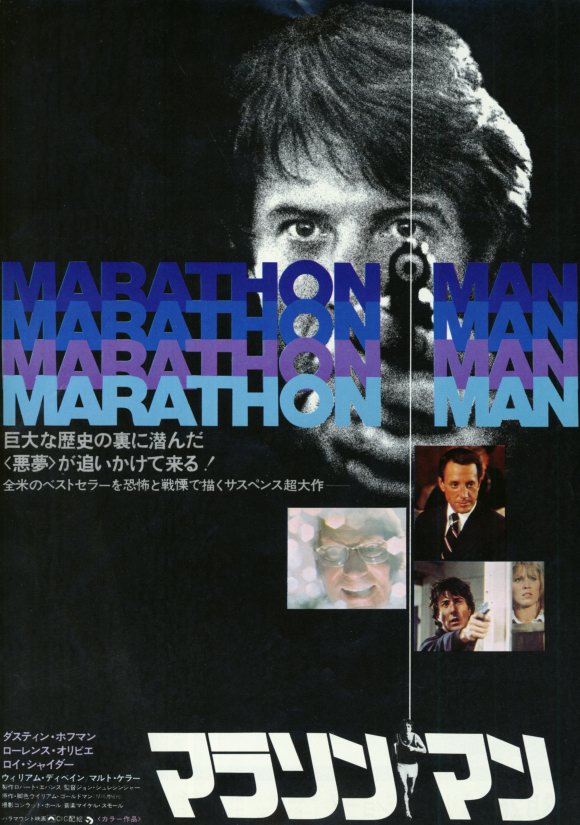
As far as film (sub)genres go, there is probably none that is more patently oxymoronic and outstandingly absurd than the “Jewish Thriller,” which is exactly how queer British-Jewish auteur John Schlesinger (Billy Liar, Darling) described his fairly commercially and critically successful film Marathon Man (1976) starring Dustin Hoffman as a somewhat unlikable Jewish doctoral candidate and legendary British master actor Laurence Olivier as a murderously greedy and vain Nazi criminal criminal who is forced to resume his favorite old pastime of elegantly torturing Israelites with his masterful Aryan dental skills. If Ronald Neame’s The Odessa File (1974), Franklin J. Schaffner’s badly botched Ira Levin adaptation The Boys from Brazil (1978) starring alpha-white-liberal Gregory Peck in the hilarious against-type role of Dr. Josef ‘Angel of Death’ Mengele, George Roy Hill’s The Little Drummer Girl (1984), Éric Rochant’s Les patriots (1994) aka The Patriots, Eytan Fox’s Walk On Water (2004), and Stephen Spielberg’s Munich (2005) are notable examples of the Jewish thriller than I can certainly completely do without the entire subgenre, yet somehow I found Schlesinger’s film to be strangely enthralling, especially for a highly commercial movie that was directed by an exceedingly effete Hebraic queen who was not exactly suited for such a film and who apparently mainly opted to take on the fairly masculine project because his previous film—the rather underrated cult flick The Day of the Locust (1975)—was an abject commercial and critical failure and, as source writer William Goldman once revealed, he was “terrified he was dead in Hollywood.”  Of course, Schlesinger made the right decision, as the film ultimately proved to be his last extremely successful cinematic work, though it has never really been considered a masterpiece and its popularity surely has dwindled as the decades have passed.  It should also be noted that, despite being an extremely Jewish film in many regards, Schlesinger's somewhat eccentric thriller is a rare Hollywood production that features various defective and even loathsome Hebraic characters.

While certainly a piece of sleekly stylized kitsch like most thrillers, Marathon Man has enough memorable idiosyncrasy and preternatural paranoiac energy to warrant modern day reexamining, even if the world is already contaminated enough with goyim-geared Zionist propaganda. Indeed, featuring a super sly blue-eyed Chinese hit men that gets in a homoerotic fight to the death with a macho gay Jew government secret agent, angry Auschwitz-esque German Shepherds that horrify the neurotic titular protagonist, scheming German shiksa spies, an unintentionally hilarious elderly Jew versus elderly Aryan road rage incident that is ignited by the extremely hostile and seemingly senile Hebrew and climaxes with both men dying in a mini urban holocaust after they accidentally crash their cars into an oil truck, and Laurence Olivier in the last great role of his career as a diamond-fetishizing Nazi war criminal that acts more like a stereotypical evil Jew than an evil Nazi, Marathon Man is a sort of conspicuously kosher Kafkaesque thriller that makes more allegorical references to the holocaust than Orson Welles’ rather dark masterpiece The Trial (1962), albeit in executed in a less abstract and more organic fashion that makes one realize that auteur Schlesinger has a deep-seated and visceral fear and hatred of both Nazis and Germans. In fact, in an interview with his mischling half-Dutch nephew Ian Buruma featured in the book Conversations with John Schlesinger (2006), the director confessed in regard to his Teutophobia, “We all have prejudices, of course, and one of mine is a hatred of all things German, as a result of the Holocaust […] Going to Germany after the war and even working there, in Berlin on Ian McEwan’s THE INNOCENT, made me very conscious of my anti-German feelings. I never suffered personally at their hands, but I do remember a relative in Holland named Martin Schuster, who was in a wheelchair. Martin, who was much older than me, had the same birth date as I did and always used to remember my birthday. Then suddenly the birthday cards stopped. I heard subsequently that he had been sent to a concentration camp and was exterminated. I find it awfully difficult to divorce all that from my basic anti-German feelings.”   In other words, like many modern Jews, Schlesinger seems incapable of differentiating between Nazis and Germans and sees them both as sort of perennial mortal enemies.  To Schlesinger's credit, his anti-Aryanism did not stop him from collaborating with Austrian master conductor and one-time Nazi party member Herbert von Karajan on a production of Giuseppe Verdi's classic opera Un ballo in maschera aka A Masked Ball.


 Despite his keenly kosher hatred of krauts, Schlesinger, who had three German-born grandparents, was somewhat ironically raised with a deep appreciation for German high culture and he has even expressed a deep appreciation for both antisemitic proto-Nazi composer Richard Wagner and (in)famous Third Reich filmmaker Leni Riefenstahl, not to mention the fact he had an equal appreciation for English culture and the royal family, hence his fairly European sensibility as a filmmaker. Indeed, Marathon Man is what you might expect if the eccentric queer son of Jean-Pierre Melville and Ida Lupino made a respectable failed attempt to direct a big budget Mossad recruitment video disguised as a Hollywood thriller. Admittedly, as much as I would typically rather perform cunnilingus on the decaying corpse of an AIDS-ridden negress crack whore than watch another Zionistic celluloid turd, Schlesinger's film somehow manages to transcend the whole Israeli agitprop angle and becomes something more bizarre as a cinematic that seems more like an incriminating Hebraic horror film that exposes some of the more absurd forms of Judaic paranoia and thus actually somehow manages to enable less than philo-Semitic individuals like myself to empathize with the curious kosher plight of a Jewish doctoral student that proudly identifies as a liberal pacifist. Additionally, while he is not depicted absurdly shooting Jews for target practice while drunk with his beer belly hanging out from the comfort of his chateau balcony like the highly fictionalized Amon Göth featured in Spielberg’s Schindler’s List (1993, the Mengele-esque Nazi war criminal depicted in Schlesinger's film is easily the most enthrallingly evil and delightfully menacing Hollywood screen Nazi I have ever encountered, as a sort of mystifying and highly secretive National Socialist war criminal that is plagued with many of the highly stereotypical negative flaws of his Jewish enemies, namely a fiendish fetish for diamonds and material wealth. On the other hand, I have never seen a film that featured so many hordes of weird and creepy Jews flooding city streets that range from hysterical Yiddish-speaking holocaust survivors to slimy jewelry dealers to packs of yarmulke-sporting Orthodox pups. In short, sometimes Marathon Man feels like it could be renamed Dawn of the Judaics or Day of the Jews. Indeed, due to the film's sometimes cinéma-vérité style and various scenes featuring Jews in medieval orthodox garb crowding the streets of the overtly dirty and sleazy NYC diamond district, I sometimes felt like I was watching a Hollywood big budget remake of Fritz Hippler's Nazi agitprop piece Der Ewige Jude (1940) aka The Eternal Jew.  


 When Schlesinger proudly referred to Marathon Man as a “Jewish Thriller,” he was not just trying to be cute, witty, or ironic, or as he stated himself to Buruma, “I always called it my Jewish thriller because that aspect of it was quite important. I remember asking Laurence Olivier whether it would be a good idea for him to grow a little [Hitler] mustache, and he said: ‘No, no, no. Don’t you think you should use to the maximum my mean little mouth?’ I could see his point.”  Of course, Schlesinger, star Dustin Hoffman, and novelist/screenwriter William Goldman are not the only Hebraic ingredients of the film, which was co-produced by Paramount Pictures studio head Robert Evans (real name Robert J. Shapera) and fellow Jew Sidney Beckerman (Kelly's Heroes, Red Dawn). Quite atypical in many ways for both a Hebrew and Hollywood studio head, Evans—a hardly humorless fellow that, at the mere age of 12, annoyed his family members by reinventing himself as a “Jewish Nazi” and playing a Nazi concentration camp colonel on “Radio Mystery Theater”—was, by most accounts, an extremely handsome, charming, likeable, loyal, and warm fellow that Peter Biskind once described as, “…very much the ladies’ man, a sharp dresser given to sartorial clichés like suede jeans and gold chains. Had he not had the good fortune to meet [Charles] Bluhdorn, he might well have spent his youth as a gigolo, squiring dowagers around the spas of Europe.” More or less a model turned brief reluctant actor turned studio head, totally inexperienced but quite eager go-getter Evans managed to totally revamp Paramount and its image and took it from being the ninth largest studio in Hollywood to the most successful during the 1970s as the man behind important and highly successful movies like Roman Polanski’s Rosemary's Baby (1968) and Chinatown (1974), Hal Ashby’s Harold and Maude (1971), Francis Ford Coppola’s The Godfather (1972), among countless others. Despite hating the project and assuming it would be a major commercial failure (which it was), Evans still had the integrity to back Schlesinger’s artistic vision on The Day of the Locust, but more importantly the studio head was also the man responsible for giving Laurence Olivier back his dignity by securing him the main villain role in Marathon Man at a time when no one would hire the legendary British actor because he was considered uninsurable since he was cancer-ridden. In the end, not only did Olivier earn an Oscar nomination for Best Supporting Actor for his performance, but his cancer also went into remission and he lived for another 13 years, with his final acting performance in any medium being that of a wheelchair-bound WWII war veteran in Derek Jarman's rather underrated Benjamin Britten adaptation War Requiem (1989). 


 In an opening sequence that somewhat seems like a sadistic overtly Jewish take on Grumpy Old Men (1993), an elderly 72-year-old ex-Nazi that looks Jewish named Klaus Szell (played by German-born vaudevillian performer Ben Dova, who was both a survivor and suspect in the explosion of the Hindenburg) and a equally old and disgruntled four-eyed German-hating Jew that looks like he could by Woody Allen's father get in a sort of pointlessly tragic slapstick road rage car chase that ultimately results in both of their deaths after they crash into a oil truck in New York City during Yom Kippur while tons of baffled orthodox Jews watch on. This literal holocaust will ultimately have tragic unexpected consequences for unwitting protagonist Thomas ‘Babe’ Levy (Dustin Hoffman), who is a self-proclaimed “liberal pacifist” that will have to face the wrath of shadowy fugitive Nazi war criminal named Dr. Christian Szell (Laurence Olivier), whose brother Klaus was the man that died in the car crash.  Indeed, Szell's brother's death acts as a catalyst to the film's entire plot. While Babe believes that his big brother Henry ‘Doc’ Levy (Roy Scheider) is a capitalist whore that works in the oil business, he is actually member of a highly secret and supremely morally bankrupt government agency called ‘The Division,’ which does dubious jobs that the FBI lacks the capacity to do and the CIA does not want to touch. While both a government agent and Jew, Doc is involved in an elaborate international network of couriers who transport diamonds that were stolen during World War II from wealthy Jews seeking to flee Germany for the benefit of Dr. Szell, who now lives a Mengele-esque life of luxury in South America on the wealth that he has acquired as a result of the jewels that he plundered from the Jews while working as a dentist in a concentration camp.  Initially becoming rich off the gold teeth that he would pull out of the mouths of Jewish prisoners, Szell eventually worked his way up to diamonds. As a result of his brother’s unexpected death, Szell has become paranoid that his couriers, especially Jew Doc Levy, intend on stealing his diamond stash, which he has locked away in a safe deposit box in Manhattan. Since his brother was the only other person that had a key to his fortune, Szell presumes that all his couriers are after his wealth and decides to begin liquidating them, even though he has nil concrete evidence to support his paranoid delusions. Unfortunately for Szell, he makes that mistake of beginning to go after Babe Levy who, although a self-righteous college doctoral candidate, has a lot of pent up rage and hatred because his father committed suicide after he lost his job and his reputation was ruined during the Communist witch hunts of the Joseph McCarthy era. Of course, in the end, destroying a Nazi war criminal and his entire operation becomes the ultimate form of redemption for left-wing Jew Babe, who seems to have been waiting his entire life for someone to blame for his kosher commie father’s self-inflicted death. 


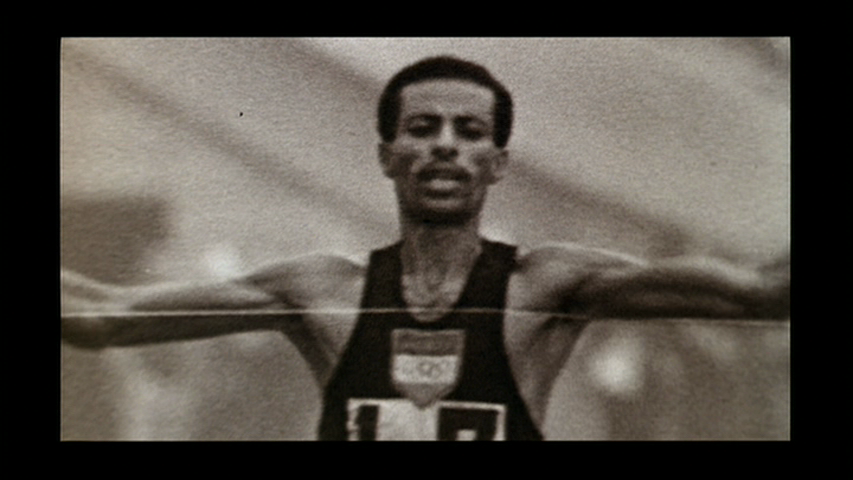
 As the title of the film somewhat hints, pint-sized yet strong-willed Marathon Man protagonist Babe is an avid runner and he is especially obsessed with Ethiopian double Olympic marathon champion Abebe Bikila as indicated by photographs of the African champ hanging on his apartment wall and stock footage of the proud barefoot runner featured at the beginning of the film. Babe is also somewhat of a paranoiac who almost seems to suffer a mental breakdown when he witnesses a German Shepherd attempting to bite a fellow runner at a local park, as if the canine gives him visions of Auschwitz, even though he is not a holocaust survivor.  Of course, as someone whose father committed suicide after having his career ruined due to highly political reasons, Babe has a special sensitivity when it comes to signs of imminent danger and conspiracy.  Although apparently a fairly intelligent individual as one of  only four individuals that was selected for a history Ph.D. seminar that had 200 applicants, Babe seems to lack common sense and lives like a virtual bum in an extremely dirty, trash-covered studio apartment in a city ghetto where he is routinely mocked and called names like “creep,” “chicken,” and “twinkle-toes” by local criminally-inclined deadbeat Puerto Rican thugs. Of course, being a stereotypical passive-aggressive Jewish intellectual, Babe does not dare to defend himself against the exceptionally swarthy Hispanic quarterons, octoroons and quintroons that lurk around his less than luxurious neighborhood. Indeed, it is only when his sole brother is murdered and his own life becomes extremely endangered that Babe develops the sort of testicular fortitude it takes to take serious action and defend himself like a man. 


 One day while studying at a table in the library at Columbia University, an extremely beauteous blonde babe with a Germanic accent named Elsa Opel (Swiss actress Marthe Keller of John Frankenheimer’s Black Sunday (1977) and European arthouse works like Romuald Karmakar’s Nightsongs (2004)) asks Babe a question about extremely corrupt 19th-century NYC politician William M. ‘Boss’ Tweed, but then abruptly exits the building after arousing protagonist’s attention, thus hinting that she is a serious cocktease. Luckily, Babe thinks fast and steals one of Elsa’s self-addressed books before she leaves, thus giving him a reason to chase her down and hit on her. While Babe demonstrates that he has about as much charisma as a wet paper bag, Elsa reluctantly agrees to go on a date with him and, somewhat improbably considering the protagonist's lack of looks and wealth, a hot and heavy romance begins between the two. Indeed, somehow a short and dorky Jew-boy and a tall and statuesque Aryanness prove to be both quite emotionally and sexually compatible, or so it initially seems. Of course, unbeknownst to Babe, Elsa is a Mata Hari-esque hired-whore of sorts who was contracted by Dr. Szell to spy on him. In fact, when his brother Doc eventually comes to town and provides irrefutable proof that Elsa has been lying to him and thus probably has unsavory ulterior motives, hopelessly lovestruck bitch-boy Babe still refuses to believe that he has been emotionally cuckolded by a conniving kraut cunt who hardly has his best interests in mind. Somewhat intriguingly, Elsa ultimately proves to be a somewhat reluctant secondary femme fatale whose cold and calculating deceptions are ultimately put to shame by an inordinately well dressed and groomed male government agent with a somewhat questionable sexual persuasion. 


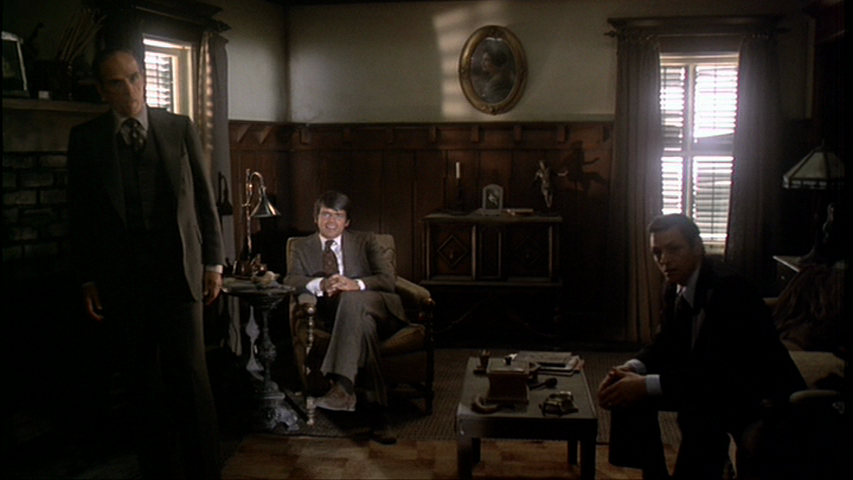
 After being nearly killed by a blue-eyed Chinaman named Chen (James Wing Wong) while in Paris, Doc realizes that his clock is ticking and that it is only a matter of time before Dr. Szell has him exterminated, thus he decides to immediately fly to NYC and pay a visit to his little baby brother Babe. Of course, unbeknownst to Doc, Szell is already monitoring Babe’s behavior via hired whore Elsa. In fact, while romantically strolling in a local park, Babe and Elsa are mugged, beaten, and robbed by two well dressed middle-aged men that hardly resemble the sort of ghetto thugs that typically mug people. Not surprisingly, these two suavely dressed muggers, Karl (Richard Bright of The Godfather trilogy) and Erhardt (blacklisted Jewish communist Marc Lawrence in a most ironic role), are eventually revealed to be Dr. Szell’s two foremost Nazi henchmen. When Doc arrives in NYC, he plays a sort of sick trick on his little brother by breaking into his apartment in the middle of the night while he is asleep and playfully smothering him with his own pillow like he is trying to kill them. While the two estranged brothers are quite happy to see one another, Doc becomes immediately annoyed when Babe attempts to show him research documents proving that their suicidal leftist intellectual father was innocent and angrily states to his little bro, “You think he wanted you to be throwing your life away on this shit? […] Nothing you write is going to change anything. It’s over. Forget it.” When Babe asks him if he should become a “corporate hustler” just like him, Doc exposes his glaring sense of hopelessness and despair by replying, “No. My life’s throw away, anyway.” Of course, Doc does not dare reveal that he is a secret government agent who works for a Nazi war criminal that is trying to kill him.  Naturally, when Babe reveals to him that he and Elsa were mugged by two elegantly dressed men that wore similar suits to his own, Doc immediately suspects Dr. Szell's involvement, though he makes the mistake of saying nothing to his brother.


 When Doc takes Babe and Elsa out for lunch at a fancy French restaurant where the sloppy protagonist becomes annoyed when the waiter forces him to wear a tie, it does not take long for the naturally suspicious secret government agent to figure out that his little bro’s ladylove is a femme fatale who he presumes works for Dr. Szell. Indeed, Doc exposes the fact that Elsa is lying about her identity and background by tricking her into claiming that she grew up near an imaginary mountain in Switzerland that he simply made up. When Doc reveals she is German instead of Swiss and accuses her of having ulterior motives, Elsa somewhat dubiously cries in her defense, “Why don’t you ask me if I care for him?” and then runs out of the restaurant like an embarrassed child. While Doc tries to warn Babe, “She’s a phony. She’s after something. Can’t you see it?,” the pathetically pussy-whipped protagonist replies, “Why don’t you stay out of it?” and then also leaves the restaurant.  Later that night, Doc shows up late to a meeting with Dr. Szell and his henchmen and immediately accuses the old Nazi of trying to assassinate him. Naturally, Doc also berates Szell for getting involved with his brother, stating, “It is a violation. We do not involve family. We never involve family,” to which the deceptively mild-mannered old Aryan replies, “Think of it as a warning, nothing more.” Needless to say, Doc makes a big mistake when he slaps Szell to the ground and states “Think of that as a warning and nothing more.” Of course, Doc makes an even bigger mistake when Szell asks him if he can be trusted and he replies “No” and then adds, “Can I be candid? I couldn’t give a fuck about your—Uhh!” Rather unfortunately, Doc does not get to finish what he says because Szell abruptly fatally stabs him in the gut with a large retractable blade that he has concealed under his sleeve. 


 While Doc manages to stumble all the way back to Babe’s apartment before completely croaking, he is unable to warn his quite unwitting brother that he is in grave danger and simply succumbs to his wounds while saying the protagonist’s name.  Thankfully, in terms of both the film's tone and storyline, things only get all the more bizarre from there. Indeed, in an eerily Kafkaesque scene that screams neurotic Hebraic paranoia, Babe practically suffers a total mental breakdown when police come by his apartment and question him about his brother’s somewhat dubious death.  While on the verge of crying hysterically in front half a dozen or so exceedingly stoic cops that seem totally unimpressed with the protagonist's histrionics, Babe accuses them of trying to interrogate like he is a criminal. Needless to say, when Doc’s coworker Peter Janeway (William Devane) shows up and reveals to the protagonist that his brother was not a “corporate hustler” after all, but instead a government secret agent, he is left all the more shocked and confused. As Janeway states to Babe in regard to his employer, “Now, when the gap gets too large between what the FBI can handle effectively and what the CIA doesn’t want to deal with, that’s where we come in...The Division.” Janeway also informs Babe that the same people that killed Doc will also probably go after him and that he wants to use him as “possible bait” to catch his brother's killer(s). Of course, as fits the sometimes Kafkaian logic of the film, Janeway is actually a dirty double agent that is working with Szell. To make matters all the more bizarre, despite betraying him and ultimately playing a role in his death, Janeway was also tough guy Doc’s secret gay lover, though this is never made all that overt in the film like it was in the source novel. In fact, the only part of the film that hints of the secret gay love affair between the two secret agents is a scene early on in the flick where Doc talks to some unidentified person on the phone while in Paris and states to them in an aggressively salacious fashion, “Janey. Well, London was hectic, but I’m fair. Just fair. Listen, why don’t you hop into a cab and get your ass over here? I’ve got plenty of room. Oh, screw appearances. I miss you […] Listen, Janey, why don’t you finish what you’re doing and get your ass over here.” Of course, ‘Janey’ is Doc’s poof pet name for Janeway and the duplicitous double agent was probably reluctant to meet up with his boy toy because he felt guilty since he was involved with plotting to have him killed. In that regard, Janeway is in some ways more despicable and loathsome than Szell. 


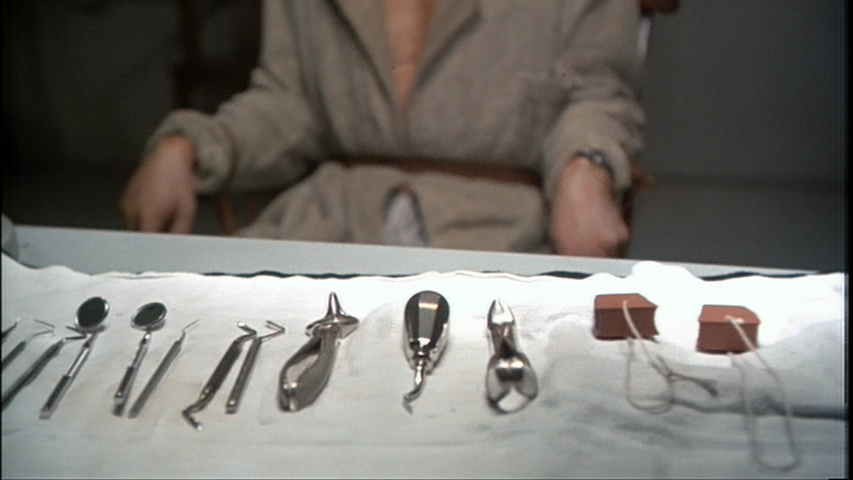
 In what literally feels like only minutes after Janeway leaves and his brother’s corpse is taken away in a body-bag, Dr. Szell’s dapperly dressed neo-Gestapo goons Karl and Erhardt break into Babe’s apartment while he is bathing and daydreaming about his father's suicide and then proceed to begin drowning the protagonist in his own bath water until he is knocked unconscious. When Babe eventually regains consciousness, he finds himself strapped to a chair in a large, brightly lit, and mostly empty warehouse room where he is eventually visited by Dr. Szell, who begins repeatedly asking the protagonist: “Is it safe?”  Naturally, poor Babe has no clue who Dr. Szell is or what he wants from him.  Although initially proclaiming that he has no idea what Dr. Szell is talking about when he asks him if it is safe, Babe’s inner arrogant passive-aggressive Jewish comedian eventually emerges and he states, “No, it’s no safe. It’s…very dangerous. Be careful.” Of course, Dr. Szell does not find Babe’s comment to be funny and reacts to it by whipping out some rather intimidating dental tools and proceeding to look at the protagonist’s teeth and rebuking for not taking care of them properly since he has a cavity. When Babe refuses to answer whether it is “safe” or not after he is asked a couple more times, Szell proceeds to torture Babe by digging into his cavity with one of dentistry tools, though the good doctor soon relieves the protagonist pain by applying oil of cloves to his tooth and then gloats, “Isn’t that remarkable? Simple oil of cloves, and how amazing the results. Life can be that simple. Relief…discomfort.” After the interrogation, Babe is brought to a sort of makeshift cell where he is soon abruptly rescued by Janeway, who ostensibly kills both Karl and Erhardt. 


 While driving away in the getaway car after escaping from Dr. Szell’s warehouse, Janeway ultimately reveals to Babe all the things that he has probably wanted to know since his brother was killed, stating to the discernibly startled protagonist, “Those two guys I just wasted worked for a man named Christian Szell […] He ran the experimental camp at Auschwitz, where they called him the ‘White Angel,’ the ‘Weisse Engel,’ because he had this incredible head of white hair. He’s probably the wealthiest and most-wanted Nazi left alive, and he’s hiding out somewhere in Uruguay. In 1945, Szell let it be known around Auschwitz that he could provide escape for any Jew who was willing to pay the price. He started out with gold, naturally, but very quickly worked his way up to diamonds […] Szell saw the end early and he snuck his brother into America with his diamonds. They’re right here, in New York, in a safe deposit box. Szell’s brother had the key. The only other key was kept by Szell in Uruguay. And now if he has to come out of hiding to use it, he’s gonna expose himself to incredible risk. Well, everything worked out fine, until his brother got killed in a head-on collision with an oil truck.” At this point, Babe realizes that the demented dentist that tortured him is actually the ‘Weisse Engel’ that Janeway just told him about, albeit with a shaved head. When Babe asks Janeway if his brother worked for Szell, Janeway gets somewhat agitated in a somewhat phony smart-ass fashion and excitedly replies, “No! He worked for us. Everything we do cuts both ways. Szell ratted on all of his buddies. He kept track of all the old Nazis throughout the world. Whenever we wanted to bring one of them in, we went to Szell.” Unfortunately, Babe is in for quite the shock when Janeway drives him back to Szell’s warehouse after he fails to tell the government agent what he wants to hear when he asks if he brother told him any important information before he died. Indeed, aside from the fact that he had no idea that Janeway is a double agent, Babe becomes shocked to the point of suffering a hysterical fit upon seeing that Karl and Erhardt are still alive and then begins screaming at his dead brother’s treacherous ex-beau while in a state of complete and utter shock, “I saw you kill them! You killed them! You killed them! You killed them! You fucking killed them! You killed my brother!” 


 Needless to say, after being delivered back to the warehouse, Dr. Szell immediately begins torturing Babe again and does so by drilling a healthy tooth in the protagonist’s mouth since it is “infinitely more sensitive” in comparison to a decaying tooth. After the unnerving dental torture session, Szell becomes completely convinced that little Babe knows nothing and states to Janeway, “He knew nothing. If he had known, he would have told. Get rid of him.” While Szell tells his men liquidate Babe since he knows too much about the Nazi fugitive, the protagonist manages to break free from his enemies and after a long chase he manages to outrun Karl, Erhardt, and Janeway due to his trusty marathon runner skills, as if all of his obsessive training was leading up to this one quite critical life or death situation. After giving a shady negro taxi driver his dead brother’s expensive Rolex watch for a ride back to his apartment and a dime, Babe uses the latter to call Elsa on a payphone at 5:00am to tell her to pick him up at drug store at 51st and Broadway in a hour. Since he does not want to be detected by Janeway and Szell’s men, Babe offers a Puerto Rican thug named Melendez (Tito Goya of Andy Warhol's Bad (1977) and the prison cult flick Short Eyes (1977)) all his personal belongings in his apartment to break into said apartment and retrieve the handgun that his father used to kill himself with. While Elsa picks up Babe, the protagonist begins to suspect that she is one of Szell’s employees when she drives him to a remote country house that ultimately proves to have been owned by Szell’s deceased brother. Not long after Babe takes Elsa hostage at gunpoint after getting her to admit that she works for Szell, Janeway, Karl, and Erhardt show up in a car and the protagonist threatens them by lying and telling them that he has called the cops and that they are on their way. Of course, it is not long before one of Szell’s men attempts to whip out a gun and shoot the protagonist, but luckily Babe somehow manages to magically shoot and kill both Karl and Erhardt before they can kill him. At this point, Janeway pretends to offer Babe a peace offering of sorts by declaring “I’ll give you Szell for your brother” and then telling him where he can find the murderously miserly Nazi war criminal.  Not surprisingly, when Babe turns around and begins to leave, Janeway makes a cowardly attempt to shoot him in the back, but luckily Elsa warns the protagonist. While Babe manages to shoot and kill Janeway before he can kill him, the double agent has time to shoot and kill Elsa as revenge for warning the protagonist.  Indeed, Elsa might have been a lying whore, but she ultimately becomes a martyr of love in the end.


 In what ultimately has to be a particularly paranoid Nazi war criminal’s worst nightmare, Dr. Szell finds himself in a sort of super surreal Jewish diamond ghetto that feels like some sort of of kosher purgatory and is flooded with hordes of both Orthodox and assimilated Jews, including extremely aggressive jewelers that naturally annoy the shit out of the elderly Aryan dentist. Somewhat magically, not one but two holocaust survivors manage to recognize Dr. Szell, including an elderly Jewess who causes a huge scene after nearly getting hit by a car while attempting to chase down her former tormentor while hysterically screaming “White Angel” in German. When an elderly Hebrew with a foggy memory begins to recognize Szell after briefly meeting him at a jewelry store, the good doctor pretends he is a fellow holocaust survivor that fled Germany for London in 1933. When the old Jew's memory eventually comes back and he realizes that Szell is actually the dreaded White Angel, he chases him down and attempts to make a citizen's arrest, so the old Nazi is forced to slit his rather wrinkly throat. Unfortunately, Dr. Szell is not so lucky when it comes to young chosenites, as Babe pulls a gun on him soon after he gleefully retrieves his diamonds from the safety deposit box that he had them stored in. Demonstrating that he is not completely humorless, at least when it comes to tormenting his enemies, Babe states upon surprising Dr. Szell from behind, “It’s not safe” and then forces him at gunpoint to walk to a somewhat ominous water treatment plant in Central Park.

While Szell is delighted when Babe tells him that he has no interest in keeping his diamonds, he gets somewhat offended when the protagonists tells him that he can keep as many of the expensive rocks that he can swallow and then forces him to eat one. While all this is going on, Babe sadistically taunts Szell by throwing handfuls of diamonds at him, which are ultimately lost in water below them. After having trouble swallowing just one diamond, Szell refuses to eat anymore, stating in a somewhat aristocratic fashion, “No. You’ll have to shoot me.” At this point, Szell proceeds to accuse Babe of being too much of a coward to shoot him, stating just before rudely spitting in his face, “You’re too weak. Your father was weak in his way, your brother in his, now you in yours. You’re all so predictable.” Naturally, Babe becomes quite upset at this point and proceeds to lunge at Szell and ultimately drops his gun in the process. After dropping his gun, Szell reveals the large blade he has hidden under his sleeve and proceeds to attempt to strike Babe, who opts to throw an open briefcase containing the remaining diamonds down a stairwell that leads to water. Of course, Szell instantly forgets about his fight with Babe and dives down the stairwell, only to absurdly commit accidental suicide in the process as a result of tripping after impaling himself with his own blade. Indeed, in what is arguably the mostly seemingly unintentionally ironic and insanely improbable conclusion in film history, a young Jew chooses personal integrity over a life of fortune and guaranteed financial security and in the process accidentally causes a sinisterly parsimonious Shylock-esque Nazi war criminal that is greedier than kosher swindler Bernie Madoff to kill himself, thus giving him his much desired revenge but also leaving him completely free of the guilt of killing an elderly man. In the end, Babe also demonstrates that he has gotten over his Oedipal hang-ups, as he tosses his father’s pistol into a river.  Undoubtedly, in Babe's mind, causing the demise of Dr. Szell and his henchmen was a sort of therapeutic means for him to feel like he had avenged his father against the supposedly antisemitic McCarthyites that ruined both his life and career and, in the process, destroyed both the protagonist's childhood and overall mental well-being.


 Notably, apparently as a result of Herr Hoffman, who at that point in his career was already acting like a supreme primadonna, being dissatisfied with the original ending of the source novel, which involves Babe sadistically tauting and killing Dr. Szell and thus in the process becoming just as sadistic and inhumane as his Nazi enemy, perennial script doctor Robert Towne (another member of the tribe whose real name is Robert Bertram Schwartz) was brought in by Robert Evans to rewrite the ending and came up with the patently preposterous idea of a young Jew forcing a Nazi war criminal to eat diamonds. Somewhat humorously, source novelist and screenwriter William Goldman, who felt his whole Nietzschean theme of, “He who fights with monsters should look to it that he himself does not become a monster. And if you gaze long into an abyss, the abyss also gazes into you,” had been ruined, was quite vocal about his disgust for the film's the new Hollywood-esque ending.  In fact, in the featurette Going the Distance: Remembering 'Marathon Man' (2001), Goldman states of Towne's fairly phony and uniquely improbable ending, “I thought it was Hollywood horseshit,” which is certainly a more than charitable way to describe it.  Indeed, as virtually all Jewish holidays and the constant attacks against both Germans and Europeans/European-Americans in contemporary Hollywood and the mainstream media clearly demonstrate, there is nothing quite like the venomous and oftentimes craven ruthlessness of Jewish vengeance, yet Marathon Man concludes with an unintentionally absurd feel-good cop-out ending where the inordinately principled Jewish liberal pacifist protagonist gets so lucky that he accidentally causes the death of his brother’s killer while simultaneously humiliating and degrading the once highly powerful Nazi war criminal, thereupon completely keeping his much cherished moral principles intact, as if such an obscenely ideal outcome has anything to do with real-life (of course, in his superior films Midnight Cowboy and Sunday Bloody Sunday, Schlesinger would clearly demonstrate that he is not exactly an optimist).

Thankfully, the moral and philosophical hypocrisies of ostensibly pacifistic left-wing Jewish intellectual types are exposed throughout the film in somewhat subtle ways, not least of all in a scene where the protagonist’s brother Doc states to him, “For a liberal pacifist, you’ve got some sense of vengeance.”   Indeed, Babe may lack the testicular fortitude to physically fight and confront people, but his entire life is driven by a deep-seated desire to avenge his disgraced father, even if he refuses to admit it himself, hence why he initially neglects to admit to his Judaic professor Biesenthal that his dissertation on “The use of tyranny in American political life” will focus on the McCarthy witch-hunts that destroyed his father. Notably, Biesenthal, who was a protege of the protagonist's father, states to Babe regarding his father's demise, “I think he was guilty. I think he was guilty of being arrogant and brilliant and of being naïve. He was guilty of not being able to cope with the humiliation of being dismissed. But of the charges, I know he was innocent. And, if it matters, Levy, I wept the day he died.”  Of course, Babe, who seems to suffer from the same sort of self-deceptive arrogance and naivety as his father, seems to ignore Biesenthal's kind critique of his dead daddy as he wants to remember his progenitor as a total innocent, hence his remark to the professor, “Sir, I don’t have to worry about clearing him because he was innocent.”


 Of course, Marathon Man is not only a thinly veiled act of quasi-artistic vengeance against Germans and Nazis, but also U.S. Senator Joseph McCarthy and so-called ‘McCarthyism,’ which has been the object of incessant ridicule and scorn by Hollywood ever since at least the release of half-Hebrew John Frankenheimer noir-ish suspense-thriller The Manchurian Candidate (1962). Indeed, good little shabbos goy actors and filmmakers like George Clooney demonstrate their allegiance to Judaic leftists by directing wholly worthless and absurdly artless big budget agitprop pieces disguised as serious filmic art like Good Night, and Good Luck (2005), which are predictably honored with tons of awards and award nominations simply because of their asinine anti-McCarthy messages.  Not surprisingly, Marathon Man even goes so far as to compare the United States Government and U.S. Government secret agents with the Third Reich and members of Schutzstaffel. Indeed, during one particularly notable scene in the film that takes place right after the protagonist is tortured by the Nazi villain, double agent Janeway remarks to Dr. Szell after being accused of using underhanded tactics, “I’m just doing my job. I believe in my country” and the old National Socialist stoically replies, “So did we all,” though the viewer suspects that neither of them really cares about their country and instead has exploited powerful positions for solely opportunistic reasons.  After all, as a closest homosexual who lives a constant life of deception, Janeway probably has no loyalty to anyone or anything and has merely exploited his keen survival instincts as a secret member of a much maligned sexual minority to get ahead in life.  Of course, history has demonstrated this is not an uncommon phenomenon among homosexuals. In fact, director Schlesinger was well acquainted with the story of the British double agents of Cambridge Spy Ring as recruited by NKVD officer and Soviet scout Arnold Deutsch, who was incidentally the cousin of prominent English Jewish movie theater chain owner Oscar Deutsch. In fact, Schlesinger considered An Englishman Abroad (1983)—a 60-minute BBC TV production written by English queer playwright Alan Bennett about gay Cambridge Spy Ring member Guy Burgess, who was also the subject of Marek Kanievska's critically acclaimed Julian Mitchell adaptation Another Country (1984) starring Rupert Everett—to be one of his personal favorites of the films he had directed. Rather revealing, Kanievska's Another Country points to so-called homophobia as being one of the reasons as to why Burgess opted to betray his country and spy for the commie cause, even though homosexuality was a serious crime in the Soviet Union.

Naturally, one of the reasons McCarthy is still so ruthlessly attacked by Hollywood is because he was right about commie infiltration as demonstrated by the fact that America has degenerated into a anti-Christian multicultural shithole where a Zionistic Jewish Trotskyite like Bernie Sanders, who belonged to the Young People's Socialist League (YPSL) and volunteered at volunteered at Sha’ar HaAmakim kibbutz in northern Israel, could be considered an ideal presidential candidate among largely university educated young people who do not even realize that the pseudo-intellectual twaddle that they were brainwashed with while in college was largely inspired by the vengeful anti-European theories of highly scornful and resentful Jewish émigrés of the Frankfurt School like Herbert “Father of the New Left” Marcuse, Max Horkheimer, and Theodor W. Adorno who had committed their life's work to destroying Occidental Civilization because Uncle Adolf kicked them out of Europe and sent their family members to concentration camps (though it should be noted that they were all already well committed to the anti-Aryan cause long before the Nazi takeover). Undoubtedly, after obtaining his doctorate in history, the protagonist of Marathon Man would probably dedicate his life to writing hardly historically accurate swill about how innately evil, racist, sexist, and homophobic Europeans are and how the United States is an evil fascistic empire that is run by psychopathic WASPs.  As for Schlesinger, he had good reason to loathe McCarthy, as the U.S. Senator linked communism and homosexuality with mental instability and even once hilariously stated to a reporter, “If you want to be against McCarthy, boys, you've got to be either a Communist or a cocksucker.” Of course, considering the close intersecting ties of the political homos and dykes of the LGBT movement, colored crybabies of the Black Lives Matter movement, and countless left-wing Jewish groups, it seems that McCarthy was quite prophetic and that, if anything, he actually underestimated his enemies and the sort of corrosive effect that they would ultimately have on the United States.


 Somewhat ironically, it was sod director John Schlesinger that ultimately opted to obscure the gay subtext of Marathon Man, though it was apparently for largely artistic reasons. Indeed, as Schlesinger told his nephew Buruma in regard to an important revelational scene that he decided to cut from the film where the protagonist learns that his macho brother is actually a homo, “There was a wonderful moment in MARATHON MAN, the final sequence, when he had a very long speech, which was lifted from the boo, in which he [Olivier] said to Dustin Hoffman: ‘There are things that you must know about your brother. Your brother was a HOMOSEXUAL!’ And it was sort of shouted out in such a hammy way that I had to cut it.” Of course, it was also probably to the commercial benefit of the film that the gay subtext was dropped, even if said gay subtext was not exactly pro-gay (incidentally, Schlesinger was criticized by gay groups when Midnight Cowboy was released because they felt that the film featured an unflattering portrayal of homosexuals).

 Undoubtedly, with the exception of his assumedly lost documentary Israel: A Right to Live (1967)—a Zionist propaganda piece that was written by London Jew Wolf Mankowitz and produced by kosher Canadian Herschel Saltzman that was apparently screened a couple times and then quickly fell into obscurity (though, according to William J. Mann in his bio Edge of Midnight: The Life of John Schlesinger (2005), the director never actually completed the film “due to 'creative differences' with the BBC”)—Marathon Man is surely Schlesinger’s most overtly and shamelessly Jewish film. To be fair, Schlesinger was a more ‘humanistic’ filmmaker than a ‘political’ one and he was quite vocal about the fact that he most enjoyed directing more personal gay-themed works like the quite autobiographical Sunday Bloody Sunday (1971), which depicts the somewhat pathetic life of a middle-aged gay Jewish doctor who suffers much heartbreak and loneliness as a result of having to share his young goy boy toy boyfriend with a bitchy divorced bourgeois broad in her mid-30s in what ultimately proves to be a decidedly doomed bizarre love triangle. 


 While a sometimes shameless piece of action-packed big budget kosher kitsch where Schlesinger has some fun by subtly subverting and ultimately sodomizing genre conventions by portraying the most pernicious femme fatale a duplicitous crypto-cocksucker and including an interracial homoerotic fight scene (indeed, in the film’s gayest fight scene, an almost completely naked Roy Scheider wrestles and ultimately breaks the neck of a blue-eyed Chinaman that attempts to strangle him to death with a garrote wire in a scenario that almost resembles Born to Raise Hell-esque sadomasochistic sod porn), Marathon Man is important in that it is rather incriminating as a rare mainstream movie that exposes a lot of things about the highly temperamental, paranoid, and vengeful people that operate in Hollywood, academia, and the government, especially those of the Judaic sort. Indeed, in many ways it is quite symbolic but also ironic that the film begins with a seemingly half-deranged old Jewish guy acting as an unwitting catalyst to a series of political murders and conspiracies after becoming enraged and acting like a villain in Death Race 2000 because an equally elderly German guy is blocking his way on a Manhattan street. After all, had the savagely senile Semite controlled his tyrannical Hitler-esque temper and primal Teutophobia, he would have not only prevented himself from perishing in a mini-Shoah, but he would have also prevented the deaths of at least one gay Jew (Doc) and at least one holocaust survivor (the elderly Jew with the concentration camp tattoo who identifies Szell near the end).  It should be noted that the elderly Jewish, who totally initiates the road rage scenario, calls Szell's brother a “kraut meathead” and “limburger-loving schmuck” immediately upon realizing that he is German, but then has the hyper hypocritical gall to accuse the elderly Teuton of being an “anti-Semitic bastard” when he retorts by simply calling him a “Jude.”  Of course, this extremely hilarious racially-charged name-calling scenario can be seen as a sort of metaphor for the history of antisemitism and reminds me of the Polish proverb, “The Jew Cries Out in Pain as He Strikes You.”  Another great irony of the film is that the Nazi war criminal villain also proves to hardly be a real Nazi at all (at least as far as his ideals and actions prove), but instead an opportunistic traitor with stereotypically Jewish character flaws who ratted out all of his Nazi friends and who has no problem working with Jews in the diamond world. After all, aside from helping Jews to escape concentration camps if they provided him with their gold teeth and ratting out his own fellow Nazi war criminal friends to protect himself, Szell relied on Jews and homosexuals to act as couriers for him in his international black market diamond smuggling operation. In that sense, Szell is somewhat of a Hans Landa type figure, albeit without the sense of humor and propensity for childlike joy.  Of course, also like Landa in Inglourious Basterds (2009), Szell is easily the most intriguing and intimidating character featured in Marathon Man.


 Undoubtedly, one of the greatest ironies of Marathon Man is that one of the reasons that it is so captivating and though-provoking is because it is such a hopeless mess of a movie that is full of plotholes and loose ends that allow the viewer to use their imagination and fill in the blanks when it comes to the more curious aspects of the film (for example, Szell mentions Babe's fathers like he knew him, though it is never made clear how he knew him), thus making it nearly unwatchable for younger audiences who are used to being spoon-fed contrived movies where everything is spelled out for them and tied up in a neat package in the end. Indeed, ultimately the film is the quixotic result of an extremely effete gay European arthouse director attempting and failing to direct a highly accessible blockbuster for the unthinking masses. Of course, while Schlesinger had the honor of directing the only X-rated film ever to win the Academy Award for ‘Best Picture’ with Midnight Cowboy (1969), he tended to fail horribly when attempting to create contrived genre-oriented trash like the unintentionally hokey horror turd The Believers (1987) and his miserable mainstream gay swansong The Next Best Thing (2000) starring alpha-fag-hag Madonna and prince of the British screen poofs Rupert Everett. Despite his self-admitted hatred of Germans, Schlesinger belonged to the last generation of cultivated Jews with a deep respect and admiration for real European culture and not the prepackaged post-postmodern multicultural swill that pollutes the continent nowadays. Indeed, it is no coincidence that virtually all of the great Jewish filmmakers of film history, including Fritz Lang, Erich von Stroheim, Ernst Lubitsch, Max Ophüls, and Josef von Sternberg came from Austrian and German backgrounds, as Jews have no real culture of their own, hence the overall cultural and artistic poverty of contemporary Hollywood (one also cannot forget that Kubrick deeply immersed himself in European culture and more or less transformed himself from a lower-middleclass Brooklyn Jew into a cultivated Englishman, not to mention the fact that he married and reproduced with the niece of one of the greatest filmmakers of the Third Reich).


 Although innately flawed and sometimes convoluted, Marathon Man is what I see as the ideal Hollywood thriller as a consistently enthralling roller-coaster of a movie that is equipped with just enough sophistication and eccentricity to appeal to serious cinephiles that care more about nuanced cinematic art than the sort of grandiose and bombastic blockbuster farts that culturally retarded anti-auteurs like Michael Bay and J.J. Abrams unleash on the worlds.  If The Day of the Locust—a film that, like the 1939 Nathanael West novel of the same name that it is based, is a scathing and even sometimes grotesque satire of Hebraic Hollywood from a Hebraic perspective—unequivocally demonstrated that Schlesinger saw Tinseltown as sort of a vaudevillian brothel city, Marathon Man reveals that the auteur and probably a good percentage of his kinsmen, see antisemitism (and, to a lesser extent, homo-hating), especially of the Nazi oriented sorts, as the ultimate real-life Kafkaesque nightmare.  Indeed, the film may fail in many regards, but it indubitably succeeds in expressing the seemingly inborn pathological fear, paranoia, and obscene obsession that members of god's (seemingly forsaken) chosen tribe have for their enemies.  Undoubtedly, I have seen more Nazi and holocaust themed films than I care to admit, yet Marathon Man is the only one where I felt like I was able to actually understand the sort of crippling primordial fear and paranoia that seems to epitomize a lot of post-WWII Jews.  While Tarantino's Inglourious Basterds exposes the sort of sadistic bloodlust that the more Zionistic of Jews have for their enemies, Marathon Man exposes in a sort of psychodramatic form the sort of internal hell that plagues the mind of a Jewish intellectual when he thinks of having to personally confront his enemies.  Indeed, more than just a fictional Nazi war criminal, Laurence Olivier's Dr. Szell is like a composite of all the gentiles that Jews fear, including the stoic aristocrat, Nazi doctor, ruthless businessman, and evil goy genius.  In other words, not only is Marathon Man that ultimate Jewish thriller, but it is also arguably the greatest Hebraic psychological horror flick, thus making it all the more fitting that it was produced by an inordinately masculine and handsome member of the tribe who once described himself as a “Jewish Nazi.”


-Ty E